Why Determining the Beginning and End of Ramadan by Calculated Crescent-Visibility is Perfectly Legitimate according to the Shari’ah.
Dr Usama Hasan
Fellow, Royal Astronomical Society (UK)
1st Ramadan 1447 H
19th February 2026 CE
THE ZUHAL ESSAY SERIES: NO. 1
Contents
- The Plain Truth About This Matter 2
- The Qur’anic Assertion: The Sun and The Moon are by Calculation { الشَّمْسُ والقَمَرُ بحُسْبانٍ } 4
2.1 Imam Tabari’s Explanation (Tafsir) of this verse 4
- Classical Muslim Jurists Who Allowed Calculation For Moonsighting 7
3.1 Nawawi’s commentary on “If it is obscured by cloud, then determine for it.” 7
3.2 Ibn ‘Arabi supported the use of calculations 7
3.3 Ibn Daqiq al-‘Id supported the use of calculations 8
3.4 Taqi al-Din al-Subki supported the use of calculations 8
3.5 Ibn Taymiyyah rejected calculations because they could never be accurate enough 8
3.6 Ibn Hajar al-‘Asqalani’s discussion, quoting multiple authorities 8
3.7 Shaykh Ahmad Shakir 11
4 Objections to Calculations that give the same result as Moonsighting 12
4.1 Hilal means a public matter, from its name 12
4.2 The Prophet ﷺ said: We are an unlettered (ummi) nation: we do not calculate or write 13
4.3 “Witnessing the month” can only be done via seeing the hilal 13
4.4 “Enter houses from their doors” 13
4.5 Calculations are only “in someone’s head” 14
5 A Brief History of Moonsighting Calculations 14
5.1 Medieval and modern methods 14
5.2 Modern methods 16
5.3 Modern prediction criteria 16
5.4 HMNAO’s method: the Yallop Criterion 16
5.5 Crescent-visibility curves 17
5.6 World-record crescent sightings: naked-eye, telescope & CCD-imaging 18
6 Calculations for Islamic Prayer Times, but not for Crescent-Sighting? 18
Table of Figures
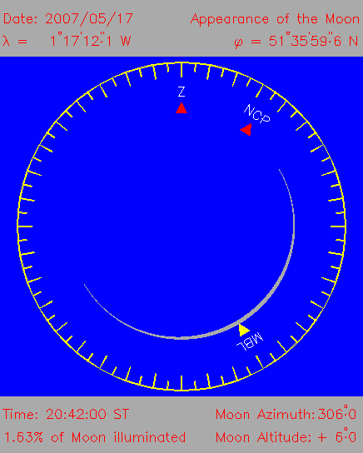
Figure 1: Calculating Crescent Visibility 12
Figure 2: Crescent-visibility curves for Ramadan 1429 H / 2007 CE 14
NB:
Classical Muslim Jurists Who Allowed Calculation For Moonsighting
- Mutarrif bin ‘Abdullah Ibn al-Shikhkhir (d. 95 H). (Disputed by Ibn ‘Abdul Barr)
- Imam Shafi’i (150-204 H), according to Ibn Khuwayz Mandad. (Disputed)
- Ibn Qutaybah (213-276 H), a Hadith expert
- Ibn Surayj (249-306 H), a leading Shafi’i jurist
- Muhyi l-Din Ibn ‘Arabi (558-638 H), an independent jurist
- Ibn Daqiq al-‘Id (625-702 H), a leading Maliki & Shafi’i jurist
- Taqi al-Din al-Subki (683-756 H), a leading Shafi’i jurist
- The Isma’ilis
- “Others”
- Shaykh Ahmad Shakir (1309-1377 H), a leading Salafi jurist and Hadith expert
 UNITY
UNITY 
Leave a comment