Bismillah. Here is my lineage to our most distant, biological, paternal ancestor known: Shaykh Muhammad Hibban, an Egyptian who settled in Yemen briefly and then for the rest of his life in India.
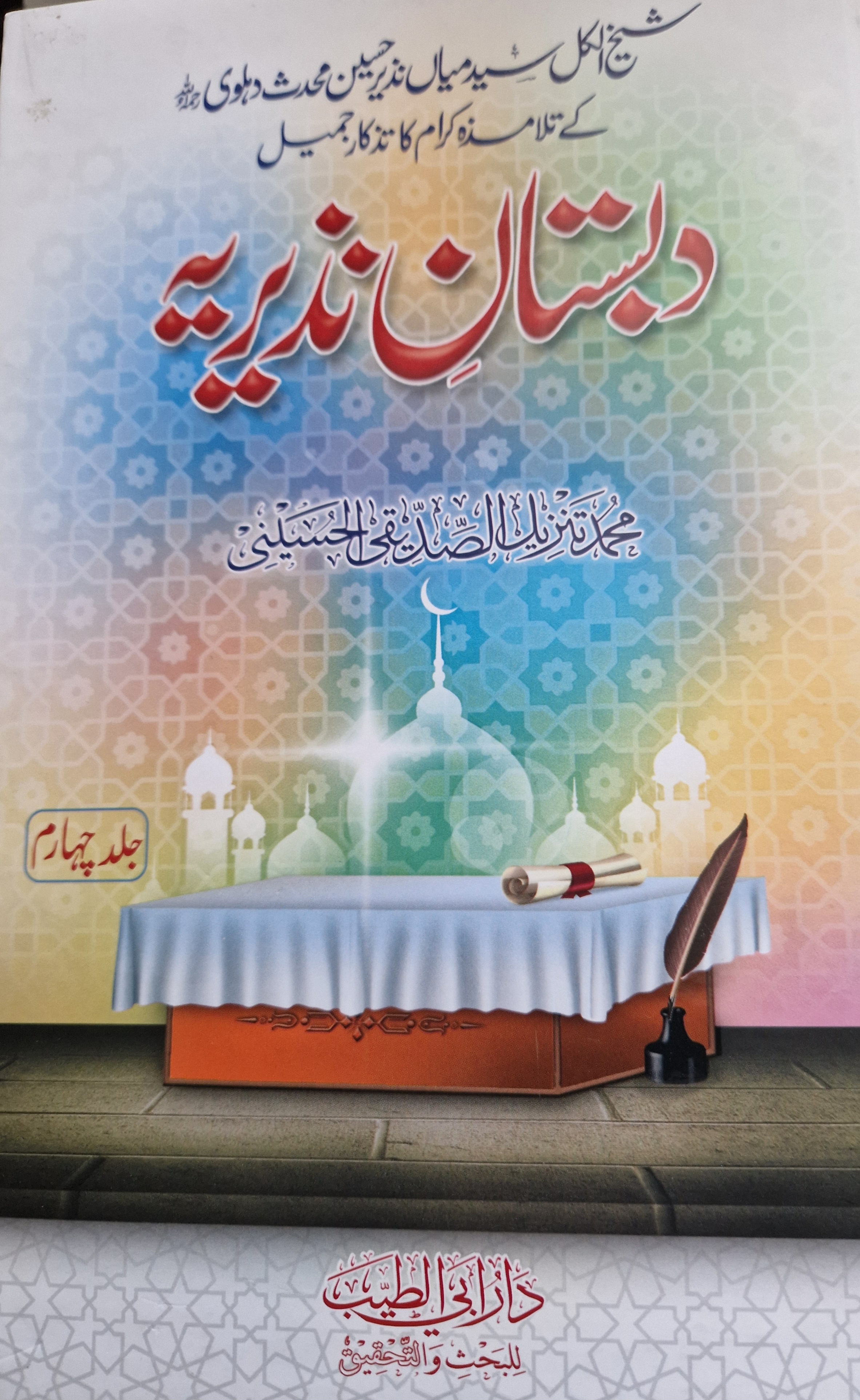
The lineage is taken from pages 153-4, vol. 4, Dabistan-e-Naziriyya (Urdu, Dar Abi Tayyib, Gujranwala, 2026) by Muhammad Tanzil Siddiqi Husaini, a book about the descending lineage of disciples of Sayyid Nadhir Husain of Delhi (1805-1902 CE), one of the towering saints and scholars of the Ahl-e-Hadith movement in India. The vast majority of the lineage is quoted at the beginning of Kitab Marqum Sharh Mathnawi Mawlana Rum [“An Inscribed Tome: Expansion of the Verses of the Mawlana of Rome”], Section 1, Folio 1, Page 2 – a commentary on Rumi’s Mathnawi. This indicates that many of the scholars in this lineage would have been skilled in Persian poetry.
From Shaykh Suhaib Hasan to Shaykh Muhammad Hibbān, they all seem to carry religious/spiritual titles of Shaykh, Mawlana, Munshi, etc. since they were generally scholars of the Qur’an and Hadith. However, these titles have been dropped for the most part, since they are not mentioned in the Dabistan text.
Some of the attributions illustrate the geographical spread, mainly around Northern India: Sarhind (Sirhind), ‘Umarpur. There has also been a strong implicit link to Dehli (Delhi) over the past few centuries, especially through the religious/spiritual order of Shah Waliullah of Delhi, although this is not explicitly reflected in the names below.
From the known birth-years of the first five entries, the gap between generations averages 25-30 years. Extrapolating this over the 33 generations, this genealogy reaches back 750-900 years. It could be 600-900 years. This is consistent with another fact stated in the above sources: one of the ancestors, along with his 2-3 brothers, accompanied Humayun’s army when it marched southwards from Kabul across Northern India in the 16th century CE. We don’t know if these ancestors came as soldiers, traders or scholars: perhaps a combination of these. (The Urdu language, whose name is derived from the Turkish yurdu meaning military barracks, was developed as a mixture of Hindi, Farsi and Arabic by the early Mughals in their army encampments.)
- Usama Hasan (1971-)
- Shaykh Suhaib Hasan (1942-)
- Mawlānā Abdul Ghaffār Hasan ‘Umarpuri (1330-1427 AH ~ 1913-2007 CE), aged 96/93
- Mawlānā Abdul Sattār ‘Umarpuri (1310-1335 AH ~ 1892-1917 CE), aged 25
- Mawlānā Abdul Jabbār ‘Umarpuri (1277-1334 AH ~ 1861-1916 CE), aged 57/55 (proficient in Arabic, Urdu & Farsi)
- Munshi Badr-ud-Deen ‘Umarpuri
- Muhammad Afzal
- Abdullāh
- Muhammad Akram
- Muhammad Anwar Shaheed Sāmānwi
- Muhammad Ahmad Sāmānwi
- Muhammad Haydar Sarhindi / Sirhindi
- Muhammad Muazzam Sarhindi / Sirhindi
- Muhammad Akram Sarhindi / Sirhindi
- Muhammad Tāhir
- Muhammad Bāqir
- Muhammad Nāzir
- Muhammad Qāsim
- Muhammad Hāshim
- Muhammad Muhsin aka Ibn al ‘Alā’i
- Zāhid
- Mahdi Abul Hasan
- Abu l-Tayyib
- Abdul Malik
- Abul Qāsim
- Abdul Rahman aka Abu Sa’eed
- Ahmad Abul Husain
- Yūnus
- Abdul A’lā
- Mūsā
- Maysarah
- Hafs
- Shaykh Muhammad Hibbān Abul Ma’ārif al-Misri al-Yamani al-Siddīqi al-Qurashi
(Shaykh Muhammad Hibbān Abul Ma’ārif, the Egyptian, the Yemeni, the Qurayshi, the descendant of Abu Bakr al-Siddīq)
He was from Egypt, then based in Yemen for a while. From there, he travelled via the Hijaz and Iran to India, where he settled for the rest of his life.
May God have mercy upon him and all his descendants. Āmīn / Amen!
Tags: Ahl-e-Hadith, Allah, Dehli, Delhi, Hadith, history, humayun, Islam, mathnawi, Muslim, Qur'an, Religion, Rumi, sarhind, sirhind, umarpur


Leave a Reply