
Posts Tagged ‘patience’

ISLAM & THE SEVEN STAGES OF GRIEF

November 29, 2025
3D Isometric Flat Vector Conceptual Illustration of Stages Of Grief, Denial, Anger, Bargaining, Depression, Acceptance

ISLAM & THE SEVEN STAGES OF GRIEF

Bismillah.

Previously, there were five stages of grief generally accepted amongst psychologists as:
1. SHOCK, 2. DENIAL, 3. ANGER, 4. BARGAINING, 5. ACCEPTANCE/HOPE.

Recently, some people have extended this to seven stages by adding GUILT & DEPRESSION after ANGER. But it varies from person to person: these are not necessarily linear stages: they may be cyclical or iterative.  Hence, the 7 stages of grief are:

1. SHOCK, 2. DENIAL, 3. ANGER, 4. GUILT, 5. DEPRESSION, 6. BARGAINING, 7. ACCEPTANCE/HOPE.

0. GRIEF

0.1 THE PROPHET MUHAMMAD’S YEAR OF GRIEF AND SORROW

The Prophet, peace be upon him, experienced his “year of grief or sorrow” (عام الحزن,  ‘Ām al Huzn) during his tenth year of prophethood, ie 3 years before the Hijra, when his only wife Khadija, his stalwart support for 25 years, died, followed closely by his uncle, Abu Talib, his tribal protector as chief of his clan, the Banu Hashim.

(I’m grateful to the Christian priest, whose name I’ve forgotten, who attended our Qur’an discussion circles c. 2013-14 and wished to co-write with me a Christian-Muslim guide to grief, since he had read about the Prophet’s “Year of Grief.” I didn’t have the time or capacity to work on it at the time, but he gave me an idea that has come to fruition today, God-willing.)

0.2 PROPHET YA’QUB BIN ISHAQ BIN IBRAHIM, aka ISRA’IL (JACOB BEN ISAAC BEN ABRAHAM, aka ISRAEL)

In the Surah named after his 11th son, Prophet Yusuf (Joseph), grief is prominent in the “best of stories.”

قال إني ليحزنني أن تذهبوا به وأخاف أن يأكله الذئب وأنتم عنه غافلون

(Yusuf, Joseph, 12:13)

When his elder 10 sons ask for his permission to take Joseph for a day out, Jacob combines grief (for the past) with fear (of the future):

“It grieves me that you take him away (from me), and I fear that the wolf will devour him whilst ye are heedless of him.”

When his sons lie to him, saying that the wolf had indeed eaten Joseph, Jacob sees through their lies and resigns himself to “beautiful patience” (صبر جميل).

Later, when his first 10 sons manage to come home without the 12th son Binyamin (Benjamin) as well, Jacob expresses extreme sorrow for Joseph, reiterates his commitment to “beautiful patience” and goes blind from grief:

وتولّى عنهم وقال ياأسفى على يوسف وابيضت عيناه من الحزن فهو كظيم 

(Yusuf, Joseph, 12:84)

Although Ibn Kathir quotes the commentator Dahhak as explaining kazeem here to mean ka’eeb: intense grief and broken in spirit, i.e. depressed, the vast majority of commentators agree that Prophet Jacob displayed beautiful patience and did not complain to anyone except God, restraining his sorrow and grief. Others amongst the Salaf said that he waited eighty years to see his beloved son Joseph, for whom his grief equalled that of seventy bereaved parents, but he “was never pessimistic about God.” (Tafsir Tabari)

1. SHOCK

1.1 UMAR BIN AL-KHATTAB: SHOCK, DENIAL, ANGER, ACCEPTANCE

Our Master Umar was in shock, denial and anger upon the news of the Prophet’s death, threatening to kill anyone who said that the Prophet was dead, until Our Master Abu Bakr said the famous words:

“Whoever worshiped Muhammad, he should know that Muhammad has died. Whoever worships God, he should know that God is The Ever-Living, Who Will Never Die.”

Abu Bakr also recited from Surah Āl Imran (The Family of Amram), the verses confirming that Muhammad was mortal and speaking of the possibility of his death, for every soul has a predestined moment of death, praising those who show gratitude. Umar commented: “It was as though I had never heard these verses before!” He rapidly reached the stage or station of Acceptance. 

وما محمد إلا رسول، قد خلت من قبله الرسل، أفائن مات أو قتل انقلبتم على أعقابكم، ومن ينقلب على عقبيه فلن يضرّ الله شيئا، وسيجزي الله الشاكرين

وما كان لنفس أن تموت إلا بإذن الله كتابا مؤجلا، ومن يرد ثواب الدنيا نؤته منها، ومن يرد ثواب الآخرة نؤته منها، وسنجزي الشاكرين

Āl Imran, The Family of Amram, 3:144-5)

3. ANGER

3.1 KHALID BIN WALEED 

Our Master Khalid bin Waleed, the Sword of God, was overcome by grief on his deathbed when he realised he wouldn’t be granted martyrdom on the battlefield (because no human’s sword could defeat the Sword of God). He was especially frustrated at knowing how many people are cowards. Khalid’s last words were:

“I have a wound on every inch of my body, but I’m dying like an aging camel. May the eyes of cowards never (find rest in) sleep!”

ASIDE:

Khalid bin Waleed’s extraordinary life and military genius and career deserve to be immortalised in an epic poem in English. I have written opening and closing stanzas for such a poem. I pray that I or someone else is able to complete it:

OPENING STANZA: THE TALE OF KHALID BIN WALEED 

If your eyes do weep and your heart does bleed

At the state of the Muslim nation, 

Then remember the tale of Khalid bin Waleed:

It is enough as inspiration. 

[…]

CLOSING STANZA: KHALID BIN WALEED’S LAST WORDS

“I’m dying like a camel

(Or like an aging sheep):

May the eyes of cowards 

Never rest in sleep!”

TRIVIUM: THE KHALID BIN WALEED PARK IN PESHAWAR, PAKISTAN

This park goes by its Urdu/Farsi name: Khalid bin Waleed Bagh. The locals are Pathan (Pashtun), and so pronounce it somewhat Farsi style, as follows, making the ‘a’ sound like ‘o’: Kholid bin Woleed Bagh. British Empire troops stationed in Peshawar heard it pronounced like this, switched the syllables around and nicknamed the park, the “Colly-Wolly Bean Bag.”

3.2 TRUE PATIENCE IS ONLY AT THE FIRST BLOW

Anas bin Malik narrated that the Prophet, may God bless him and grant him peace, passed by a woman who was weeping at a graveside, mourning a child she had lost. The Prophet said, “Fear God, and have patience.” She replied, not recognising him, “Get away from me, for you have not been afflicted by my affliction!” She was told that it was the Prophet who had spoken to her, so she came to his door and, finding no doorkeepers, said to him, “I did not recognise you.” He replied, “(True) Patience is only at the first blow.” (Bukhari & Muslim)

TRIVIUM: The Arabic for “blow” here is sadmah, root SDM. The name Saddam is derived from this as an intensive form, thus meaning, “One who delivers crushing blows.”

4. GUILT: JOSEPH’S BROTHERS

The 10 elder brothers of Prophet Yusuf (Joseph) had feelings of grief at the perceived favouritism of their father towards Yusuf. This manifested in Anger when some of them suggested killing him. Others felt guilty about this and suggested throwing him into a well, which is what they did. They must have had some feelings of guilt around this, and around lying to their father about Yusuf being eaten by a wolf. After many years, once they were reunited with Yusuf and his magnanimity, they went through the stages of Bargaining and Acceptance/Hope, admitting their mistakes to both Yusuf and their father Ya’qub. (Yusuf, Joseph, 12:91 & 12:97)

7. ACCEPTANCE/HOPE: NO FEAR, NO GRIEF

The Prophet, may God bless him and grant him peace, endured his Year of Grief with immense patience and acceptance. This is the way of “living in the moment” as “children of the moment in time” (abna’ al-waqt) without fear (of the future) or grief (for the past), the way of the “Friends of God” or saints. The phrase, “There will be no fear upon them, nor will they grieve,” occurs repeatedly in the Qur’an for the People of the Garden in the Hereafter. However, it applies to certain, select people in this world also:

أَلَآ إِنَّ أَوْلِيَآءَ ٱللَّهِ لَا خَوْفٌ عَلَيْهِمْ وَلَا هُمْ يَحْزَنُونَ
ٱلَّذِينَ ءَامَنُوا۟ وَكَانُوا۟ يَتَّقُونَ

Lo! Truly, the Friends of God:

There is no fear upon them, 

Nor do they grieve:

Those who have achieved faith (inner security)

And were always saving themselves (taqwa).

(Yunus, Jonah, 10:62-63)

In Imam al-Qushayri’s Treatise on Tasawwuf (Sufism), the first topic he discusses after brief biographies of early Sufis is that of Time (Waqt), where he says that “the Sufi is the son of his time,” i.e. that he lives in the moment. Shaykh Hamza Yusuf linked this to the above Qur’anic verse during a conversation in Abu Dhabi, 2022.

It is narrated from the Prophet, may God bless him and grant him peace, that this applies to people in this world “who did not fear when the people had fear, and did not grieve when people grieved.” They will be surrounded by Light in the Hereafter, and made to sit upon pulpits of Light: even the Prophets and the Martyr-Witnesses will be amazed by their station. (Tafsir Tabari, #17,730 & #17,731)

Usama Hasan

London, UK

8th Jumada al-Thani 1447

28th November 2025
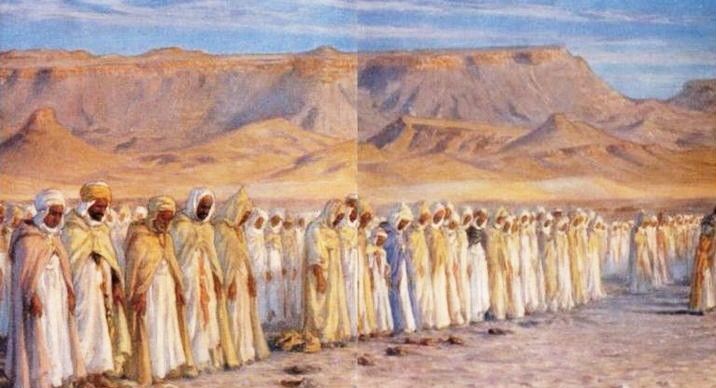
RAMADAN & EID: PATIENCE & GRATITUDE – BBC Thought For The Day, Eid al-Fitr

June 15, 2018


With the Name of God, All-Merciful, Most Merciful

RAMADAN & EID: PATIENCE & GRATITUDE

Thought For The Day, BBC Radio 4, 15th June 2018 (1st Shawwal 1439, Eid al-Fitr)

Imam Dr Usama Hasan

Eid Mubarak! Over the next few days, beginning today, more than a billion people around the world will be celebrating Eid al-Fitr, the Muslim festival that ends the month-long fasting during Ramadan.

For an entire month very year, hundreds of millions of Muslims abstain from all food and drink, including water, during daylight hours: that’s up to sixteen or eighteen hours without eating or drinking, every day. Ramadan, especially during the summer, is a gruelling physical and spiritual ordeal, and mirrors the tradition of fasting in other religions, such as the original Christian observance of Lent. In fact, we know of Jews and Christians in Britain who fast for some of Ramadan, and Muslims who fast during Lent. Despite many conflicts, the world’s great religions have so much in common!

Fasting can have numerous health benefits, although it is not recommended for pregnant women or those with certain medical conditions. The BBC Horizon programme, Eat, Fast & Live Longer, broadcast in 2012, documented healthy weight loss and increased neuron growth in the brain caused by periods of hunger. The episode looked at the 5:2 diet, involving fasting two days a week, and also at several days of consecutive fasting. Well, Ramadan involves 30 days of consecutive fasting. And outside of Ramadan, the Islamic tradition recommends fasting precisely two days per week, or at least three days per month.

On a spiritual level, fasting represents patience, whilst eating and drinking should involve gratitude: after a long fast, even a glass of water feels like a luxury. The Prophet Muhammad taught that “one who eats gratefully is like one who fasts patiently,” and that the best form of fasting was that of King David, or Prophet Dawud, who would fast on alternate days. This is ideal, partly because it represents the ultimate balance of patience and gratitude.

In the Qur’an, there is much praise of those who are “extremely patient and extremely grateful,” especially in response to the vicissitudes of time. Patience and gratitude are two intertwined halves, two sides of the same coin of faith: we are required to have patience through troubled times, and show gratitude in good times.

For Muslims, showing gratitude to God includes being grateful to people through whom we receive God’s favours. Gratitude also includes using our God-given talents, skills and faculties for good and noble purposes, rather than for engaging in mischief and evil.

Fasting is a metaphor for life: difficulties are followed by ease. Breaking the fast at the end of each day, and at the end of the month, is a foretaste of heavenly bliss. So go on, treat yourself for Eid: you’ve probably deserved it!

Inner Aspects of Ramadan

August 23, 2011

With the Name of Allah, All-Merciful, Most Merciful

Inner Aspects of Ramadan

Three Levels of Fasting

Imam al-Ghazzali, in his Ihya’ ‘Ulum al-Din (Revival of the Sciences of Religion), describes the following three levels of fasting (cf. Inner Dimensions of Islamic Worship, publ. Islamic Foundation, which is a translation by the late Mukhtar Holland of an extract from the Ihya’):

  1. Fasting of the body: abstaining from food, drink and sex
  2. Fasting of the tongue: abstaining from backbiting, gossip, slander, idle talk, etc.
  3. Fasting of the heart and soul: abstaining from the remembrance of anything or anyone except God and engaging constantly in dhikr Allah, the mention or remembrance of God

Patience & Gratitude (Sabr & Shukr)

Allah says often in the Qur’an (e.g. 14:5, 34:19, 42:33), especially in regard to the ups and downs of life and history that constitute the Days of God (ayyam Allah), “… In this there are Signs for every extremely patient one, given to much gratitude.” (sabbar shakur, both intensive active participles derived from sabr and shukr, respectively)

The Prophet (peace be upon him) taught, “One who eats gratefully is like one who fasts patiently.” (al-ta’im al-shakir ka l-sa’im al-sabir, a sound hadith found in the Sunan collections)  Thus, eating wholesome food with thanks to God is spiritually equal to depriving oneself of food and drink for the sake of God.

Some of the early Muslim authorities (Salaf) said, especially in explaining the above Qur’anic ayah, “Faith has two halves: half of faith is patience; the other half is gratitude.” (al-iman nisfan: nisf sabr wa nisf shukr)

Thus, as Imam Ibn al-Qayyim explains, Patience and Gratitude are two sides of the same coin of faith: we are required to have patience in troubled times, and show gratitude to God in good times.  This is why these two qualities are mentioned in the Qur’an alongside lessons from time and history, or the Days of God.

Showing gratitude to God includes being grateful to people through whom we receive God’s favours. It also includes using our God-given talents, skills and faculties for good and noble purposes, rather than for disobeying God and engaging in mischief and evil: all good actions thus become part of the worship of God.

Imam Ibn al-Qayyim, further explains the importance of balancing these two qualities to achieve true faith and grow closer to God, with the following simile: “Patience and Gratitude are like the two wings of a believer in their flight to their Lord.”

Another beautiful teaching of the Prophet, peace be upon him, that reinforces these themes, is the following: “Wonderful is the situation of the believer! If he or she is afflicted by misfortune, he or she is patient, and this is good for him or her.  If he or she is touched by good fortune, he or she is grateful, and this is good for him or her.  This (grace) is not available to anyone except the believer!” (A sound hadith transmitted by Bukhari and Muslim)

(For further reading, refer to Patience and Gratitude by Ibn al-Qayyim, trans. Huda Khattab, publ. Dar al-Taqwa, London)

Life & Death

The Prophet (peace be upon him) famously taught that “The person fasting enjoys two moments of happiness: (1) happiness upon breaking the fast and (2) happiness upon meeting the Lord.”

Thus, the joy of iftar or Fitr (breaking the fast) is a foretaste of the joy of meeting God.

The daily cycle of fast and break-fast is a symbol of life and death: the daily fast symbolises the constraints, difficulties and tribulations of life; the daily break-fast symbolises the joy of death and meeting God, for the believer.

These inner meanings are wider: the entire month of fasting symbolises the tribulations of life, whilst ‘Id al-Fitr (the Festival of Breaking the Fast) symbolises the joy of meeting God.

The practice of I’tikaf (Seclusion in the Mosque) during the last ten days and nights of Ramadan, partly in order to seek the greatest night of the year, also contains reminders of these themes, amongst many other benefits.  Seclusion in the mosque entails devoting time to prayer, remembrance of God and other types of worship, avoiding worldly matters completely and minimising profane thought and talk.  Seclusion affords much time for silence and reflection.  The time of I’tikaf, i.e. the last third of Ramadan, is followed immediately by the ‘Id celebration.

I’tikaf may thus be seen and felt as a foretaste of our time in the grave, followed by ‘Id, which we hope is a foretaste of Paradise!

The authentic Sunnah (Way of the Prophet, peace be upon him) is that women may also stay in the mosque also for the spiritual seclusion of I’tikaf: many of the Prophet’s wives and female disciples engaged in this practice.  Mosques should thus be available to women for this uplifting bodily-and-spiritual practice.

Ramadan Cheer, Generosity and Spirit

As described by his Companions, Allah be pleased with them, the Prophet, peace be upon him, was the most generous of people and was especially generous during the month of Ramadan: even more generous than the winds that herald live-giving rains.  He, peace be upon him, himself explained why this was so: it was because the Archangel Jibril (Gabriel), the Ruh al-Qudus (Spirit of Holiness or Holy Spirit), would visit him daily to rehearse the Qur’an with him, consolidating during each Ramadan all that had been revealed of the Qur’an so far.  In the final Ramadan of the Prophet’s life, Jibril rehearsed the Qur’an with him twice, indicating that the revelation of the Qur’an was almost complete.  All the minor variations in the Qur’anic revelation were thus superseded by this “final rehearsal” (al-‘ard al-akhir), as it is known in Qur’anic studies.

Much may be learnt from this breathtaking meeting of Spirits (the Prophet Muhammad, the Noble Qur’an and the Archangel Gabriel) during Ramadan in Madinah during that Blessed Age:

  • The importance of visiting each other to strengthen spiritual contact.  The Prophet, peace be upon him, would sometimes complain to Gabriel outside Ramadan that the latter did not visit him enough, upon which the verse of the Qur’an was revealed, describing the movements of the angels, “We do not descend, except by the command of your Lord …” (19:64)
  • The blessed practice of rehearsing as much as one knows of the Qur’an during Ramadan, especially with someone who has preserved it equally or better (e.g. a teacher or colleague).  This should be done whether a person knows one verse or ten, one surah or ten, and in the case of preservers of the whole Qur’an (huffaz), one recitation (qira’ah) or ten.
  • The blessings of spirituality and generosity that arise from the above two matters: the Prophet’s generosity peaked during Ramadan due to these two factors.

Thus, Ramadan is the month of: fasting, recitation of the Qur’an, remembrance of God, generosity, mercy, charity and Jihad (struggling against all forms of evil).  And just as our Christian friends speak about “Christmas cheer,” Muslims should manifest the “Ramadan cheer, generosity and spirit.”

Tips for Getting the Most out of Ramadan

The following obvious tips may be derived from the Divine guidance to the Prophet, peace be upon him, “So when you have completed and become free (of worldly matters), stand (in worship).  And to your Lord, turn your desire!” (94:7-8)

  • Take time off work if possible
  • Get important worldly matters out of the way before Ramadan, e.g. house/car/furniture purchases and maintenance, bills, payments, etc.
  • Devote time to worship in all its forms, e.g. prayer, fasting, charity, reconciliation amongst people, serving people and the rest of God’s creation in general

May Allah shower upon us all the blessings of Ramadan, this year and every year.

© Usama Hasan