Posts Tagged ‘Allah’

Did the Prophet Muhammad protect an icon of Mary and Jesus inside the Ka’bah at Mecca?

December 25, 2025

Bismillah. This alleged incident, at the time of the Conquest of Mecca when the Ka’bah was purified of the 360+ idols around it and inside it, was famously mentioned by Martin Lings (Abu Bakr Siraj al-Din), may God have mercy upon him, in his book, Muhammad: His Life Based on the Earliest Sources.

In 1990, JIMAS (UK) published a then-recent exchange of letters in the Saudi Gazette between Abu Bilal Mustafa al-Kanadi [The Canadian], may God have mercy upon him, and Martin Lings, in which Kanadi was very critical of Lings: one of his criticism was Lings’ inclusion of this story in his Sirah (Biography of the Prophet), based on its mention by al-Waqidi in Kitab al-Maghazi (The Book of Military Expeditions) and al-Azraqi (d. 250 H) in Akhbar Makkah (History of Mecca). That exchange is reproduced at the bottom of this post, for reference. Neither correspondent referred to the Hadith expert Imam Dhahabi’s discussion and comment on this report.

Imam Dhahabi’s discussion and comment on this report
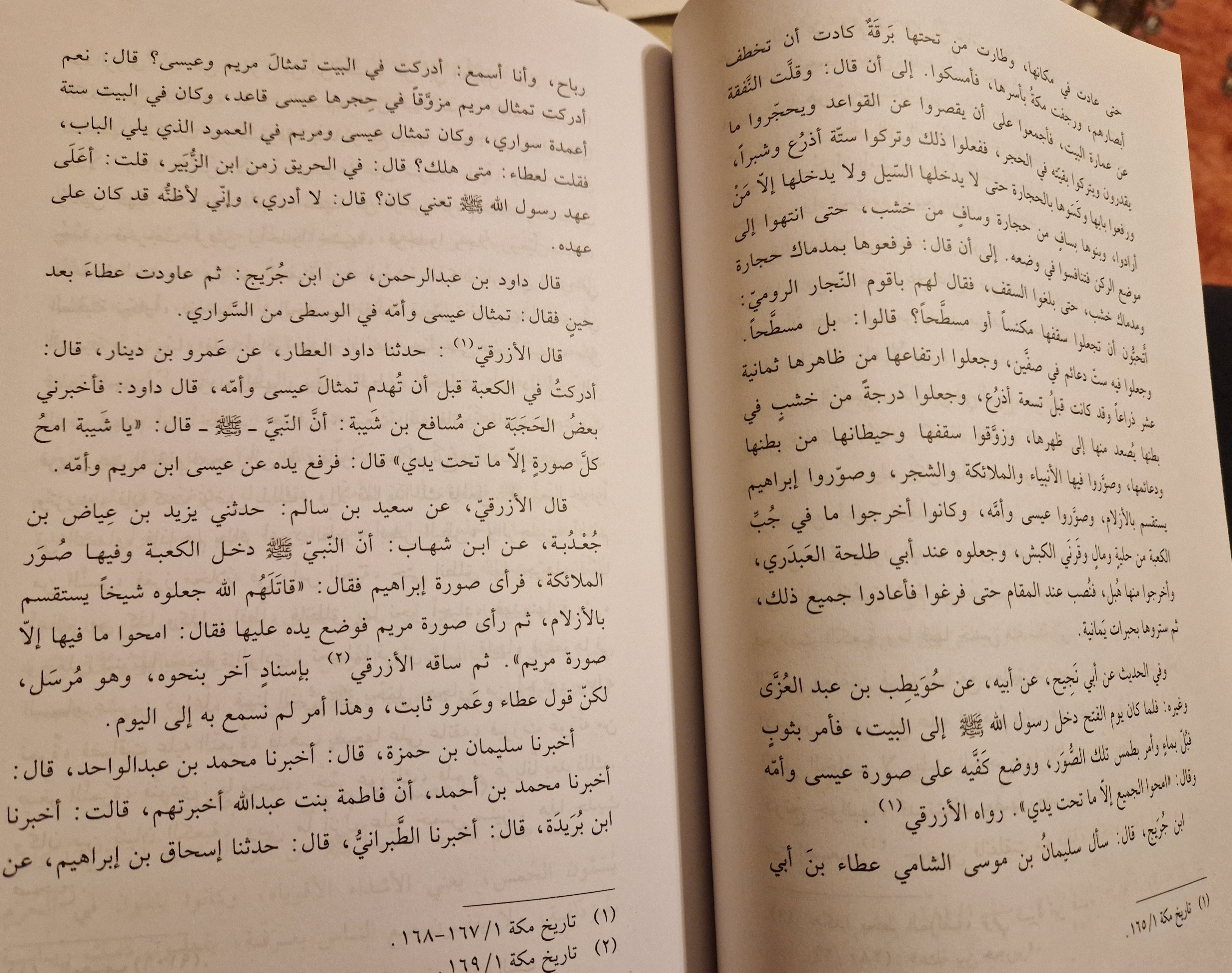
Muslim [bin Khalid] al-Zanji [The Negro], on the authority of Ibn Abi Najih, on the authority of his father [Abu Najih], who said: Men of the Quraysh sat and reminisced about the building of the Ka’bah … [The builders] depicted prophets, angels and trees inside it. They depicted Ibrahim [Abraham] divining with arrows. They depicted Jesus and his mother …

And in the hadith on the authority of Ibn Abi Najih, on the authority of his father [Abu Najih], on the authority of Huwaytib bin ‘Abdul ‘Uzza and others: On the day of the Conquest [of Mecca], the Messenger of God, may God bless him and grant him peace, entered the House [of God]. He ordered for a cloth to be moistened and commanded that those pictures be effaced. He placed his palms upon the picture of Jesus and his mother and said, “Erase them all, except what is beneath my hand.” Al-Azraqi transmitted it.[1]

Ibn Jurayj said: Sulayman bin Musa al-Shami [The Syrian] asked ‘Ata’ bin Abi Rabah [The Mufti of Mecca] whilst I was listening, “Did you come across the statue[2] of Mary and Jesus in the House [of God]?” He replied, “Yes, I came across the embellished[3] statue of Mary with Jesus standing in her lap. There used to be six support pillars inside the House: the statue of Jesus and Mary was in the pillar nearest the door.” So I [Ibn Jurayj] asked ‘Ata’, “When was it destroyed?” He replied, “In the fire during the rule of Ibn al-Zubayr.” I asked, “Do you mean that it was there during the time of the Messenger of God, may God bless him and grant him peace?” He replied, “I do not know, but I think it was there during his time.”

Dawud bin ‘Abdul Rahman said, on the authority of Ibn Jurayj: I then repeated the question to ‘Ata’ after a while. He said, “The statue of Jesus and his mother was in the middle pillar.”

Al-Azraqi said: [4] Dawud al-‘Attar [The Perfumier] narrated to us, on the authority of ‘Amr bin Dinar, who said, “I came across the statue of Jesus and his mother in the Ka’bah before it was demolished.”[5] Dawud said: One of the gatekeepers informed me on the authority of Musafi’ bin Shaybah that The Prophet, may God bless him and grant him peace, said: “O Shaybah! Erase all the pictures except what is beneath my hand.” When he lifted his hand, there was Jesus, son of Mary, and his mother.

Al-Azraqi said, on the authority of Sa’id bin Salim: Yazid bin ‘Iyad bin Ju’dubah narrated to me, on the authority of Ibn Shihab [al-Zuhri] that The Prophet, may God bless him and grant him peace, entered the Ka’bah containing pictures of angels. He saw the picture of Ibrahim [Abraham] and said, “May God fight them! They made him an old man divining with arrows.” He then saw the picture of Mary and placed his hand upon it, saying, “Erase all [the pictures] in it, except the picture of Mary.”

Al-Azraqi then quoted similarly with another chain of transmission. It is mursal [“hanging loose”; discontinuous].[6] But the statements of ‘Ata’ and ‘Amr are established (thabit): this is a matter that we had never heard of until today. [emphasis added]

Source:

al-Imam Shams al-Din Muhammad bin Ahmad bin ‘Uthman al-Dhahabi (d. 748 H / 1347 CE),
Siyar A’lam al-Nubala’ (Biographies of Notable Nobles),
ed. Dr Bashshar ‘Awwad Ma’ruf,
Mu’assasat al-Risalah, Beirut, 1422 H / 2001 CE, vol. 26, pp. 67-69


[1] The editor of the Siyar adds the reference: Akhbar Makkah,1/165

[2] Timthal: icon, picture or statue

[3] Muzawwaq: embellished, especially with quicksilver (mercury) or an amalgam of quicksilver and gold.

[4] The editor of the Siyar adds the reference: Akhbar Makkah,1/167-8

[5] The Ka’bah has been destroyed and rebuilt several times in its history due to floods, fires, earthquakes, etc.

[6] Mursal especially refers to a Follower (Tabi’i) quoting the Prophet directly without naming the Companion (Sahabi) from whom he must have heard the narration. In this case, Ibn Shihab [al-Zuhri] is a Follower and quotes The Prophet directly without naming the intervening Companion(s), so the narration is mursal. There is much difference of opinion amongst Hadith scholars about the authenticity of the mursal hadith. See the section on this topic in Suhaib Hasan, An Introduction to the Science of Hadith, Al-Qur’an Society, London, 1994, pp. 24-29.

ANALYSIS & BIOGRAPHICAL NOTES from Imam Dhahabi’s Tadhkirat al-Huffaz (Memoire of the Preservers of Hadith)

A. IBN SHIHAB AL-ZUHRI (50-124 H): The most knowledgeable of the Preservers of Hadith (Huffaz)

Abu Bakr Muhammad bin Muslim bin ‘Ubaydillah bin ‘Abdillah bin Shihab bin ‘Abdillah bin Zuhrah bin Kulab, The Qurayshi, The Zuhri, The Madinan, The Imam. He narrated Hadith from Ibn ‘Umar, Sahl bin Sa’d, Anas bin Malik, Mahmud bin al-Rabi’, Sa’id bin al-Musayyib, Abu Umamah bin Sahl and their generation of minor Companions (Sahabah) and major Followers (Tabi’in). The following narrated Hadith from him: Ma’mar bin Rashid, Awza’i, Layth, Malik, Sufyan bin ‘Uyaynah and multitudes besides them.

Layth said, “I never saw a person of knowledge at all more comprehensive than Zuhri. He would narrate about encouragement of worship: you would say that he only specialised in that. If he narrated about the (history of) the Arabs and genealogies, you would say that he only specialised in those. If he narrated about the Qur’an and the Sunnah, then similarly … He was amongst the most generous of people … He used to drink honey a lot, but not eat apples. He said: I never forgot any knowledge after my heart had deposited it … No-one has had patience upon knowledge like my patience; no-one has spread knowledge the way I have.”

Nafi’ checked his memorisation of the Qur’an with Zuhri. (Zuhri memorised the entire Qur’an in eighty nights.) ‘Umar bin ‘Abdul ‘Aziz said, “No one remains more knowledgeable about past traditions than Zuhri.” Malik said, “Ibn Shihab remained, but there was no-one similar to him in the world.” Ayyub al-Sikhtiani said, “I did not see anyone more knowledgeable than him.” ‘Amr bin Dinar said, “I did not see the dinar (gold coin) and the dirham (silver coin) less important to anyone than Zuhri: they were like dung to him.” Others said: Zuhri was an accomplished soldier. He used to dye his grey hair with henna.

[The Umayyad Caliph] Hisham bin ‘Abdul Malik asked Zuhri to dictate some knowledge to one of his sons, so he dictated four hundred hadiths to him. Zuhri then assembled People of Hadith and narrated those four hundred hadiths to them. He met Hisham again after a month or so: Hisham tested him by telling him that the book of dictated hadiths had been lost. Zuhri called a scribe and dictated the hadiths again: these were compared against the original book, and there was not a single difference, not even in a letter. Makhul was asked, “Who was the most knowledgeable person you ever met?” He replied, “Ibn Shihab.” He was asked, “Then who?” He replied, “Ibn Shihab.”

Some further statements of Ibn Shihab al-Zuhri:

“Al-Qasim bin Muhammad said to me: I see that you are eager for knowledge: Shall I not then point you to one of its great vessels? … ‘Amrah bint ‘Abdul Rahman, for she grew up in ‘Aisha’s lap. So I came to her and found her to be an ocean that could not be exhausted.”

“I never revised knowledge at all.”

“Whoever would like to memorise hadiths, should eat raisins.”

“A Preserver of Hadith is only born once in forty years.”

“God has not been worshipped via anything better than knowledge.”

B. ‘AMR BIN DINAR, THE PRESERVER OF HADITH, THE IMAM (c. 46-126 H)

The person of knowledge of the Sanctuary (Haram). Abu Muhammad of Jumayh (their freed-slave), The Meccan, al-Athram. He heard traditions from Ibn ‘Abbas, Ibn ‘Umar, Jabir bin ‘Abdillah, Bajalah bin ‘Abdah, Anas bin Malik, Abu l-Sha’tha’, Tawus and many others. Shu’bah, Ibn Jurayj, the two Hammads [Hammad bin Zayd & Hammad bin Salamah], the two Sufyans [Sufyan bin ‘Uyaynah & Sufyan al-Thawri], Warqa’ and many besides them, all narrated from him.

Shu’bah said, “I did not see anyone more established in Hadith than ‘Amr.” Ibn Mahdi said: Shu’bah said to me, “I did not see anyone like ‘Amr bin Dinar.” Yahya al-Qattan and Ahmad [bin Hanbal] said, “He was more established than Qatadah.” ‘Abdullah bin Abi Najih said, “I never saw anyone at all with more (juristic) understanding than ‘Amr, not even ‘Ata’, Mujahid or Tawus.”

Ibn ‘Uyaynah said, “He would not leave the mosque. He would ride a donkey. I only ever saw him sitting down. He was a person of understanding (jurist). He would narrate by meaning … Trustworthy, Trustworthy, Trustworthy … He divided the night into three: he would sleep for a third, teach his hadiths for a third and pray for a third … We did not have anyone with more understanding, knowledge or preservation than ‘Amr bin Dinar.”

The Hafiz Ibn al-Mufaddal established him as one of the four amongst the top generation (of hadith-narrators) after the year 40 H: Zuhri, ‘Amr bin Dinar, Qatadah & Abu Ishaq al-Sabi’i.

C. MUSLIM BIN KHALID AL-ZANJI (100-180 H): “the Imam, the Man of Understanding (Jurist) … Shaykh of the Sanctuary (Haram).”

Muslim bin Khalid al-Zanji [The Negro]. He narrated Hadith from the likes of Ibn Abi Mulaykah, Ibn Shihab al-Zuhri, ‘Amr bin Dinar, Zayd bin Aslam, Hisham bin ‘Urwah, ‘Abdul Malik Ibn Jurayj and their generation. He devoted himself to Ibn Jurayj for a while, gained juristic understanding and gave fatwas, concentrating on knowledge. He transmitted the (Qur’anic) letter variations (huruf) from ‘Abdullah bin Kathir, and gave Shafi’i permission to give fatwas. Shafi’i, Marwan al-Tatiri, Humaydi, Musaddad, Hakam bin Musa, the Hafiz Ibrahim bin Musa, Hisham bin ‘Ammar and others narrated Hadith from him.

Azraqi said, “He was a person of understanding and worship. He would fast all the time.”

Yahya Ibn Ma’in said, “There is no problem with him.”

Ibn ‘Adi said, “He is good in Hadith: I hope there is no problem with him.”

Abu Dawud said, “Weak in Hadith.”

Bukhari said, “Rejected in Hadith.”

Abu Hatim said, “He is not used as a proof.”

Ibrahim al-Harbi said, “He was the Jurist of Mecca.”

Suwayd said, “He was named ‘The Negro’ because of his black skin.” But Ibn Sa’d and others said that he was blonde: he was termed ‘The Negro’ via the irony of opposite meaning. Dhahabi: He died in 180 H, aged 80.

ISLAM & THE SEVEN STAGES OF GRIEF

November 29, 2025
3D Isometric Flat Vector Conceptual Illustration of Stages Of Grief, Denial, Anger, Bargaining, Depression, Acceptance

ISLAM & THE SEVEN STAGES OF GRIEF

Bismillah.

Previously, there were five stages of grief generally accepted amongst psychologists as:
1. SHOCK, 2. DENIAL, 3. ANGER, 4. BARGAINING, 5. ACCEPTANCE/HOPE.

Recently, some people have extended this to seven stages by adding GUILT & DEPRESSION after ANGER. But it varies from person to person: these are not necessarily linear stages: they may be cyclical or iterative.  Hence, the 7 stages of grief are:

1. SHOCK, 2. DENIAL, 3. ANGER, 4. GUILT, 5. DEPRESSION, 6. BARGAINING, 7. ACCEPTANCE/HOPE.

0. GRIEF

0.1 THE PROPHET MUHAMMAD’S YEAR OF GRIEF AND SORROW

The Prophet, peace be upon him, experienced his “year of grief or sorrow” (عام الحزن,  ‘Ām al Huzn) during his tenth year of prophethood, ie 3 years before the Hijra, when his only wife Khadija, his stalwart support for 25 years, died, followed closely by his uncle, Abu Talib, his tribal protector as chief of his clan, the Banu Hashim.

(I’m grateful to the Christian priest, whose name I’ve forgotten, who attended our Qur’an discussion circles c. 2013-14 and wished to co-write with me a Christian-Muslim guide to grief, since he had read about the Prophet’s “Year of Grief.” I didn’t have the time or capacity to work on it at the time, but he gave me an idea that has come to fruition today, God-willing.)

0.2 PROPHET YA’QUB BIN ISHAQ BIN IBRAHIM, aka ISRA’IL (JACOB BEN ISAAC BEN ABRAHAM, aka ISRAEL)

In the Surah named after his 11th son, Prophet Yusuf (Joseph), grief is prominent in the “best of stories.”

قال إني ليحزنني أن تذهبوا به وأخاف أن يأكله الذئب وأنتم عنه غافلون

(Yusuf, Joseph, 12:13)

When his elder 10 sons ask for his permission to take Joseph for a day out, Jacob combines grief (for the past) with fear (of the future):

“It grieves me that you take him away (from me), and I fear that the wolf will devour him whilst ye are heedless of him.”

When his sons lie to him, saying that the wolf had indeed eaten Joseph, Jacob sees through their lies and resigns himself to “beautiful patience” (صبر جميل).

Later, when his first 10 sons manage to come home without the 12th son Binyamin (Benjamin) as well, Jacob expresses extreme sorrow for Joseph, reiterates his commitment to “beautiful patience” and goes blind from grief:

وتولّى عنهم وقال ياأسفى على يوسف وابيضت عيناه من الحزن فهو كظيم 

(Yusuf, Joseph, 12:84)

Although Ibn Kathir quotes the commentator Dahhak as explaining kazeem here to mean ka’eeb: intense grief and broken in spirit, i.e. depressed, the vast majority of commentators agree that Prophet Jacob displayed beautiful patience and did not complain to anyone except God, restraining his sorrow and grief. Others amongst the Salaf said that he waited eighty years to see his beloved son Joseph, for whom his grief equalled that of seventy bereaved parents, but he “was never pessimistic about God.” (Tafsir Tabari)

1. SHOCK

1.1 UMAR BIN AL-KHATTAB: SHOCK, DENIAL, ANGER, ACCEPTANCE

Our Master Umar was in shock, denial and anger upon the news of the Prophet’s death, threatening to kill anyone who said that the Prophet was dead, until Our Master Abu Bakr said the famous words:

“Whoever worshiped Muhammad, he should know that Muhammad has died. Whoever worships God, he should know that God is The Ever-Living, Who Will Never Die.”

Abu Bakr also recited from Surah Āl Imran (The Family of Amram), the verses confirming that Muhammad was mortal and speaking of the possibility of his death, for every soul has a predestined moment of death, praising those who show gratitude. Umar commented: “It was as though I had never heard these verses before!” He rapidly reached the stage or station of Acceptance. 

وما محمد إلا رسول، قد خلت من قبله الرسل، أفائن مات أو قتل انقلبتم على أعقابكم، ومن ينقلب على عقبيه فلن يضرّ الله شيئا، وسيجزي الله الشاكرين

وما كان لنفس أن تموت إلا بإذن الله كتابا مؤجلا، ومن يرد ثواب الدنيا نؤته منها، ومن يرد ثواب الآخرة نؤته منها، وسنجزي الشاكرين

Āl Imran, The Family of Amram, 3:144-5)

3. ANGER

3.1 KHALID BIN WALEED 

Our Master Khalid bin Waleed, the Sword of God, was overcome by grief on his deathbed when he realised he wouldn’t be granted martyrdom on the battlefield (because no human’s sword could defeat the Sword of God). He was especially frustrated at knowing how many people are cowards. Khalid’s last words were:

“I have a wound on every inch of my body, but I’m dying like an aging camel. May the eyes of cowards never (find rest in) sleep!”

ASIDE:

Khalid bin Waleed’s extraordinary life and military genius and career deserve to be immortalised in an epic poem in English. I have written opening and closing stanzas for such a poem. I pray that I or someone else is able to complete it:

OPENING STANZA: THE TALE OF KHALID BIN WALEED 

If your eyes do weep and your heart does bleed

At the state of the Muslim nation, 

Then remember the tale of Khalid bin Waleed:

It is enough as inspiration. 

[…]

CLOSING STANZA: KHALID BIN WALEED’S LAST WORDS

“I’m dying like a camel

(Or like an aging sheep):

May the eyes of cowards 

Never rest in sleep!”

TRIVIUM: THE KHALID BIN WALEED PARK IN PESHAWAR, PAKISTAN

This park goes by its Urdu/Farsi name: Khalid bin Waleed Bagh. The locals are Pathan (Pashtun), and so pronounce it somewhat Farsi style, as follows, making the ‘a’ sound like ‘o’: Kholid bin Woleed Bagh. British Empire troops stationed in Peshawar heard it pronounced like this, switched the syllables around and nicknamed the park, the “Colly-Wolly Bean Bag.”

3.2 TRUE PATIENCE IS ONLY AT THE FIRST BLOW

Anas bin Malik narrated that the Prophet, may God bless him and grant him peace, passed by a woman who was weeping at a graveside, mourning a child she had lost. The Prophet said, “Fear God, and have patience.” She replied, not recognising him, “Get away from me, for you have not been afflicted by my affliction!” She was told that it was the Prophet who had spoken to her, so she came to his door and, finding no doorkeepers, said to him, “I did not recognise you.” He replied, “(True) Patience is only at the first blow.” (Bukhari & Muslim)

TRIVIUM: The Arabic for “blow” here is sadmah, root SDM. The name Saddam is derived from this as an intensive form, thus meaning, “One who delivers crushing blows.”

4. GUILT: JOSEPH’S BROTHERS

The 10 elder brothers of Prophet Yusuf (Joseph) had feelings of grief at the perceived favouritism of their father towards Yusuf. This manifested in Anger when some of them suggested killing him. Others felt guilty about this and suggested throwing him into a well, which is what they did. They must have had some feelings of guilt around this, and around lying to their father about Yusuf being eaten by a wolf. After many years, once they were reunited with Yusuf and his magnanimity, they went through the stages of Bargaining and Acceptance/Hope, admitting their mistakes to both Yusuf and their father Ya’qub. (Yusuf, Joseph, 12:91 & 12:97)

7. ACCEPTANCE/HOPE: NO FEAR, NO GRIEF

The Prophet, may God bless him and grant him peace, endured his Year of Grief with immense patience and acceptance. This is the way of “living in the moment” as “children of the moment in time” (abna’ al-waqt) without fear (of the future) or grief (for the past), the way of the “Friends of God” or saints. The phrase, “There will be no fear upon them, nor will they grieve,” occurs repeatedly in the Qur’an for the People of the Garden in the Hereafter. However, it applies to certain, select people in this world also:

أَلَآ إِنَّ أَوْلِيَآءَ ٱللَّهِ لَا خَوْفٌ عَلَيْهِمْ وَلَا هُمْ يَحْزَنُونَ
ٱلَّذِينَ ءَامَنُوا۟ وَكَانُوا۟ يَتَّقُونَ

Lo! Truly, the Friends of God:

There is no fear upon them, 

Nor do they grieve:

Those who have achieved faith (inner security)

And were always saving themselves (taqwa).

(Yunus, Jonah, 10:62-63)

In Imam al-Qushayri’s Treatise on Tasawwuf (Sufism), the first topic he discusses after brief biographies of early Sufis is that of Time (Waqt), where he says that “the Sufi is the son of his time,” i.e. that he lives in the moment. Shaykh Hamza Yusuf linked this to the above Qur’anic verse during a conversation in Abu Dhabi, 2022.

It is narrated from the Prophet, may God bless him and grant him peace, that this applies to people in this world “who did not fear when the people had fear, and did not grieve when people grieved.” They will be surrounded by Light in the Hereafter, and made to sit upon pulpits of Light: even the Prophets and the Martyr-Witnesses will be amazed by their station. (Tafsir Tabari, #17,730 & #17,731)

Usama Hasan

London, UK

8th Jumada al-Thani 1447

28th November 2025

WHO ARE THE MU’ALLAFATU QULUBUHUM (THOSE WHO ARE GIVEN ZAKAT TO BRING THEIR HEARTS NEAR) ?

April 22, 2024

WITH THE NAME OF GOD, ALL-MERCIFUL, MOST MERCIFUL

WHO ARE THE MU’ALLAFATU QULUBUHUM
(THOSE WHO ARE GIVEN ZAKAT/ALMS TO BRING THEIR HEARTS NEAR) ?

Allah (God) says in the Qur’an:

إِنَّمَا الصَّدَقـٰتُ لِلفُقَراءِ وَالمَسـٰكينِ وَالعـٰمِلينَ عَلَيها وَالمُؤَلَّفَةِ قُلوبُهُم وَفِى الرِّقابِ وَالغـٰرِمينَ وَفى سَبيلِ اللَّهِ وَابنِ السَّبيلِ ۖ فَريضَةً مِنَ اللَّهِ ۗ وَاللَّهُ عَليمٌ حَكيمٌ

Truly, the [compulsory] alms are only for: the poor; the needy;
those who work upon them (in alms-collection);
those whose hearts are brought near;
those whose necks are under the yoke;
those who have taken on a major debt;
in the path of God; and the child of the path [i.e. the traveller]:
an obligation from God: for God is Knowing, Wise.

(Surah al-Tawbah, Repentance, 9:60 Hafs)

TAFSIR TABARI ON THIS VERSE (SUMMARISED)

Imam Tabari (224-310 H / 839-923 CE) said:

As for “those whose hearts are brought near”: they were a group of people who were brought closer to Islam (through the incentive of being given wealth), who could not be (openly) supported. The alms benefited themselves and their close families. Such people were: Abu Sufyan bin Harb, ‘Uyaynah bin Badr, Aqra’ bin Habis and similar heads of tribes.

Similar to what we have said, has been said by the People of Interpretation.

Mention of those who said that: Ibn ‘Abbas, Yahya bin Abi Kathir, Zuhri, Mujahid, Hasan [Basri] and Qatadah. Yahya bin Abi Kathir said that such heads of tribes were given a hundred she-camels[1] each by the Prophet, may God bless him and grant him peace; a few others were given fifty each. Zuhri added that this phrase includes Jews and Christians who submit to God (via Islam), even if they are rich.

The people of knowledge differed about whether or not this category exists today, and whether anyone today may be given charity to bring them closer to Islam?

Some of them said: The category of “those whose hearts are brought together” is invalid today: there is no share in the compulsory alms except for those in need, those in the path of God and those who work upon them (in alms-collection).

Mention of those who said that: Hasan [Basri], ‘Amir [bin Sharahil al-Sha’bi] and ‘Umar bin al-Khattab.

When ‘Uyaynah bin Hisn came to [Caliph] ‘Umar bin al-Khattab [seeking to be given alms], ‘Umar said, “The Truth (has come) from your Lord: so whoever wishes to, may have faith; and whoever wishes to, may deny!” [Surah al-Kahf, The Cave, 18:29 Hafs] That is, there is no bringing near today.

‘Amir [bin Sharahil al-Sha’bi] said: Those whose hearts were brought near, were only during the time of the Prophet, may God bless him and grant him peace: when Abu Bakr, may God Exalted’s Mercy be upon him, came to power, incentives stopped.

Others said: “Those whose hearts are brought near” exist in every age, and they have a right to some alms.

Mention of those who said that: Abu Ja’far [i.e. Imam Muhammad bin ‘Ali al-Baqir].

Abu Ja’far [i.e. Imam Tabari, who had his own, independent Madhhab] said:

The correct saying from amongst those, in my view, is that God has made alms to serve two purposes. One of them is to fill any gaps (of need) amongst the Muslims. The other is to aid and strengthen Islam. Whatever charity is to aid Islam and strengthen its means, this is given to both rich and poor. This is because it is not given to a person due to his need for it, but is given to him in order to aid the religion. This is just like what is given to a person for the sake of sacred war (Jihad) in the way of God, for that is given to him whether he is rich or poor, and not to fill his gap (of need). Similar are those whose hearts are brought near: they are given that charity even if they are rich: such giving to them seeks to benefit the matter of Islam and seeks to strengthen and fortify it.

The Prophet, may God bless him and grant him peace, gave to whomever amongst those whose hearts were to be brought near, after God opened the victories for him: Islam spread and its people increased in honour. Thus, there is no proof in the argument of the one who says that “Today, no-one is to be brought near to Islam (via alms), because the people of Islam, by their great number, are prevented from being reached by anyone who wishes to give them alms.” The Prophet, may God bless him and grant him peace, gave to those whom he gave whilst they were in the condition that has been described.

TAFSIR IBN KATHIR ON THIS VERSE (SUMMARISED)

Imam Ibn Kathir (700-774 H / 1300-1373 CE) said:

As for “those whose hearts are brought near”:

[1] Some were those who were given (alms) that they may submit (in Islam).

An example is that the Prophet, may God bless him and grant him peace, gave to Safwan bin Umayyah out of the spoils (of war) at Hunayn, a battle that the latter had witnessed as a polytheist. Imam Ahmad, Muslim and Tirmidhi narrated that Safwan bin Umayyah said, “The Messenger of God, may God bless him and grant him peace, gave me (wealth) on the Day of Hunayn whilst he was the most hated of people to me, but he continued giving me (wealth) until he became the most beloved of people to me.”

[2] Some were given (alms) in order that they improve their Islam (having already submitted) and for their hearts to become firm.

An example is that he distributed (wealth), on the Day of Hunayn, to a group of tribal chiefs and nobles amongst the released captives: a hundred camels each. He said, “Truly, I give to a man whilst another is more beloved to me, fearing that God will upend him (the former) on his face in the Fire of Jahannam.”

In the two Sahihs (of Bukhari and Muslim), there is on the authority of Abu Sa’id that ‘Ali sent a small nugget of gold, (encased) in its rock, to the Prophet, may God bless him and grant him peace, from Yemen: he divided it amongst four people: Aqra’ bin Habis, ‘Uyaynah bin Badr, ‘Alqamah bin ‘Ulathah and Zayd al-Khayr, and said, “I bring them near.”

[3] Some were given (wealth) because of the hope that their peers would submit (in Islam).

[4] Some were given (wealth) in order to elicit alms from those around them, or

[5] To ward off harm from the border lands around the territory of the Muslims.

The place for detailed explanation of this is the books of jurisprudential rulings (furu’).

And God knows best.

Can alms be given to those being brought closer to Islam, after the (time of) the Prophet, may God bless him and grant him peace ?

There is difference of opinion in this matter.

It is narrated from ‘Umar, ‘Amir al-Sha’bi and a group (of authorities) that they are not to be given (alms) after his time, because God has honoured Islam and its people, established them firmly in the land and made the necks of others subservient to them.

Others said: Rather, they are to be given (alms) because he, Blessings and Peace be upon him, gave to such people after the Opening of Mecca [i.e. when Islam had already become established] and the Breaking of (the Tribe of) Hawazin [at Hunayn]: this was a situation where alms might be needed, so these could be diverted to them.

IMAM ABU BAKR AL-JASSAS (HANAFI) & QADI ABU BAKR IBN AL-‘ARABI (MALIKI)[2]

Imam Abu Bakr al-Jassas (305-370 H / 917-981 CE) said in his Ahkam al-Qur’an (Rulings of the Qur’an), whilst discussing the premise that alms are essentially for the poor:

If it is said that “those whose hearts were brought near” would receive alms without being poor, it would be said in reply: they would not receive it as alms; rather, alms would be collected for the poor, but some of it would be given to those whose hearts are brought near, in order to repel their harm against the poor amongst the Muslims, and that the former might submit in Islam, thus strengthening the poor amongst the Muslims. Thus, they would not receive it as alms; rather, alms were collected and used for the benefit (masalih) of the Muslims. This is because wealth given for the poor may be diverted for their benefit (masalih) if the Imam [i.e. the Caliph] rules over them and decides about matters beneficial to them (masalih).

[Summarised] Qadi Abu Bakr ibn al-‘Arabi (468-543 H / 1076-1148 CE) said in his Ahkam al-Qur’an (Rulings of the Qur’an):

THE NINTH ISSUE [regarding this verse of the Qur’an]

About “those whose hearts are brought near,” there are four views:

  1. They were given alms because of the weakness of their certainty, until this became strong. Those who said that they were Muslims, cited the examples of Abu Sufyan bin Harb, Aqra’ bin Habis and ‘Abbas bin Mirdas. Those who said that they were non-Muslims, cited the example of ‘Amir bin Tufail. Those who said that they were polytheists with an inclination towards Islam, cited the example of Safwan bin Umayyah.

  2. Yahya bin Abi Kathir named them as leaders of the following [ten] tribes or clans: Banu Umayyah, Banu Jumah, Banu ‘Amir, Banu Asad, Banu Hashim, Banu Fazarah, Banu Tamim, Banu Nasr, Banu Sulaym and Thaqif.

  3. Ibn Wahb narrated from Malik that he said: Safwan bin Umayyah, Hakim bin Hizam, Aqra’ bin Habis, ‘Uyaynah bin Badr, Suhayl bin ‘Amr and Abu Sufyan were amongst “those whose hearts were brought near,” and that on the day [of Hunayn] when Safwan was given alms, he was a polytheist.

    Asbagh said, on the authority of Ibn al-Qasim: “Those whose hearts were brought near” were Safwan bin Umayyah and certain men of Quraysh.

  4. The Shaykh Abu Ishaq named them to be forty men of the Quraysh and other tribes, including leaders and others.

THE TENTH ISSUE

There has been a difference of opinion as to whether [the category of] “those whose hearts are brought near” persisted.

Some of them said: They [i.e. this category of people] disappeared. This view was expressed by a group (of authorities), and was held by Malik.

Some said: They remain, because the Imam [i.e. the Caliph] may need to bring people near to Islam. [Caliph] ‘Umar discontinued them [i.e. this category of people] because of what he saw of the might of the religion.

My view is that if Islam is strong, this category disappears; but if such people are needed, they are given their share, just as the Messenger of God, may God bless him and grant him peace, used to give the share. For it is narrated in the Sahih (authentic hadiths): “Islam began as a stranger, and will return as a stranger, as it began.” [Sahih Muslim]

THE ELEVENTH ISSUE

If we say that this category of people has disappeared, then their share returns to all the (other) categories, or to whichever (category or categories) the Imam decides, according to the previous explanation regarding the root of the disagreement.

Zuhri said: Half of their share is to be given to those who frequent the mosques. There is no evidence for this view. The first view (mentioned above) is more correct.


[1] A hundred camels represents a lot of wealth: it is the same as the diyah (blood-money) for murder. In today’s financial terms, it would approximate up to a hundred thousand US dollars or UK pounds, or even more. (AQS)

[2] The Hanafi and Maliki schools are complementary, in the sense that they represent the schools of Reason (Ahl al-Ra’y) and Tradition (Ahl al-Hadith) respectively. A holistic approach to the Sunnah combines these complementary approaches, as per Imam Shatibi (cf. Al-Shanqiti, On Madhhabs & Taqlid, AQS, 1445/2023)

On Following Madhhabs – Shaykh Muhammad al-Amin al-Shanqiti

September 16, 2023

CONTEMPLATING THE QUR’AN

FOLLOWING THE QUR’AN AND SUNNAH:
BENEFITING FROM THE MADHHABS HOLISTICALLY
AND NOT FOLLOWING ONE MADHHAB RIGIDLY

Shaykh Muhammad al-Amin al-Shanqiti

An abridged translation of the author’s tafsir of
an ayah of the Qur’an (Surah Muhammad, 47:24)
from his Adwa’ al-Bayan (Lights of Eloquence)

with an

INTRODUCTION

by

Shaykh Suhaib Hasan

1st Rabi’ al-Awwal 1445 H / 16th September 2023

© Al-Qur’an Society, 1445 H / 2023 CE – All rights reserved.

Contemplating the Qur’an is a treatise on following the Qur’an and the Sunnah, benefiting from the codified Madhhabs holistically whilst not following any one Madhhab rigidly or blindly, by Shaykh Muhammad al-Amin al-Shanqiti (1325-1393 H / 1907-1973 CE) of Mauritania and Saudi Arabia, one of the greatest authorities on the Qur’an of the 20th century CE and the 14th Islamic century. The treatise is an abridged translation of the author’s tafsir of an ayah of the Qur’an (Surah Muhammad, 47:24) from his monumental tafsir, Adwa’ al-Bayan (Lights of Eloquence).

In this treatise, the author covers the following topics:

  • Muslims must contemplate the Qur’an, learn it, understand it and act by it
  • There is no basis for those who say that the above is only for the mujtahids 
  • A muqallid is not an ‘alim: a follower of opinions does not have knowledge
  • Saying that we cannot follow the Qur’an and Sunnah but must follow the codified Madhhabs, is one of the greatest falsehoods
  • A critique of Sawi’s view that holding to the apparent meanings of the Book and the Sunnah is one of the principles of kufr (blasphemy)
  • On Ijtihad, Taqlid and Madhhab; permissible and impermissible taqlid

He concludes with eleven “Important Notes About This Issue,” including:

the Four Imams were united in forbidding their blind taqlid;

Haram/Halal cannot be stated on the basis of taqlid;

the difference between taqlid & ittiba’;

our stance towards the Imams;

every Imam has been criticized for going against the Sunnah in particular matters (with examples);

muqallids must distinguish between their Imam’s actual views and those added to his Madhhab after him;

it is impermissible for a Muslim to believe that the era of ijtihad is closed, and that only four Madhhabs must be followed;

turning away from the Qur’an and Sunnah in favour of the Four Madhhabs is one of the greatest problems that has beset Muslims over recent centuries.

We have added five important Appendices.

Firstly, an earlier, concise fatwa from the Shaykh about following Madhhabs, given in 1385 H (1964/5 CE). The Shaykh moved on from this fatwa somewhat, but we include it for the sake of integrity.

Secondly, we mention the Shaykh’s broadening out from his basis of the Maliki Madhhab after becoming exposed in Mecca and Medina to diverse views and schools from around the Muslim world.

Thirdly, we correct a contemporary misquote from Imam Ibn al-Qayyim, whom the Shaykh quotes extensively in his full discussion.

The misquote attempts to portray Ibn al-Qayyim as saying the opposite of his actual position, so we are happy to set the record straight.

Fourthly, we show how Imam Shatibi also presented a holistic approach to the Madhhabs.

Finally, we include Zamakhshari’s classic, educational and entertaining poem about Madhhabi sectarianism.

Jesuit Muslims

December 28, 2016

JESUIT MUSLIMS (OR MUSLIM JESUITS)

From Ibn ‘Arabi, al-Futuhat al-Makkiyyah [The Meccan Revelations], Dar Ihya’ al-Turath al-‘Arabi [House of Revival of Arab Heritage], Beirut, 1418/1997, vol. 1, pp. 286-291.

[NB: This is not about the Christian, Roman Catholic Order of Jesuits, but refers to Muslims who also follow Jesus in their practices and states.]

With the Name of God, All-Merciful, Most Merciful

Chapter 36: On the recognition of [Muslim] Jesuits …

Know, may God strengthen you, that the Way of Muhammad, may God bless him and grant him peace, includes all previous ways, and that the latter have no validity in this world save that of them that is endorsed by the Muhammadan Way, by the endorsement of which they remain valid. We exert ourselves in worship via these ways because Muhammad, may God bless him and grant him peace, endorsed them, not because the prophet specific to that way in his time endorsed it.

This is why the Messenger of God, peace be upon him, was given “Comprehensive Words” (jawami’ al-kalim). Thus, when a Muhammadan does a work, and the entire responsible universe today of human and jinn is Muhammadan, for there is no divine way in the universe today except for the Muhammadan Way, this worker from the [Muslim] nation may coincide in his work, with an opening in his heart and path, with a path of one of the previous prophets that it is included in this Way, which endorses it and the result of following it. Thus, such a person will be attributed to the founder of that way and called Jesuit (‘Isawi), Mosaic (Musawi) or Abrahamic (Ibrahimi) …

There is no prophethood with a way (shar’) after Muhammad, may God bless him and grant him peace … This is why it is mentioned in the report that “the people of knowledge are the inheritors of the prophets” …

The original Jesuits are the disciples and followers of Jesus … the second Jesuits are those who followed Jesus directly without a veil and then followed him via Muhammad, may God bless him and grant him peace, and there is an experiential difference between the two. This is why the Messenger of God, may God bless him and grant him peace, said about such a person, “Truly, he will be rewarded twice” [cf. Qur’an, The Story, 28:52-55], and similarly, such a person has two different sets of inheritances, openings and experiences, in each of which he is only attributed to the relevant prophet.

These are the second Jesuits. Their base of principles is to unify God, free of all likenesses. This is because the initiation into existence of Jesus, peace be upon him, was not by way of a human male, but by the manifestation (or likeness) of a spirit in the form of a human [Q. Mary 19:17]. This is why the doctrine of God manifested in a form dominated the nation of Jesus, son of Mary, over all other nations: they make forms, images and likenesses in their churches, and worship within themselves by focusing their attention on these. The origin of their prophet, peace be upon him, was by a likeness, so this reality has continued amongst his nation until now.

Then, when the Way of Muhammad, may God bless him and grant him peace, came and forbade likenesses (images), whilst he, peace be upon him, included the reality of Jesus, and his way in his, he laid the path for us, peace be upon him, “that we worship God as though we see Him,” in imagination, which is the meaning of making images. But he forbade us from this (making images) in the sensual/physical world, lest physical forms or images [of God] should appear in this nation.

Furthermore, this particular teaching, “Worship God as though you see Him,” was not stated to us by Muhammad, may God bless him and grant him peace, directly; rather, it was stated by Gabriel, peace be upon him, and it was he who appeared in the total likeness of a man to Mary at the conception of Jesus, peace be upon him … We were the ones addressed by that statement, which is why it occurs at the end of the tradition, “This was Gabriel: he wished for you to know, since you would not ask”; or in other narrations, “He came to teach the people their religion,” or “He came to you, to teach you your religion” …

Moreover, you should know that their [the Jesuits’] base of principles also includes the teaching that comes from ways other than that of Jesus, peace be upon him, “… but if you were not able to see Him, then truly, He sees you.”

Our shaykh, Abu l-‘Abbas al-‘Uraybi, may God have mercy upon him, was Jesuit at the end and extent of his path, which was the beginning of ours [i.e. the beginning of Ibn ‘Arabi’s path was Jesuit]; then we moved to a solar, Mosaic opening, then to Hud, peace be upon him, then to all the prophets, peace be upon them. After that, we moved to Muhammad, may God bless him and grant him peace. Thus was our matter in this path, may God establish us in it and not divert us from the straightness of the path …

Jesuits have extremely active aspiration, their prayers are answered and their speech is heard. One of the signs of the Jesuits, if you wish to recognise them, is that you will see each of them having mercy and compassion towards everyone, whoever they are, no matter what religion they follow. They entrust other people’s matters to God: when they address the servants of God, they do not utter anything that will constrain people’s hearts in respect of anyone at all.

Another of their signs is that they see the best in everything and only goodness flows from their tongues … e.g.

(1) What is narrated from Jesus, peace be upon him, that he saw a pig and said to it, “Go safely, in peace.” Upon being asked about this, he replied, “I train my tongue to speak goodness.”

(2) The Prophet, may God bless him and grant him peace, passed by a carcass and said, “How beautifully white are its teeth!” whereas those with him said, “How horrible is its stench!”

(3) The Prophet, may God bless him and grant him peace, commanded the killing of snakes in specific situations and informed us that God loves courage, even if only in killing snakes. However, despite this, when he was in the cave in Mina where Surah al-Mursalat [Qur’an Chapter: The Messengers, no. 77] descended upon him (it is known as the Cave of al-Mursalat until today – I have entered it, seeking blessings), a snake came out of its hole and the Companions rushed to kill it but it frustrated them, the Messenger of God, may God bless him and grant him peace, said, “Truly, God saved it from your evil just as He saved you from its evil.”

[3a] He thus named it (killing snakes) “evil”, even though it is a commanded matter, just like His saying, Most Exalted, regarding retribution, “The reward of a bad deed is a bad deed like it; [so whoever forgives and reforms, their reward is with God: truly, He does not love the oppressors” – Q. Consultation 42:40] – He named retribution a “bad deed” and encouraged forgiveness.

Thus, the Prophet’s eye, may God bless him and grant him peace, only fell upon the best aspect of the carcass. Similarly, the friends of God only see the best in everything they look at: they are blind to the faults of people, although not to faults in themselves, for they have been commanded to avoid these. Similarly, they are deaf against listening to obscenity and dumb against uttering bad words, even if this is allowed in some places.

This is how we have known them [the Jesuits], so Glory be to the One who purified them, chose them and guided them to the straight path. “They are the ones whom God has guided: by their guidance, follow!” [Q. Cattle 6:90]

This is the station of Jesus, peace be upon him, within Muhammad, may God bless him and grant him peace, for he preceded him in time and these states were transmitted from him by the latter. God said to His Prophet [Muhammad], may God bless him and grant him peace, after mentioning several prophets including Jesus, peace be upon them, “They are the ones whom God has guided: by their guidance, follow!” [Q. Cattle 6:90].

However, the station of Messenger determines that the beautiful must be explained and distinguished from the ugly in order to be known, as the Exalted said, “… that you may explain to the people what has been revealed to them” [Q. The Honey-Bee 16:44]. Thus, when he explained the bad side of a person, it was by inspiration from God, such as his saying about someone, “What a bad son of his tribe!” Similarly, Khidr killed a lad and said about him, “His nature had been stamped as an ingrate unbeliever (kafir)” and reported that if he had left him alive, he would have behaved badly towards his parents. He also said, “I did not do that of my own accord.” [i.e. it was by God’s command; Q. The Cave 18:74, 80-82]

Thus, the essences of such people, whether prophets or saints, are characterised by kind speech, seeing the best in everything and listening attentively only to goodness. However, if there is the occasional exception to this, it is by divine command, not from their own tongue.

This is what we have mentioned of the states of the Jesuits, as facilitated by God upon my tongue, “and God speaks the Truth and He guides to the Way.” [Q. The Confederates 33:4]


Abridgment and Translation: Usama Hasan

London, 28th December 2016 / 29th Rabi’ al-Awwal 1438


JESUS & MUHAMMAD, PEACE BE UPON THEM – NOTES ON THEIR REALITY IN ISLAMIC TEACHING

December 25, 2016

With the Name of God, All-Merciful, Most Merciful


JESUS & MUHAMMAD, PEACE BE UPON THEM


– NOTES ON THEIR REALITY IN ISLAMIC TEACHING


in the hope of helping to increase Christian-Muslim mutual understanding, an absolute necessity for our times


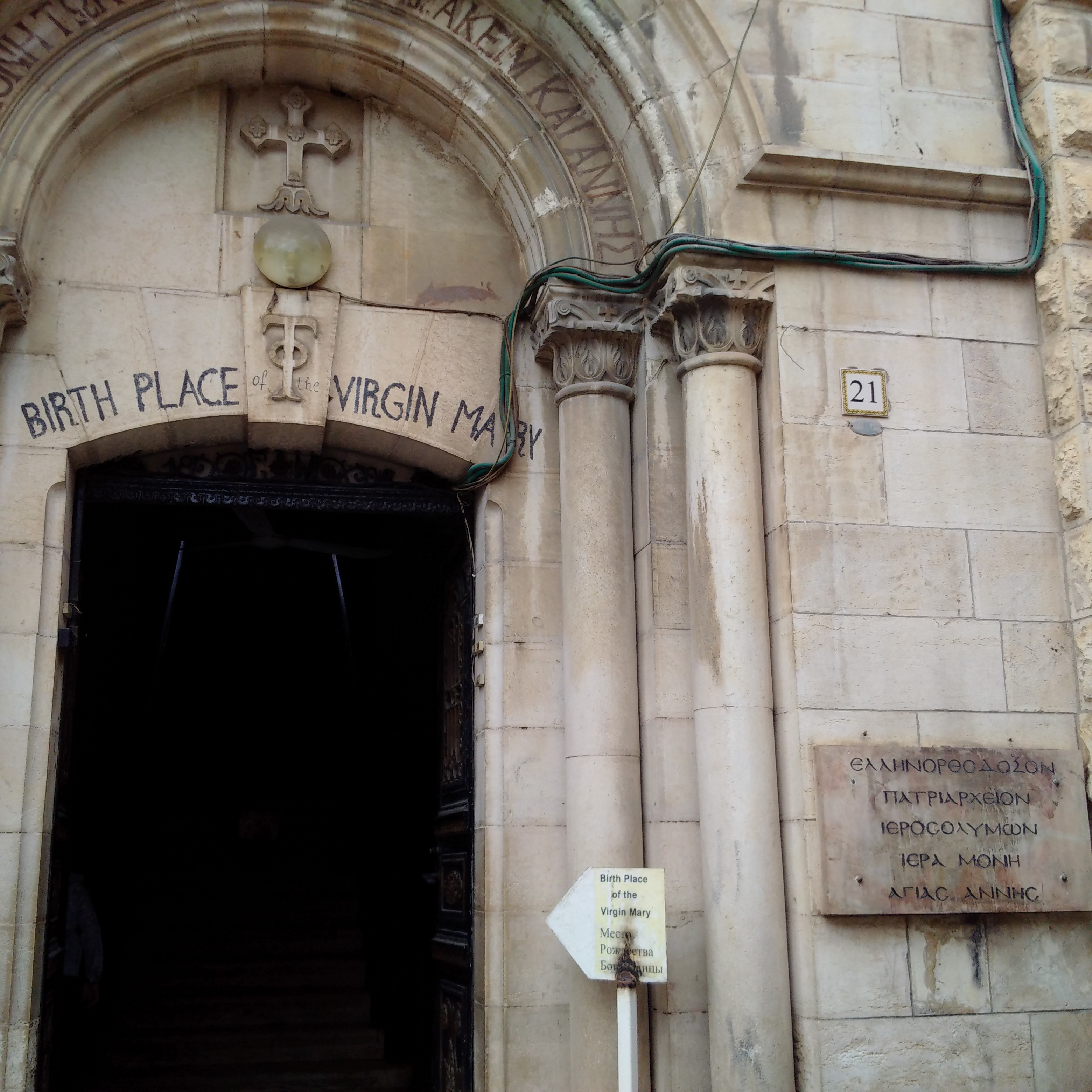
img_20150512_141045

Birthplace of the Virgin Mary according to Christian tradition, on the edge of Temple Mount (al-Masjid al-Aqsa / al-Haram al-Sharif) in Jerusalem. The story of her birth is also in the Qur’an, Family of Imran, 3:33-37. Photo (c) Usama Hasan, May 2015

img_20150512_140326

Chapel inside the birthplace of the Virgin Mary according to Christian tradition, on the edge of Temple Mount (al-Masjid al-Aqsa / al-Haram al-Sharif) in Jerusalem. The story of her birth is also in the Qur’an, Family of Imran, 3:33-37. Note that this site was largely preserved as a place of pilgrimage and prayer for Christians throughout Islamic rule over Jerusalem since c. 640 CE / 17 AH. Photo (c) Usama Hasan, May 2015

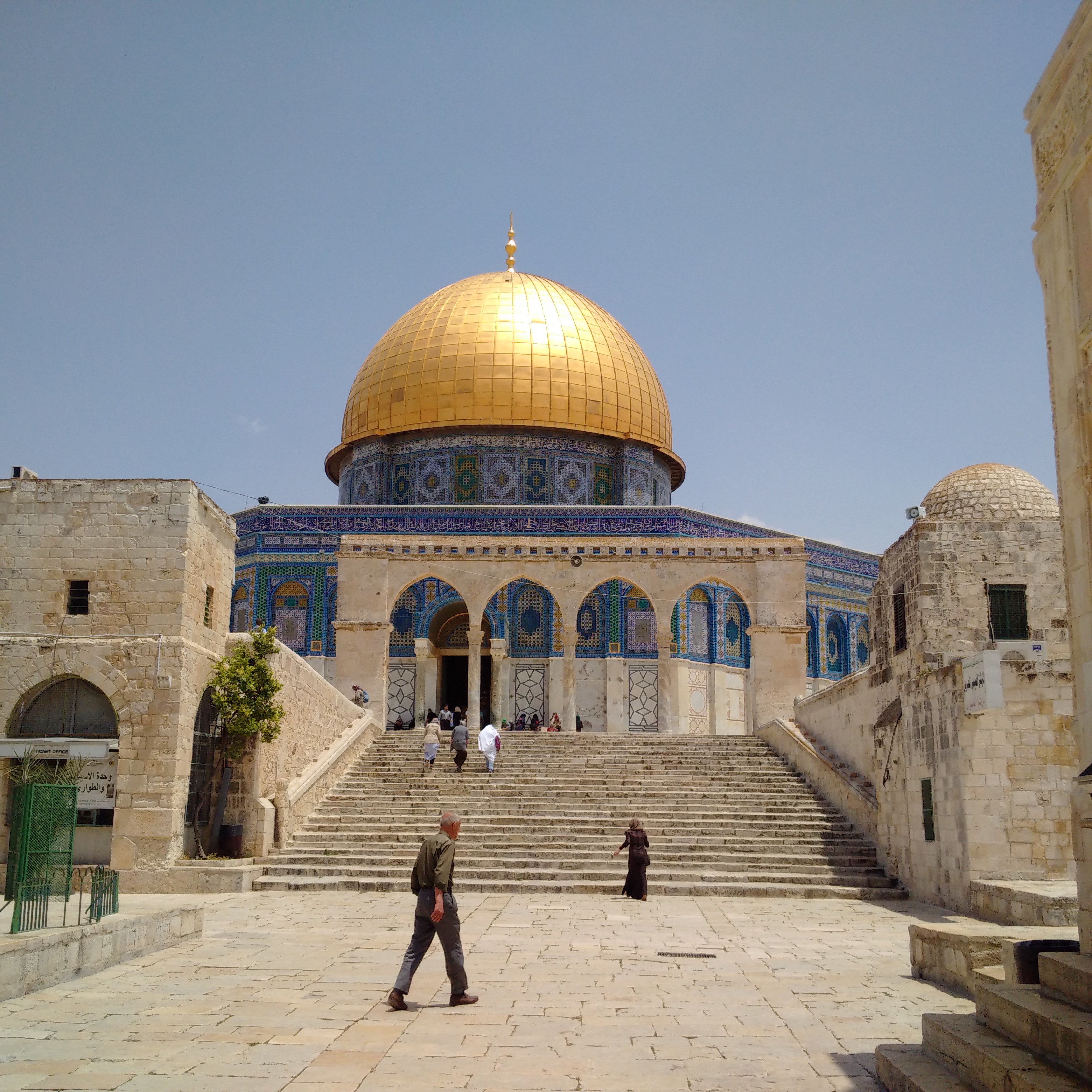
Dome of the Rock mosque atop Temple Mount (al-Masjid al-Aqsa), where Mary, Jesus & Muhammad all worshipped God, according to Islamic tradition.

Dome of the Rock mosque atop Temple Mount (al-Masjid al-Aqsa), where Mary, Jesus & Muhammad all worshipped God, according to Islamic tradition. Muhammad was brought here by Gabriel, in one of the many magnificent meetings between these two great Spirits. Photo (c) Usama Hasan, May 2015

With the Name of God, All-Merciful, Most Merciful


JESUS & MUHAMMAD, PEACE BE UPON THEM


– NOTES ON THEIR REALITY IN ISLAMIC TEACHING


in the hope of helping to increase Christian-Muslim mutual understanding, an absolute necessity for our times


  1. WORD (LOGOS)


1.1 JESUS CHRIST: A WORD OF GOD & THE WORD OF GOD

Jesus Christ is “the Word of God” cast unto Mary (Q. Women 4:171), “a Word from God” (Q. The Family of ‘Imran 3:45) as well as being a Prophet and Messenger of God. In Christian Greek scriptures and theology, the Word of God is the Logos.


1.2 THE QUR’AN: THE WORD OF GOD

The Qur’an is also the Word of God. Hence, there is a parallel between Jesus and the Qur’an, both being Logos.


1.3 LOGOS, CREATION & COMMAND

This Word or Logos is specifically associated with the Divine Word and Command, “Be!” (Kun) that Creates all Being (Kawn), and thus there is a parallel between Jesus and Adam (Q. The Family of ‘Imran 3:59). Islamic views on philosophical discussions about “being” all derive from this Qur’anic teaching about the Divine Command, “Be!”

To God belong the Creation and the Command (Khalq and Amr: Q. The Heights 7:54). Everything besides God is outwardly Creation, inwardly a Divine Command (Sufi teaching, based on the above Qur’anic verse). Adam and Jesus are prime reminders of this reality.

It is for this reason that theologians who later wrote Islamic creeds often included the phrase “… the Word of God: it originated from, and returns to, Him” (kalam Allah, minhu bada’a wa ilayhi ya’ud).

And just as the “Christological controversies” exercised early Christians about the nature of Christ: human, divine or both, the “Qur’anological controversies” exercised early Muslims about the nature of the Qur’an: created, divine or both. For example, both traditions produced the identical phrase “not made” or “uncreated” in attempts to resolve this theological paradox between Creation and Command. The Christian formulation about Jesus being “begotten, not made” (mawlud, ghayr makhluq in Arabic) is identical in its second half to the Islamic formulation about the Qur’an being “the word of God, uncreated” (kalam Allah, ghayr makhluq).


  1. SPIRIT


2.1 JESUS CHRIST: A SPIRIT FROM GOD & THE SPIRIT OF GOD

Jesus Christ is also a “Spirit from God” (Q. Women 4:171), and in several hadiths, the “Spirit of God” (Ruh Allah).

When Christians accepted his message, Prophet Muhammad would often ask them to affirm in addition, after the basic declaration of faith, “There is no god but God; Muhammad is the Messenger of God,” that “Jesus Christ is the Messenger of God and His Word, cast unto Mary, and a Spirit from Him,” echoing the Qur’an.


2.2 ARCHANGEL GABRIEL: A SPIRIT OF GOD & THE SPIRIT OF GOD

The Archangel Gabriel is also the “Spirit of God” (Q. Mary 19:17), sent to Mary in human form to cast the Word of God into her, resulting in “the effusion of the Spirit of God” into Mary and into her womb (Q. The Prophets 21:91, Prohibition 66:12).

Specifically, Gabriel in the Qur’an is the Holy Spirit (Ruh al-Quds or “Spirit of Holiness” – Q. The Heifer 2:87, 2:253). According to some commentators, Gabriel is also the all-embracing “Universal/Cosmic Spirit” or “Spirit of the Universe/Cosmos” or simply, “The Spirit” (Al-Ruh), i.e. the Spirit that encompasses all created beings, which is why it is called the “Spirit of God.” (cf. commentaries, including Tafsir Ibn Kathir, on Q. The News 78:38, Destiny 97:4)

The Qur’anic Arabic for Gabriel is Jibril or Jibra’il, the meaning of which is variously given as “servant of God” (‘Abdullah) or “higher realms of the Kingdom of God” (Jabarut Allah), which resonates with Gabriel’s title of being “The Spirit” – cf. e.g. Fath al-Bari of Ibn Hajar al-‘Asqalani.

Note also that it is not only Christians who believe in the Holy Spirit being with them: some Muslims also had this honour; when Prophet Muhammad encouraged his poets such as Hassan bin Thabit during war, he urged them, “Attack them (with your poetry): the Holy Spirit (Ruh al-Quds) is with you!” (Sahih Muslim)


2.3 ADAM & HUMANITY: RECIPIENTS OF GOD’s SPIRIT

Adam, the first full human, received the effusion of God’s Spirit (Q. Rock 15:29, S 38:72), as did all human beings in turn, since they share in his Adam-ness or humanity (Q. Prostration 32:9; hadiths about foetal development in the womb). This is another parallel between Jesus and Adam.

Adam was created in the image of God (authentic hadith), and was taught all the beautiful Names of God, thus surpassing even the angels (Q. The Heifer 2:31-33).


2.4 THE QUR’AN: A SPIRIT FROM GOD

The Qur’an is “a Spirit, from God’s Command” inspired to Prophet Muhammad (Q. Consultation 42:52). Note that the early Islamic controversy over whether the Qur’an was created or uncreated is related to the aspects of Creation and Command mentioned above (section 1.3).

The Qur’an is a Light and Guidance, just as were the Torah and Gospel before it (Q. The Last Supper 5:44,46). Prophet Muhammad is also a Light and Guidance (Q. The Last Supper 5:15-16).


2.5 PROPHET MUHAMMAD’S SPIRIT

In a famous hadith (Sahih Muslim), Aisha described the character (khuluq) of the Prophet as being the Qur’an. The character is the inner aspect of creation (khalq). Therefore, the Prophet’s inner reality (haqiqa Muhammadiyya) or spirit is also Logos, being the Qur’an, which is itself a “Spirit from the Divine Command.”


2.6 INTERACTION OF THE SPIRITS:

GABRIEL — JESUS (LOGOS) — MARY:

Already mentioned above. Note that Mary was chosen “over all the women of the worlds” (Q. The Family of ‘Imran 3:42), and was a female Prophet (nabiyya or Prophetess) according to some leading Muslim theologians such as Ibn Hazm and Ibn Hajar, based on the fact that God sent His Archangel Gabriel directly to her.

GABRIEL — QUR’AN (LOGOS) – -MUHAMMAD:

The Qur’an was revealed from God to Prophet Muhammad by Archangel Gabriel as the Holy Spirit (Ruh al-Quds, Q. The Honey Bee 16:102) and the Faithful or Trustworthy Spirit (al-Ruh al-Amin), directly to the Heart (qalb) of the Prophet (Q. The Poets 26:193-4)

These interactions or relationships show that not only are there parallels between Jesus and the Qur’an, but also between Mary and Muhammad, another aspect of interest for Christian-Muslim dialogue and mutual understanding.


  1. MERCY

Where there is Spirit, there is Mercy. (And Love: the Islamic scholar William Chittick states that the Biblical “Love” and the Qur’anic “Mercy” are very close in meaning: we might say that they are Merciful Love and Loving Mercy.)


3.1 When Adam was created in the image of God, this was especially true of the Divine Names of Mercy. (hadith: disputed authenticity, sound meaning)

3.2 The Qur’anic chapter named “Mary” (19) uses the Divine names “All-Merciful” (al-Rahman) 16 times, “God” (Allah) 7 times and “Lord” (Rabb) 23 times. “Mercy” (rahma) is mentioned a further 4 times, all with regard to Abrahamic Israelite prophets, including a description of Jesus as “a mercy from God” (Q. 19:21). The Qur’anic “mercy” is derived from “the womb” (rahm), thus further resonating with the story of Mary, the only woman mentioned by name in the entire Qur’an; all others are described as mothers, sisters or wives with regard to men.

3.3 All but one of the 114 chapters of the Qur’an begin with the formula, “In the Name of God, All-Merciful, Most Merciful”: the Qur’an is thus inextricably linked with the two foremost Divine Names, being those of Mercy.

3.4 Prophet Muhammad is nothing but a “mercy for the worlds” (Q. The Prophets 21:107) and “most kind and merciful to people of faith.” (Q. Repentance 9:128)


  1. DISCUSSION / CONCLUSIONS

4.1. Although Islam rejects a trinitarian or tri-theistic formulation of God as One (Q. The Last Supper 5:73), the above discussions show how much reverence is accorded to the holy personalities of Jesus Christ and Mary in the Qur’an: Jesus is not “just a prophet”!

4.2. In Islamic teaching, Jesus Christ is one of the manifestations par excellence of spirituality, being a spirit of, or from, God: others are Archangel Gabriel, the Cosmic Spirit, Mary, the Qur’an, Adam and Prophet Muhammad.

4.3 Thus, although Muslims do not believe that God is a trinity of “Father, Son and Holy Ghost/Spirit”, Muslims certainly believe, directly from the Qur’an, that God is “Lord Most Merciful”, that Jesus is a Word and Spirit of God, and that Gabriel is the Holy Spirit and a Spirit of God. Furthermore, the Qur’an is also a Word and Spirit of God, and constitutes the inner reality of the Prophet Muhammad. The Spirit of God was also effused into Adam, and hence into all of humanity.

4.4. All human beings have the potential to be illumined by some of the above divine spirituality and mercy by virtue of sharing in the humanity of the above holy persons, and of being created in imago Dei (the image of God).

4.5. In the Islamic tradition, Jesus and Muhammad are regarded as extremely close, being respectively the last (and “Seals”) of the Israelite and Ishmaelite branches of prophethood deriving from their common Abrahamic ancestry. All prophets are regarded as brothers, and Prophet Muhammad regularly referred to other Abrahamic and Israelite prophets as “my brothers.” He also once joined his index and middle fingers together and declared, “Jesus, son of Mary, and I are this close in this world and the hereafter: there is no prophet between us.” (Sahih al-Bukhari)

4.6. A striking example of the common love and mercy for humanity manifested by both Jesus and Muhammad in the Islamic tradition is as follows:

Prophet Muhammad once spent an entire night awake in worship (in addition to his worship and public duties by day), repeating the following prayer of Jesus Christ for sinners countless times, whilst standing, bowing and in prostration,

“If You (dear God) punish them, they are indeed Your servants;
but if You forgive them, truly You Yourself are the Mighty, Wise!”

(Q. The Last Supper 5:118 – this incident is reported in an authentic hadith widely transmitted by Islamic scholars, from the Sunan-collectors to Ibn Arabi in his Fusus al-Hikam or “Bezels of Wisdom” to Albani in his Sifah Salah al-Nabi or “The Prophet’s Prayer Described”)

4.7 This universal Christian and Muhammadan compassion is a metaphysical reality, and one that Christians and Muslims worldwide need to continue to manifest and enhance, especially in our troubled times. May God bless Prophets Abraham, Moses, Mary, Jesus and Muhammad, peace be upon them and all their followers, and grant us the courage to follow in some of their noble examples.


Usama Hasan

London, 25th December 2016 / 26th Rabi’ al-Awwal 1438 (updated 27/12/2016 // 28/03/1438)


FREEDOM – Islamic reflections on Liberty

December 25, 2016

With the Name of God, All-Merciful, Most Merciful

FREEDOM

Reflections by Imam Usama Hasan, Head of Islamic Studies at Quilliam Foundation, in preparation for the Inspire Dialogue Foundation conference in Cambridge, Saturday 17th September 2016, hosted by Lord Rowan Williams, Emeritus Archbishop of Canterbury

There are many universal human rights: arguably, freedom is one of the basic ones, intertwined with life itself. As Tipu Sultan, the famous Indian resistance leader against the British, exclaimed: “better to live one day, free as a lion, than to live as a slave for a thousand years.” Caliph Omar once berated one of his commanders, who had followed the common pre-Islamic medieval wartime practice of enslaving the women and children of a defeated army, asking: “how could you enslave people whom God had created free?!” echoing Moses’ defiant response to Pharaoh in the Qur’an (26:22), which asks: “is this the favour, of which you are reminding me, that you have enslaved the Children of Israel?”

Theologically, true faith is based on free will and free choice: any practice that is not free, including faith and religious observance, cannot be genuine. Hence the famous Qur’anic declaration (2:256), “There is no compulsion in religion!”

The centrality of freedom to faith raises important issues: drugs, alcohol, mental illness, carnal lusts and social pressures all mean that our choices and decisions in life are not totally free. How, then, are these actions judged by fellow humans and by God? In particular, one of the goals of religious practice has always been to remove internal shackles that inhibit our expression of humanity, enabling greater self-awareness and realisation of our potential. Thus, a tradition of the Prophet Muhammad says that “the world is a prison for the believer,” i.e. the moral person, and great sages survived imprisonment because they were, internally, free spirits. Ideas of freedom and liberty have, of course, strongly shaped the modern world since the 18th century with the abolition of slavery, French and American republican ideals and anti-colonial independence movements.

It is my firm belief that the great philosophers, sages and prophets: Moses, Mary, Christ and Muhammad, Buddha and Confucius, and men and women of God through the ages, supported the liberation of men and women of all colours, races and religions, children and slaves, individuals and populations, from the yokes of tyranny and oppression. Our modern heroes in this regard range from Wilberforce to Jefferson to Gandhi, Jinnah, Martin Luther King and Mandela.

But today, we still have our modern forms of slavery: bonded and child labour; entire multiple-generation families working in sweatshop factories; highly-organised international rings dealing in human trafficking, including that of children, for financial and sexual exploitation. Therefore, we need to address the above problems by rekindling the same spirit that historically liberated children from labour into education, slaves from enslavement into liberty, peoples from colonisation into independence, and people of colour from segregation and apartheid into civic equality.

Tony Blair, whilst UK Prime Minister, once said in an historic speech on Capitol Hill that “to be American is to be free.” In reality, as spiritual-animal beings made in the image of the Divine, to be human is to be free. Now, let’s continue with working towards inner and outer freedom, and sharing it with our fellow travellers, with the goal of reaching our full and common humanity.

Ibn ‘Ashur’s Discussion of the Hadith Cursing Women Who Wear Wigs, Tattoos, Etc.

July 25, 2016

Bismillah.  Many people think that tattoos are absolutely prohibited (haram) in Islam due to a particular hadith. The following discussion from Ibn ‘Ashur shows that this is not the case.

Ibn ‘Ashur’s Discussion of the Hadith Cursing Women Who Wear Wigs, Tattoos, Etc.


Translation: Usama Hasan, 25/07/2016


(1) al-Tahrir wa al-Tanwir


وليس من تغيير خلق الله التصرّف في المخلوقات بما أذن الله فيه ولا ما يدخل في معنى الحسن؛ فإنّ الختان من تغيير خلق الله ولكنّه لفوائد صحيّة، وكذلك حَلق الشعر لفائدة دفع بعض الأضرار، وتقليمُ الأظفار لفائدة تيسير العمل بالأيدي، وكذلك ثقب الآذان للنساء لوضع الأقراط والتزيّن، وأمّا ما ورد في السنّة من لعن الواصلات والمتنمّصات والمتفلّجات للحسن فممّا أشكل تأويله. وأحسب تأويله أنّ الغرض منه النهي عن سمات كانت تعدّ من سمات العواهر في ذلك العهد، أو من سمات المشركات، وإلاّ فلو فرضنا هذه مَنهيّاً عنها لَما بلغ النهي إلى حدّ لَعن فاعلات ذلك. وملاك الأمر أن تغيير خلق الله إنّما يكون إنما إذا كان فيه حظّ من طاعة الشيطان، بأن يجعل علامة لِنحلة شيطانية، كما هو سياق الآية واتّصال الحديث بها. وقد أوضحنا ذلك في كتابي المسمّى: النظر الفسيح على مشكل الجامع الصحيح .


(Tafsir or Qur’an-commentary of: {ولأضلنهم ولأمنينهم ولآمرنهم فليبتكن آذان الأنعام ولآمرنهم فليغيرنَّ خلق الله}


[Satan says: I will misguide them, and give them false hopes; I will instruct them and they will surely cut the ears of cattle; I will instruct them and they will surely change the creation of God, al-Nisa’, 4:121])


Ibn ‘Ashur says:


Modifying creation, in ways that God has allowed, or in beautification, is not included in “changing the creation of God.” For example: circumcision changes the creation of God but is done for health benefits; shaving the hair gives the benefit of preventing some harms; clipping the nails is for the benefit of facilitating manual work; ear-piercing for women is for adornment with ear-rings, etc.


As for what is narrated in the Sunnah of cursing women who use false hair and wigs, pluck their eyebrows [to thin them] or widen the gaps in their teeth, all for the sake of beauty, this is one of the difficult matters for interpretation (ta’wil). [Translator’s note: some versions of this hadith also mention women who have tattoos on their bodies.] I think its interpretation (ta’wil) is that its purpose is to forbid characteristics that were regarded as those of prostitutes or idolatrous, polytheistic women in that era. Otherwise, even if we regard these as (still) being forbidden, the forbiddance would not reach the extent of cursing the women who do so.


In short, “changing the creation of God” only applies where there is an element of obeying Satan by placing a symbol of a Satanic quality, as is the context of the verse and its link with the hadith. We have explained this clearly in my book, al-Nazar al-Fasih ‘ala mushkil al-Jami’ al-Sahih (A Broad Analysis of the Difficulties of [al-Bukhari’s] Authentic Collection).


(2) Maqasid al-Sharia


Maqasid al-Shari’a (3/268-9; Wizarah al-Awqaf al-Qatariyya)

Chapter/Section fi maqasid al-tashri’ al-‘aammah: ‘umum shari’ah al-islamOn the General Principles of Legislation: the Generality of the Law of Islam:


We are certain that customs of people have no right – as customs – to be forced upon other people in legislation, nor in fact to be forced upon the original people themselves. It is true that the Sharia does force such customs upon people if they do not depart from them, because their adhering to these [customs] and the customs being central to them renders the customs as equivalent to mutual conditions that are considered in their mutual transactions, since the people are silent about anything contrary to these. An example of this is the view of Malik, may God have mercy upon him, that a noble woman is not to be forced to suckle her child, since that is the custom generally accepted by the people, and thus is like a [legal] condition. Hence, he applied the saying of God Exalted, “Mothers are to suckle their children for two complete years” (2:233) specifically to women not of the nobility, or regarded its context as being for the purpose of specifying the time period and not for the principle of mandating suckling.


From this principle of imposing a tribe’s customs upon it within the Sharia, where such customs are related to obligatory or prohibited matters, it becomes clear to us how to clear the confusion and huge problems presented to the jurists in understanding many of the Sharia’s prohibitions of matters where one finds no harm at all.


For example: the prohibition of wigs, widening gaps between teeth and tattoos for women, in the hadith of Ibn Mas’ud that “the Messenger of God, may God bless him and grant him peace, cursed women who use or ask for wigs or tattoos, or who pluck their eyebrows or widen the gaps between their teeth for the sake of beauty, who change the creation of God.” The mind is almost lost at this, because it sees categories of adornment for women, of which other types are permitted, such as rouge, perfume and the tooth-stick, so it is confounded by such a strict forbiddance of them.


The correct interpretation of this in my view, and which I have not seen anyone else articulate, is that those states [qualities and actions] were symbols of a woman’s weak morality amongst the Arabs. Thus, the forbiddance of these was a forbiddance of the underlying cause, or of becoming exposed to a violation of dignity or honour because of these states [qualities and actions].

Click here for a PDF with both extracts from Ibn ‘Ashur, in Arabic and English: tattooing-etc-with-english-translation

A FATWA ON ZAKAT AL-FITR AND FOOD BANKS IN THE UK

July 16, 2015

WITH THE NAME OF GOD, MOST GRACIOUS, MOST MERCIFUL

A FATWA ON ZAKAT AL-FITR (“FAST-BREAKING ALMS-GIVING” AT THE END OF RAMADAN) & FOOD BANKS IN THE UK

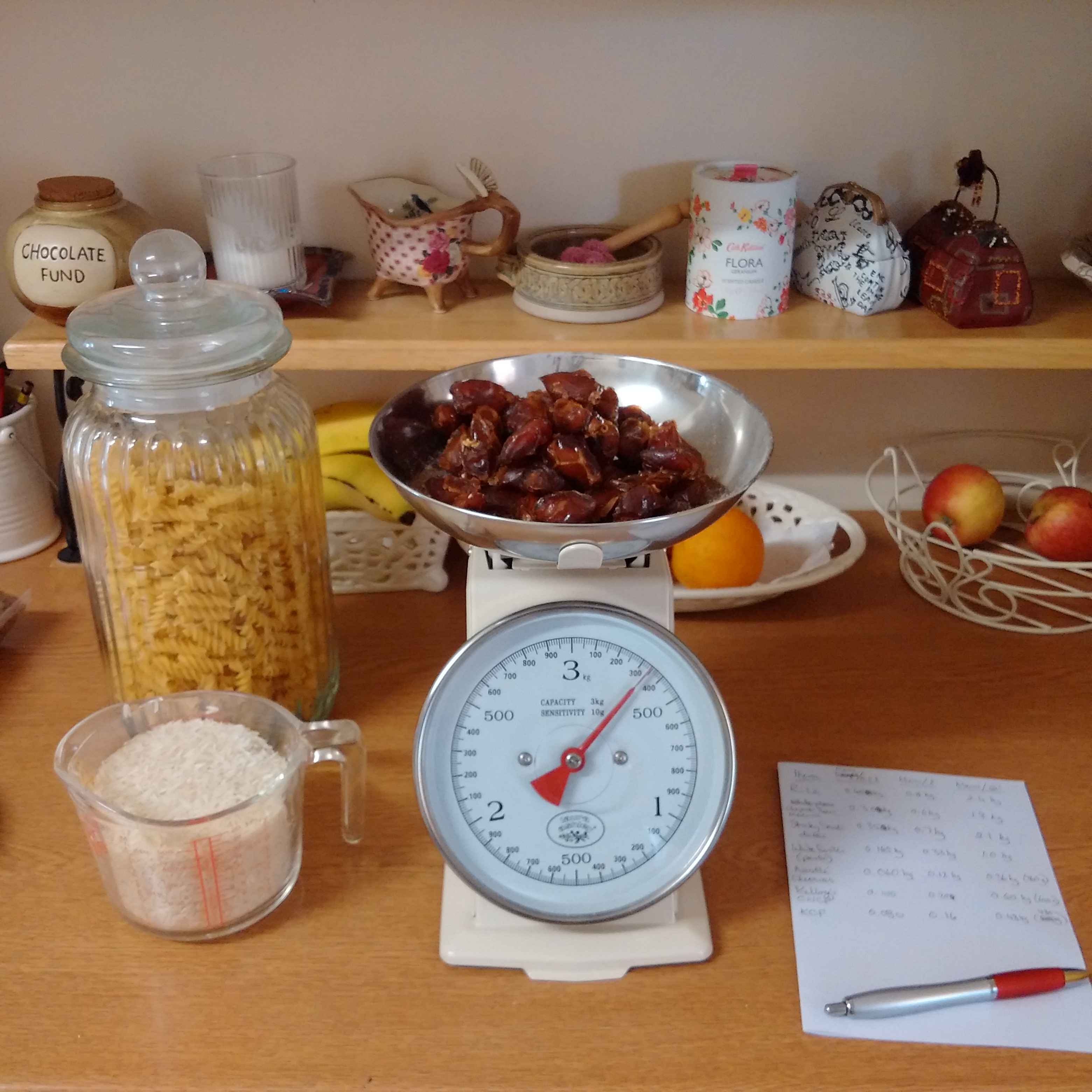
Measuring foodstuffs for zakat al-fitr

(Please click here for a PDF of this fatwa: Zakat al-Fitr and food banks)

All Praise be to God, Lord of the Worlds.  Peace and Blessings of God be upon His Noble Messengers.

  1. The “fast-breaking alms-giving” (zakat al-fitr or sadaqat al-fitr) is a confirmed Islamic tradition at the end of Ramadan, of donating food (in the form of staple foodstuffs) to poor people before Eid prayer in the morning of the day of Eid. The majority of jurists hold that zakat al-fitr is compulsory (fard), whilst a minority hold that it is a highly-recommended tradition (sunna); a small minority even argued that it was abrogated by the full obligation of zakat.
  2. Any charitable donation may be sent abroad. However, it is a basic Islamic principle, in common with other religions, that “Charity begins at home,” or as the Prophet Muhammad, peace be upon him, expressed it repeatedly, “Begin with your dependants.” (ibda’ bi man ta’ul, a sound hadith with several narrations)  Thus, it is recommended for Muslims in Britain to distribute their zakat al-fitr offerings locally.  Furthermore, God and His Prophets repeatedly recommend the rights of neighbours: regarding food, the Prophet Muhammad, peace be upon him, emphatically taught, “By God, they are not trustworthy believers: those who spend the night with stomachs full whilst their neighbours go hungry!”
  3. Zakat al-fitr is usually given as food items; the Hanafi jurists allowed the giving of cash, but this was with the intention that the poor recipients may use the cash to buy food or other essential items. Therefore, it remains an option to donate zakat al-fitr as either food items or cash.
  4. The amount of zakat al-fitr payable is, per wealthy Muslim head (adult or child), traditionally equal to one saa’ (approximately 3 litres in volume[1]) of the staple food item, or possibly half of one saa’ (approximately 1.5 litres) for more expensive foodstuffs.[2] One saa’ equates to the following approximate weight of common UK staple foods: rice 2.5kg, flour 2kg, pasta 1kg, porridge (porage) oats 1kg; by comparison, one saa’ of dates (not a UK staple food) weighs approximately 2kg.[3]
  5. The retail prices of the above items imply that UK zakat al-fitr is approximately £3-£5 per person. Some jurists recommend, to be safe, giving 3kg of staple food, which would be more than one saa’ in the vast majority of cases of staple food.
  6. Alternatively, the zakat al-fitr amount was traditionally understood to be the equivalent of food for one or two meals, each meal consisting of one or two mudds (one saa’ = four mudds). Since an average, filling meal costs roughly £2.50-5.00 in the UK currently, this approach gives us a similar answer, i.e. zakat al-fitr at £2.50-5.00 or £5-10.
  7. Traditionally, zakat al-fitr was mostly given to poor Muslims: most jurists held that poor people who were not Muslim were not eligible to receive zakat al-fitr, since both poverty and Islam were conditions for recipients. But Imam Abu Hanifa and others held that poor dhimmis (non-Muslim People of Scripture, protected by Muslim authorities) were eligible to receive it, since poverty was the only condition for recipients.
  8. Since the category of dhimmis was abolished by the Ottoman caliph in 1856 in favour of equal citizenship (muwatana) irrespective of faith or religion, and since Muslims comprise only 4-5% of the population of Britain where all citizens are equal, zakat al-fitr in the UK may simply go to poor people, irrespective of their religion, faith or belief (or lack thereof).
  9. With up to a million annual estimated uses of food banks by people in the UK to complement their situation of poverty, an obvious way for Muslims to distribute their zakat al-fitr locally is via their local food banks. Since the recipients do not have to be Muslim, based on the view of Imam Abu Hanifa, this should pose no problem religiously.  Food banks based in areas of the UK with Muslim-majority populations, or those run by mosques, are likely to have recipients who are mainly Muslim.
  10. Suggestions for the staple foodstuffs of people in the UK include, but are not limited to: bread, potatoes, rice, pasta, cereals, flour, couscous, etc. (Traditionally, zakat al-fitr has been given in solid staple foodstuffs, whereas for fidya and kaffara, bread was prominently given, accompanied by oil, fat, vinegar, meat, etc. – cf. Tafsir Ibn Kathir on Qur’an 5:89 & 5:95. Long-life milk and juice is in demand at UK foodbanks, and it is arguable that these liquids are also UK staple foods.)
  11. It is thus recommended for wealthy Muslims in the UK who wish to distribute their zakat al-fitr to do so either directly to needy families, else via their local food bank, else via cash to a local, national or international charity.
  12. May God accept and bless our worship during Ramadan, Eid and all year round, and guide us towards helping to eliminate poverty and unnecessary hunger.

(Sheikh Dr) Usama Hasan: London (UK), 29th Ramadan 1436 / 16th July 2015

APPENDIX: SOME BACKGROUND RESEARCH


  1. EXTRACTS FROM THE BOOK OF ZAKAT AL-FITR (“FAST-BREAKING ALMSGIVING”) by IBN RUSHD / AVERROES[4]

Its ruling: The majority of jurists hold that zakat al-fitr is compulsory (fard).

The ‘Iraqi jurists and some of the later Maliki ones hold that it is a recommended tradition (sunna).

Some said that it was abrogated by the obligation of zakat, based on the hadith of Qays bin Sa’d bin ‘Ubadah, who said, “The Messenger of God, may God bless him and grant him peace, used to order us to give it [zakat al-fitr] before the obligation of zakat was revealed.  When the verse of zakat was revealed, we were neither commanded to, nor forbidden from, giving it [zakat al-fitr], but we continue doing so.”[5]


When does zakat al-fitr become obligatory?

Abu Hanifa and Malik via Ibn al-Qasim: At dawn on the day of Eid al-Fitr.

Shafi’i and Malik via Ashhab: At sunset on the last day of Ramadan.

Thus, for a newborn baby between these two times, there is disagreement as to whether or not zakat al-fitr is due on his/her behalf.


Recipients

Poor Muslims may receive it, by consensus (ijma’).

As for poor dhimmis [protected non-Muslims], most of the jurists say that they may not receive it. Imam Abu Hanifa said that they may receive it. Some said that only monks amongst dhimmis may receive it.


  1. EXTRACT FROM FATH AL-BARI, IBN HAJAR AL-‘ASQALANI’S COMMENTARY ON SAHIH AL-BUKHARI, CHAPTERS ON SADAQAH AL-FITR, HADITHS NOS. 1503-1512 (translations of these hadiths widely available)

http://hadith.al-islam.com/Page.aspx?pageid=192&TOCID=965&BookID=33&PID=2783

Ja’far al-Firyabi narrated in his Kitab Sadaqat al-Fitr (Book of Fast-Breaking Almsgiving) that when Ibn ‘Abbas was the governor of Basra, he ordered the giving of zakat al-fitr: a saa’ of dates etc. or half a saa’ of wheat. When ‘Ali came and saw the cheap prices, he commanded that a saa’ measure be used for all foodstuffs, indicating that he considered the value of the food, whilst Abu Sa’id considered the volume of the food.

ويدل على أنهم لحظوا ذلك ما روى جعفر الفريابي في ” كتاب صدقة الفطر ” أنابن عباس لما كان أمير البصرة أمرهم بإخراج زكاة الفطر وبين لهم أنها صاع من تمر ، إلى أن قال : أو نصف صاع من بر . قال : فلما جاء علي ورأى رخص أسعارهم قال : اجعلوها صاعا من كل ، فدل على أنه كان ينظر إلى القيمة في ذلك ، ونظرأبو سعيد إلى الكيل كما سيأتي .


  1. ABOUT UK FOOD BANKS

In the UK, the Trussell Trust (http://www.trusselltrust.org/) runs a network of foodbanks, although there are many other independent foodbanks and collection points run by churches, mosques, synagogues, temples, community centres, etc.  Trussell can help community and faith organisations to begin a foodbank, and also have a partnership with Tesco, such that every Tesco store is potentially a foodbank collection point.  Many foodbanks distribute food parcels to the needy on one day each week.

Trussell’s recommended items for foodbanks, based on http://www.trusselltrust.org/resources/documents/foodbank/website-shopping-list.pdf and variations in printed leaflets from Trussell:

  • Milk (long-life/UHT or powdered)
  • Sugar
  • Fruit Juice (long-life or carton)
  • Soup / Hot Chocolate
  • Pasta Sauces
  • Sponge Pudding (tinned)
  • Cereals
  • Rice pudding / Custard
  • Tea Bags / Instant Coffee
  • Instant Mashed Potato
  • Rice / Pasta
  • Tinned Meat / Fish
  • Tinned Fruit, incl. tomatoes
  • Jam
  • Biscuits or Snack Bars
  1. APPROXIMATE WEIGHT (MASS) OF ONE SAA’ (THREE LITRES) OF VARIOUS FOODSTUFFS, THE RECOMMENDED AMOUNT OF ZAKAT AL-FITR TO BE GIVEN PER PERSON

This is based on simple measuring out and weighing using a measuring container and scales found in an average kitchen, by the author on the date of the fatwa. (This is a fun, instructive and educational activity for adults and children towards a religious, humanitarian objective.)

  • Rice 2.4kg
  • Flour (medium chapatti) 1.8kg
  • Dates (sticky Saudi ones) 2.1kg
  • Pasta (white fusilli) 1.0kg
  • Porridge / porage oats (Scott’s) 1.1kg
  • Corn Flakes (Kellogg’s) 480g
  • Crunchy Nut Corn Flakes (Kellogg’s) 600g
  • Cheerios (Nestle) 360g


  1. EXAMPLE OF DIY ZAKAT AL-FITR IN ACTION IN THE UK

On this date, the author and his wife are blessed with four children, so the following foodstuffs, all in 500g packets, were bought from a local supermarket and delivered to a local foodbank collection point, by the grace of God:

Rice 5kg

Pasta 3kg

Porridge oats 2.5kg

Total cost: £20, working out at just under £3.50 per head for a family of six

May Allah (God) accept and bless our Ramadan and Eid!

FOOTNOTES / REFERENCES

[1] Cf. http://www.bakkah.net/en/zakat-fitr-measurements-saa-three-litres-mudd.htm

[2] Cf. Sahih al-Bukhari, Book of Zakat, Chapters on Sadaqat al-Fitr, Hadiths nos. 1503-1512

[3] Note that 3 litres of water weigh exactly 3kg, so this implies that all these foods are less dense (“lighter”) than water. In fact, they are denser than water but the air trapped between the food particles means that 3 litres of food generally weighs less than 3 litres of water (3kg).

[4] Extracted from: Ibn Rushd al-Qurtubi al-Andalusi [Averroes], Bidayat al-Mujtahid [The Distinguished Jurist’s Primer], Dar al-Kutub al-‘Ilmiyyah, Beirut, 1418/1997, vol. 1, pp. 413-420; a full English translation of this work is available, by Prof. Imran Ahsan Khan Nyazee

[5] Nasa’i, Ibn Majah, Hakim & Bayhaqi

INNER AND OUTER ASPECTS OF ISLAMIC RITUAL PRAYER (SALAT)

June 26, 2015

Bismillah. This is about some of the beautiful symbolism and meaning behind the salat or ritual prayer, one of the five pillars of Islam and to be performed at least five times a day.  When the salat is reduced to pure ritual without any understanding of the Arabic words or of the symbolism of the actions, many inward and outward problems arise, God forbid!  But the salat is the believer’s daily ascension (mi’raj) and communion with God: it is up to us to deepen this daily experience of ours. It is the Muslim’s daily practice of mindfulness, meditation and remembrance, to develop a deep wellspring of love, faith and humility to equip us for life’s individual, social and political challenges. May God continue to bless our journeys!

All italicised phrases are from the Qur’an and Sunna; references are omitted for ease of reading and clarity: this is not an academic article, but an attempt to elucidate certain indications and symbols, with the hope of helping people on their own journeys.

With the Name of God, All-Merciful, Most Merciful

INNER AND OUTER ASPECTS OF ISLAMIC RITUAL PRAYER (SALAT)

  1. Prayer times: Time is sacred (God says, I am Time); we offer each prayer within its time in order to share in the sacredness of every part of the day and night, and to give thanks for that portion of sacred time.
  2. Washing (ablutions) before prayer: we cleanse our limbs and hearts of wrongdoing.
  3. Ablutions are nullified by toilet or sexual acts: these represent our basic animal natures, so we wash again to symbolise recovering our angelic natures in order to stand before God.
  4. Facing Mecca: The Ka’bah, as the House of God, symbolises the heart, which is also the House of God. Whilst facing Mecca outwardly, we turn inwardly to face the home of God at the centre and core of our being. So turn your face towards the Sacred Mosque!
  5. Standing in straight rows: we are in fellowship, equal before God, and imitating the ranks of the angels. The hearts of the people of Paradise beat as one … By Those Who Stand in Ranks!
  6. Raising the hands at the beginning of the prayer: symbolises the “lifting of the veil” between us and God. In prayer, we are talking directly to our Lord.
  7. Standing before God in prayer: facing up to life as a journey to God; a foretaste and preparation for standing before God on Judgment Day.
  8. Keeping the eyes open, rather than closed, in prayer: do not be veiled by multiplicity from Unity, nor by Unity from multiplicity.
  9. Lowering the head and looking at the ground (if practised): humility before God.
  10. Keeping the chin up and looking straight ahead towards Mecca (if practised): facing life, and one’s inward reality, directly.
  11. Folding the arms across the body (if practised): the servant’s pose before the Master.
  12. Reciting the Opening Chapter of the Qur’an (Surat al-Fatiha): we are sharing in a communion with God. God says, I have divided the prayer between Me and My servant …
  13. Praise be to God, Lord of the Worlds; All-Merciful, Most Merciful; Master and King of the Day of Judgment: God says, These belong to Me, as our glorification is of God.
  14. You alone we worship; You alone we ask for help: God says, This is (shared) between Me and My servant; the God-human relationship.
  15. Guide us to the Straight Path; the path of those whom You have favoured, who neither receive (Your) anger nor stray: God says, These belong to My servant, and My servant shall have whatever he or she requests.
  16. Reciting further from the Qur’an: the remembrance of God continues; God and the angels bear witness to it. Truly, the recitation at dawn was witnessed.
  17. Bowing: humility before God; bearing life’s hardships, followed by standing tall again.
  18. Prostration, with forehead, nose, hands, knees and feet pressed to the ground: ultimate humility before God; one is closest to God in this posture, which is outwardly humiliation, inwardly elevation; our hearts are higher than our brains, whilst the rest of the time, our brains are higher than our hearts; Pray hard, for your prayers are most likely to be accepted in this position; death.
  19. The second prostration, after a brief sitting: the second death, at the blowing of the Horn. Our Lord! You caused us to die twice, and to live twice …
  20. In prayer, do not sit like a dog, peck like a cockerel or squat like a monkey: throughout prayer, we must rise above our animal natures and try to inhabit our angelic natures.
  21. Standing, bowing, prostration: the body forms the Arabic letters Alif (A), Dal (D) and Mim (M) respectively, hence spelling Adam during the prayer; we are seeking our original Paradisal, primordial humanity before the Fall through our communion with God.

    [In Hebrew and Arabic, the Aleph/Alif (A) also signifies the number 1, so “Adam” is identical to “1 dam” meaning “one blood”: humanity is united; we have different skin colours, but we bleed the same colour. Red blood cells have no DNA (although white ones do), so in a sense blood represents our common humanity – much of it does not have our unique, genetic fingerprints that are found in every other of the trillions of cells of our body.]

  22. Standing, bowing, prostration: the body forms a straight line, right angle and (semi-)circle respectively, the bases of all geometry and form; we are signifying that we are at one with Nature and its beautiful forms. God is Beautiful, and loves Beauty.
  23. Sitting in remembrance of God at the end of the prayer: a foretaste of the eternal rest in Paradise.
  24. The prayer ends with the greeting of peace (salam): Their greeting on the Day they meet Him is Peace; Their greeting there (in the Garden) is Peace; they hear no vain or sinful talk, only the words, Peace, Peace!

Usama Hasan

London, Ramadan 1436 / June 2015