Posts Tagged ‘Sufism’

INNER MEANINGS OF HAJJ & ‘UMRAH – IMAM SHIBLI

August 2, 2026

Bismillah al-Rahman al-Rahim

With the Name of God, All-Merciful, Most Merciful

INNER MEANINGS OF HAJJ & ‘UMRAH – IMAM SHIBLI

The Companion of Shibli:

[1] Shibli asked me, “Did you make a firm intention (‘aqd – contract) for The Hajj?”

I replied, “Yes.”

Shibli: By your contract, did you nullify every contract opposing that contract [of Hajj for God] that you had concluded ever since you were created?

“No.”

Shibli: Then you did not make a firm contract.

[2] Shibli: Did you remove your clothes [before donning the dress of sacredness – ihram] ?

“Yes.”

Shibli: Did you strip yourself of everything [i.e. all attachments] ?

“No.”

Shibli: Then you did not remove your clothes.

[3] Shibli: Did you purify (wash) yourself [before donning the dress of sacredness – ihram] ?

“Yes.”

Shibli: Did all your faults leave you when you purified yourself?

“No.”

Shibli: Then you did not purify yourself.

[4] Shibli: Did you answer God’s call with talbiyah [after donning the dress of sacredness – ihram] ?

[The traditional words of this prayer, in answer to God’s call to people to make Pilgrimage to His House, are: Labbayk Allahumma Labbayk. Labbayka La Shareeka laka Labbayk. Inn-al-Hamda wan-Ni’mata laka wal-Mulk. La Shareeka lak. (I am here, Dear God, I am here. I am here: You have no partner; I am here. Truly, all Praise and Favour belong to You, and all Kingdom: You have no partner.)]

“Yes.”

Shibli: Did you find a similar talbiyah in answer to your own call of talbiyah ?

“No.”

Shibli: Then you did not answer God’s call.

[5] Shibli: Did you enter the Sanctuary (Haram) [of Mecca] ?

“Yes.”

Shibli: When you entered the Sanctuary (Haram), did you resolve to leave every prohibited (haraam) matter?

“No.”

Shibli: Then you did not enter the Sanctuary (Haram).

[6] Shibli: Did you overlook Mecca [from the top of a surrounding mountain] ?

“Yes.”

Shibli: Did a spiritual state from Truth-Reality (al-Haqq) overlook you because of your overlooking Mecca?

“No.”

Shibli: Then you did not overlook Mecca.

[7] Shibli: Did you enter the [Sacred] Mosque ?

“Yes.”

Shibli: Did you know (feel) that you had entered His Proximity?

“No.”

Shibli: Then you did not enter the [Sacred] Mosque.

[8] Shibli: Did you see the Ka’bah ?

“Yes.”

Shibli: Did you see the actual goal for which you travelled to it?

“No.”

Shibli: Then you did not see the Ka’bah.

[9] Shibli: Did you run three circuits and walk four [in the total of seven circumambulations around the Ka’bah] ?

“Yes.”

Shibli: Did you run from the world (in the first three circuits) such that you knew that you had distanced yourself from it and disconnected from it? Did you find from the four circuits you walked, safety from that which you were running from, such that you increased in gratitude to God for it?

“No.”

Shibli: Then you did not run [and walk].

[10] Shibli: Did you touch the Black Stone and kiss it?

“Yes.”

Shibli cried out, saying: Woe to you! It is said that whoever touches the Black Stone has shaken hands with [God] The Truth-Reality (al-Haqq), Glorified and Exalted [because of the hadith: “The Black Stone is God’s Right Hand on Earth”]. Whoever shakes hands with [God] The Truth-Reality (al-Haqq), Glorified and Exalted, is in a state of safety. Did the effect of safety become manifest upon you?

“No.”

Shibli: Then you did not touch the Black Stone.

[11] Shibli: Did you stand for a moment in front of God, behind the Station [of Abraham], and did you offer two cycles of prayer?

“Yes.”

Shibli: Did you stand according to your station with your Lord, such that you were shown your purpose?

“No.”

Shibli: Then you did not pray.

[12] Shibli: Did you exit to Mount Safa [“purity”] and stand there?

“Yes.”

Shibli: What did you do there?

“I said takbir [Allahu akbar – “God is Greatest”], seven times. I mentioned the Hajj and asked God for it to be accepted.”

Shibli: Did you say the takbir of (and with) the angels, finding the reality of your takbir in that place?

“No.”

Shibli: Then you did not say takbir.

[13] Shibli: Did you descend from Mount Safa (“purity”) ?

“Yes.”

Shibli: Did all your faults leave you, such that you had attained purity?

“No.”

Shibli: Then you neither ascended, nor descended from, Mount Safa [“purity”].

[14] Shibli: Did you sprint [in the bottom of the valley between Safa and Marwah] ?

“Yes.”

Shibli: Did you flee to Him, disavow yourself of your fleeing, and arrive at your existence/being?

“No.”

Shibli: Then you did not sprint.

[15] Shibli: Did you arrive at Mount Marwah (“thirst quenched with water”) ?

“Yes.”

Shibli: Did you see Tranquillity at Marwah, such that you took it, or did it descend upon you?

“No.”

Shibli: Then you did not arrive at Mount Marwah.

[16] Shibli: Did you go out to Mina (“desires”) ?

“Yes.”

Shibli: Did you place your desires in God, in a different state from that in which you had disobeyed Him?

“No.”

Shibli: Then you did not go out to Mina.

[17] Shibli: Did you enter the Mosque of Khayf (“fear / awe”) ?

“Yes.”

Shibli: Did you fear God whilst entering and exiting? Did you find fear unparalleled elsewhere ?

“No.”

Shibli: Then you did not enter the Mosque of Khayf.

[18] Shibli: Did you proceed to ‘Arafat (“recognitions”) and stand there ?

“Yes.”

Shibli: Did you recognise the state for which you were created, the state that you intend and the state which you are becoming? Did you recognise the One Who Teaches you to recognise these states? Did you see the place to which there are the indications, for it is He Who enables the breaths of the souls in every state ?

“No.”

Shibli: Then you did not stand at ‘Arafat.

[19] Shibli: Did you then leave for Muzdalifah (“the one nearing”) and see the Sacred Place [the area around Muzdalifah] ?

[NB God commands in the Qur’an, “Remember God at the Sacred Place.” (al-Baqarah, The Heifer, 2:198)]

“Yes.”

Shibli: Did you remember God with a remembrance that made you forget whatever is other-than-Him, such that you were occupied with Him only?

“No.”

Shibli: Then you did not stay at Muzdalifah.

[20] Shibli: Did you return to Mina and slaughter [the sacrificial animal] ?

“Yes.”

Shibli: [The sacrificial animal being] your self and ego?

“No.”

Shibli: Then you did not slaughter [the sacrificial animal].

[21] Shibli: Did you cast stones [at the devil] ?

“Yes.”

Shibli: Did you cast your ignorance aside from yourself by an increase in knowledge that manifested upon you ?

“No.”

Shibli: Then you did not cast stones.

[22] Shibli: Did you shave your head ?

“Yes.”

Shibli: Did your (false) hopes decrease ?

“No.”

Shibli: Then you did not shave your head.

[23] Shibli: Did you visit the Ka’bah ?

[During the Hajj, there are three compulsory trips to the Ka’bah: Arrival (Qudoom), Visit (Ziyarah/Ifadah) and Farewell (Wida’).]

“Yes.”

Shibli: Were any realities unveiled to you, or did you see any increase in divine generosity and honour upon you because of this visit, for the Prophet, may God bless him and grant him peace, said, “The Hajj and ‘Umrah pilgrims are the Visitors of God. It is a duty upon the one being visited to honour his visitors.

“No.”

Shibli: Then you did not visit the Ka’bah.

[24] Shibli: Did you exit the state of ihram (sacredness and prohibition) into that of matters being halal (permissible) ?

“Yes.”

Shibli: Did you resolve to eat only what is halal ?

“No.”

Shibli: Then you did not enter the state of being halal.

[25] Shibli: Did you perform the Farewell Visit to the Ka’bah ?

“Yes.”

Shibli: Did you bid farewell to your soul and spirit entirely?

“No.”

Shibli: Then you did not perform farewell (wad’), and you must return (‘awd). See how you perform the Hajj after this, for I have instructed you. When you perform the Hajj, strive that it may be as I have described to you.

[Ibn ‘Arabi:] So know, may God strengthen you, that I have only quoted this story for notification, reminder and for it to be known that the Way of the People of Allah upon this has continued with their spiritual states in it. This was Shibli’s understanding during his Hajj, for he only asked based on his own taste and experience: did others experience the same, or not? Another person might experience the same, or something higher or lower, for “all of them have a known station.” [A reference to the angels: “All of us have a known station.” (al-Saffat, Those Ranked In Rows, 37:164)]

I have not invented a path in the considerations (inner meanings) of these acts of worship different to what has preceded me, except that people’s tastes and experiences are of different levels according to God’s care of each servant in such matters.

Source: Ibn ‘Arabi, al-Futuhat al-Makkiyyah [The Meccan Openings], Kitab Asrar al-Hajj [Book of the Secrets of the Pilgrimage], Dar al-Kutub al-‘Ilmiyyah, Beirut, 3rd ed., 2011, vol. 2, pp. 437-8

Translation, with added notes and numbering of paragraphs:

Usama Hasan

London

17th Safar 1448 ~ 1st August 2026
JESUS & MUHAMMAD, PEACE BE UPON THEM – NOTES ON THEIR REALITY IN ISLAMIC TEACHING

December 25, 2016

With the Name of God, All-Merciful, Most Merciful


JESUS & MUHAMMAD, PEACE BE UPON THEM


– NOTES ON THEIR REALITY IN ISLAMIC TEACHING


in the hope of helping to increase Christian-Muslim mutual understanding, an absolute necessity for our times


img_20150512_141045

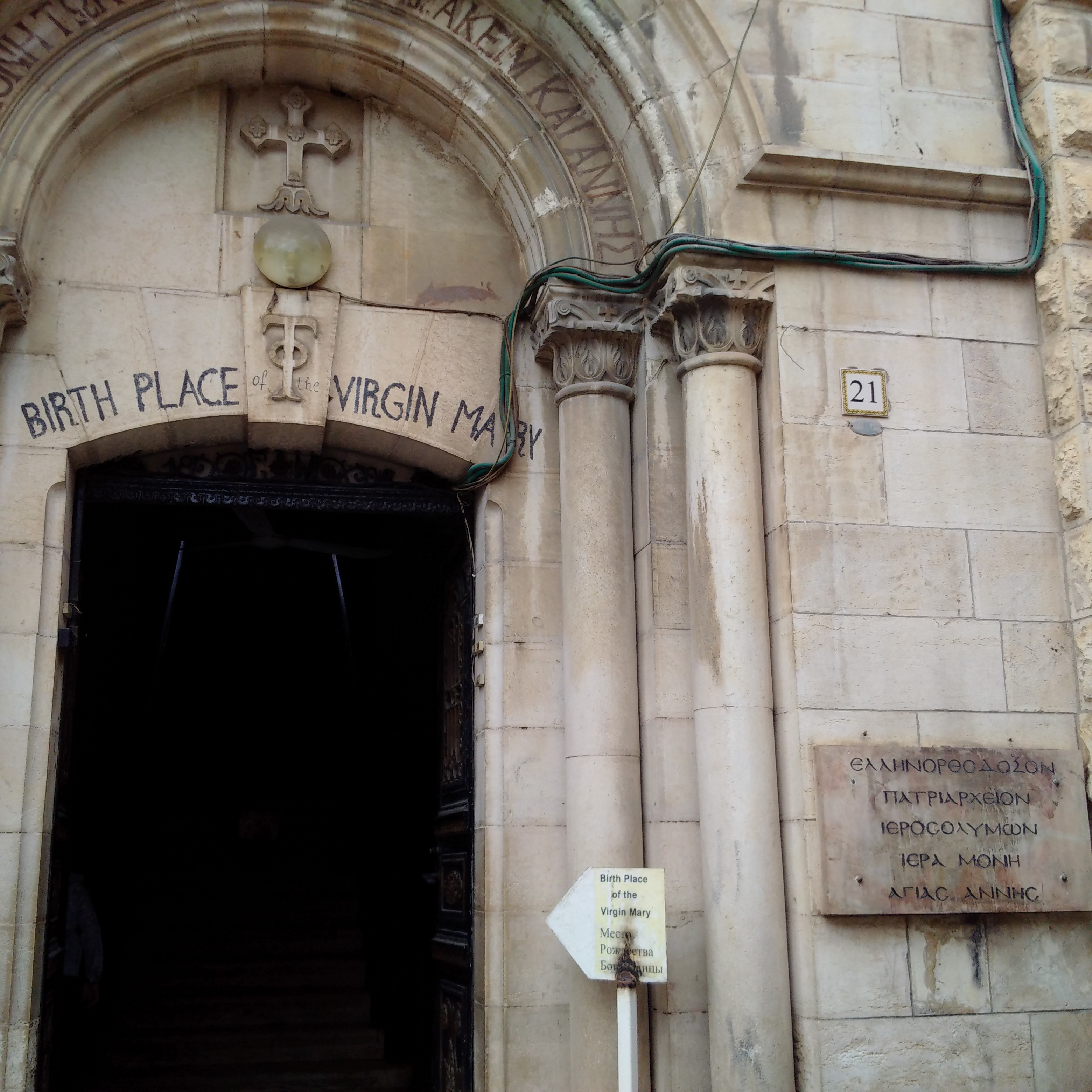
Birthplace of the Virgin Mary according to Christian tradition, on the edge of Temple Mount (al-Masjid al-Aqsa / al-Haram al-Sharif) in Jerusalem. The story of her birth is also in the Qur’an, Family of Imran, 3:33-37. Photo (c) Usama Hasan, May 2015

img_20150512_140326

Chapel inside the birthplace of the Virgin Mary according to Christian tradition, on the edge of Temple Mount (al-Masjid al-Aqsa / al-Haram al-Sharif) in Jerusalem. The story of her birth is also in the Qur’an, Family of Imran, 3:33-37. Note that this site was largely preserved as a place of pilgrimage and prayer for Christians throughout Islamic rule over Jerusalem since c. 640 CE / 17 AH. Photo (c) Usama Hasan, May 2015

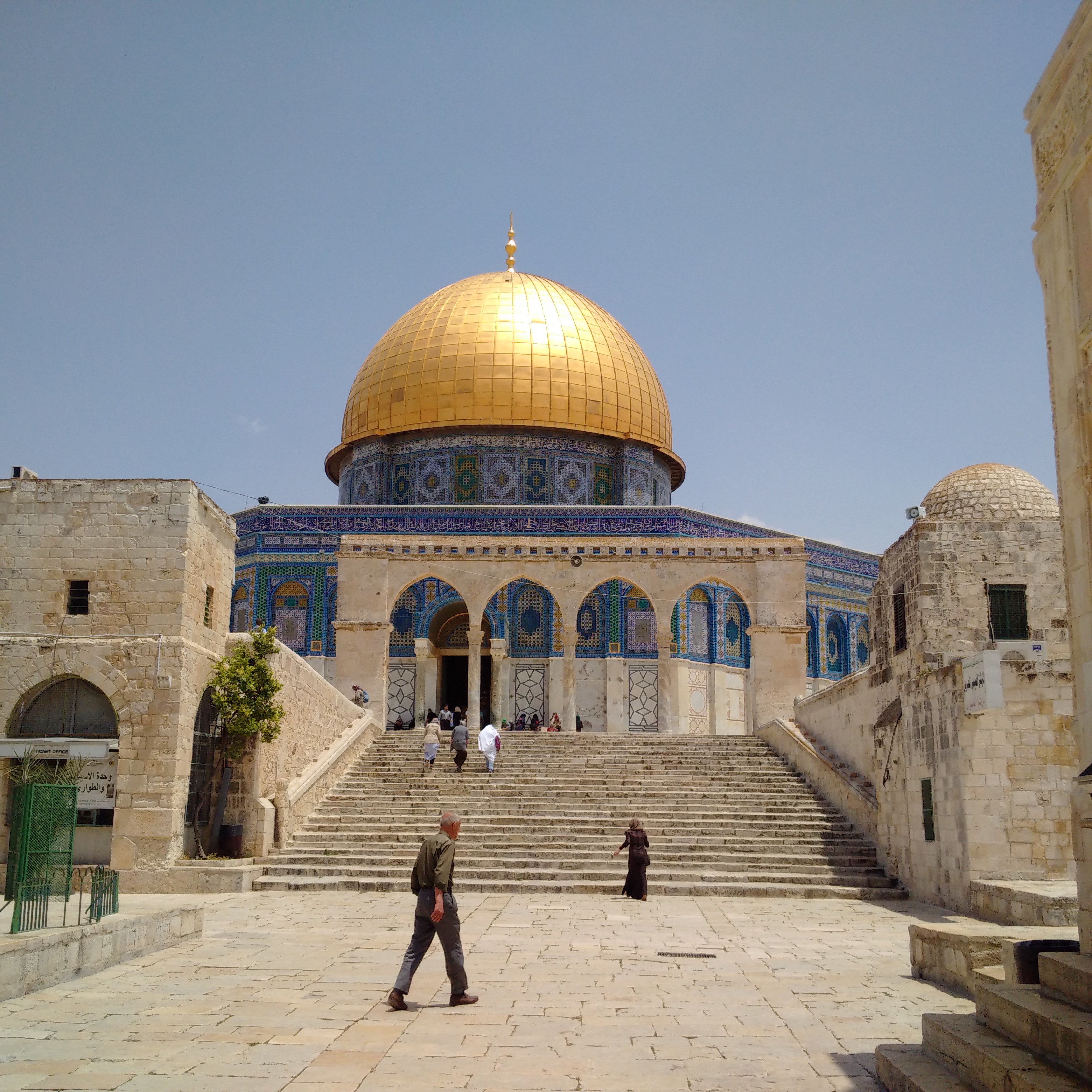
Dome of the Rock mosque atop Temple Mount (al-Masjid al-Aqsa), where Mary, Jesus & Muhammad all worshipped God, according to Islamic tradition.

Dome of the Rock mosque atop Temple Mount (al-Masjid al-Aqsa), where Mary, Jesus & Muhammad all worshipped God, according to Islamic tradition. Muhammad was brought here by Gabriel, in one of the many magnificent meetings between these two great Spirits. Photo (c) Usama Hasan, May 2015

With the Name of God, All-Merciful, Most Merciful


JESUS & MUHAMMAD, PEACE BE UPON THEM


– NOTES ON THEIR REALITY IN ISLAMIC TEACHING


in the hope of helping to increase Christian-Muslim mutual understanding, an absolute necessity for our times


  1. WORD (LOGOS)


1.1 JESUS CHRIST: A WORD OF GOD & THE WORD OF GOD

Jesus Christ is “the Word of God” cast unto Mary (Q. Women 4:171), “a Word from God” (Q. The Family of ‘Imran 3:45) as well as being a Prophet and Messenger of God. In Christian Greek scriptures and theology, the Word of God is the Logos.


1.2 THE QUR’AN: THE WORD OF GOD

The Qur’an is also the Word of God. Hence, there is a parallel between Jesus and the Qur’an, both being Logos.


1.3 LOGOS, CREATION & COMMAND

This Word or Logos is specifically associated with the Divine Word and Command, “Be!” (Kun) that Creates all Being (Kawn), and thus there is a parallel between Jesus and Adam (Q. The Family of ‘Imran 3:59). Islamic views on philosophical discussions about “being” all derive from this Qur’anic teaching about the Divine Command, “Be!”

To God belong the Creation and the Command (Khalq and Amr: Q. The Heights 7:54). Everything besides God is outwardly Creation, inwardly a Divine Command (Sufi teaching, based on the above Qur’anic verse). Adam and Jesus are prime reminders of this reality.

It is for this reason that theologians who later wrote Islamic creeds often included the phrase “… the Word of God: it originated from, and returns to, Him” (kalam Allah, minhu bada’a wa ilayhi ya’ud).

And just as the “Christological controversies” exercised early Christians about the nature of Christ: human, divine or both, the “Qur’anological controversies” exercised early Muslims about the nature of the Qur’an: created, divine or both. For example, both traditions produced the identical phrase “not made” or “uncreated” in attempts to resolve this theological paradox between Creation and Command. The Christian formulation about Jesus being “begotten, not made” (mawlud, ghayr makhluq in Arabic) is identical in its second half to the Islamic formulation about the Qur’an being “the word of God, uncreated” (kalam Allah, ghayr makhluq).


  1. SPIRIT


2.1 JESUS CHRIST: A SPIRIT FROM GOD & THE SPIRIT OF GOD

Jesus Christ is also a “Spirit from God” (Q. Women 4:171), and in several hadiths, the “Spirit of God” (Ruh Allah).

When Christians accepted his message, Prophet Muhammad would often ask them to affirm in addition, after the basic declaration of faith, “There is no god but God; Muhammad is the Messenger of God,” that “Jesus Christ is the Messenger of God and His Word, cast unto Mary, and a Spirit from Him,” echoing the Qur’an.


2.2 ARCHANGEL GABRIEL: A SPIRIT OF GOD & THE SPIRIT OF GOD

The Archangel Gabriel is also the “Spirit of God” (Q. Mary 19:17), sent to Mary in human form to cast the Word of God into her, resulting in “the effusion of the Spirit of God” into Mary and into her womb (Q. The Prophets 21:91, Prohibition 66:12).

Specifically, Gabriel in the Qur’an is the Holy Spirit (Ruh al-Quds or “Spirit of Holiness” – Q. The Heifer 2:87, 2:253). According to some commentators, Gabriel is also the all-embracing “Universal/Cosmic Spirit” or “Spirit of the Universe/Cosmos” or simply, “The Spirit” (Al-Ruh), i.e. the Spirit that encompasses all created beings, which is why it is called the “Spirit of God.” (cf. commentaries, including Tafsir Ibn Kathir, on Q. The News 78:38, Destiny 97:4)

The Qur’anic Arabic for Gabriel is Jibril or Jibra’il, the meaning of which is variously given as “servant of God” (‘Abdullah) or “higher realms of the Kingdom of God” (Jabarut Allah), which resonates with Gabriel’s title of being “The Spirit” – cf. e.g. Fath al-Bari of Ibn Hajar al-‘Asqalani.

Note also that it is not only Christians who believe in the Holy Spirit being with them: some Muslims also had this honour; when Prophet Muhammad encouraged his poets such as Hassan bin Thabit during war, he urged them, “Attack them (with your poetry): the Holy Spirit (Ruh al-Quds) is with you!” (Sahih Muslim)


2.3 ADAM & HUMANITY: RECIPIENTS OF GOD’s SPIRIT

Adam, the first full human, received the effusion of God’s Spirit (Q. Rock 15:29, S 38:72), as did all human beings in turn, since they share in his Adam-ness or humanity (Q. Prostration 32:9; hadiths about foetal development in the womb). This is another parallel between Jesus and Adam.

Adam was created in the image of God (authentic hadith), and was taught all the beautiful Names of God, thus surpassing even the angels (Q. The Heifer 2:31-33).


2.4 THE QUR’AN: A SPIRIT FROM GOD

The Qur’an is “a Spirit, from God’s Command” inspired to Prophet Muhammad (Q. Consultation 42:52). Note that the early Islamic controversy over whether the Qur’an was created or uncreated is related to the aspects of Creation and Command mentioned above (section 1.3).

The Qur’an is a Light and Guidance, just as were the Torah and Gospel before it (Q. The Last Supper 5:44,46). Prophet Muhammad is also a Light and Guidance (Q. The Last Supper 5:15-16).


2.5 PROPHET MUHAMMAD’S SPIRIT

In a famous hadith (Sahih Muslim), Aisha described the character (khuluq) of the Prophet as being the Qur’an. The character is the inner aspect of creation (khalq). Therefore, the Prophet’s inner reality (haqiqa Muhammadiyya) or spirit is also Logos, being the Qur’an, which is itself a “Spirit from the Divine Command.”


2.6 INTERACTION OF THE SPIRITS:

GABRIEL — JESUS (LOGOS) — MARY:

Already mentioned above. Note that Mary was chosen “over all the women of the worlds” (Q. The Family of ‘Imran 3:42), and was a female Prophet (nabiyya or Prophetess) according to some leading Muslim theologians such as Ibn Hazm and Ibn Hajar, based on the fact that God sent His Archangel Gabriel directly to her.

GABRIEL — QUR’AN (LOGOS) – -MUHAMMAD:

The Qur’an was revealed from God to Prophet Muhammad by Archangel Gabriel as the Holy Spirit (Ruh al-Quds, Q. The Honey Bee 16:102) and the Faithful or Trustworthy Spirit (al-Ruh al-Amin), directly to the Heart (qalb) of the Prophet (Q. The Poets 26:193-4)

These interactions or relationships show that not only are there parallels between Jesus and the Qur’an, but also between Mary and Muhammad, another aspect of interest for Christian-Muslim dialogue and mutual understanding.


  1. MERCY

Where there is Spirit, there is Mercy. (And Love: the Islamic scholar William Chittick states that the Biblical “Love” and the Qur’anic “Mercy” are very close in meaning: we might say that they are Merciful Love and Loving Mercy.)


3.1 When Adam was created in the image of God, this was especially true of the Divine Names of Mercy. (hadith: disputed authenticity, sound meaning)

3.2 The Qur’anic chapter named “Mary” (19) uses the Divine names “All-Merciful” (al-Rahman) 16 times, “God” (Allah) 7 times and “Lord” (Rabb) 23 times. “Mercy” (rahma) is mentioned a further 4 times, all with regard to Abrahamic Israelite prophets, including a description of Jesus as “a mercy from God” (Q. 19:21). The Qur’anic “mercy” is derived from “the womb” (rahm), thus further resonating with the story of Mary, the only woman mentioned by name in the entire Qur’an; all others are described as mothers, sisters or wives with regard to men.

3.3 All but one of the 114 chapters of the Qur’an begin with the formula, “In the Name of God, All-Merciful, Most Merciful”: the Qur’an is thus inextricably linked with the two foremost Divine Names, being those of Mercy.

3.4 Prophet Muhammad is nothing but a “mercy for the worlds” (Q. The Prophets 21:107) and “most kind and merciful to people of faith.” (Q. Repentance 9:128)


  1. DISCUSSION / CONCLUSIONS

4.1. Although Islam rejects a trinitarian or tri-theistic formulation of God as One (Q. The Last Supper 5:73), the above discussions show how much reverence is accorded to the holy personalities of Jesus Christ and Mary in the Qur’an: Jesus is not “just a prophet”!

4.2. In Islamic teaching, Jesus Christ is one of the manifestations par excellence of spirituality, being a spirit of, or from, God: others are Archangel Gabriel, the Cosmic Spirit, Mary, the Qur’an, Adam and Prophet Muhammad.

4.3 Thus, although Muslims do not believe that God is a trinity of “Father, Son and Holy Ghost/Spirit”, Muslims certainly believe, directly from the Qur’an, that God is “Lord Most Merciful”, that Jesus is a Word and Spirit of God, and that Gabriel is the Holy Spirit and a Spirit of God. Furthermore, the Qur’an is also a Word and Spirit of God, and constitutes the inner reality of the Prophet Muhammad. The Spirit of God was also effused into Adam, and hence into all of humanity.

4.4. All human beings have the potential to be illumined by some of the above divine spirituality and mercy by virtue of sharing in the humanity of the above holy persons, and of being created in imago Dei (the image of God).

4.5. In the Islamic tradition, Jesus and Muhammad are regarded as extremely close, being respectively the last (and “Seals”) of the Israelite and Ishmaelite branches of prophethood deriving from their common Abrahamic ancestry. All prophets are regarded as brothers, and Prophet Muhammad regularly referred to other Abrahamic and Israelite prophets as “my brothers.” He also once joined his index and middle fingers together and declared, “Jesus, son of Mary, and I are this close in this world and the hereafter: there is no prophet between us.” (Sahih al-Bukhari)

4.6. A striking example of the common love and mercy for humanity manifested by both Jesus and Muhammad in the Islamic tradition is as follows:

Prophet Muhammad once spent an entire night awake in worship (in addition to his worship and public duties by day), repeating the following prayer of Jesus Christ for sinners countless times, whilst standing, bowing and in prostration,

“If You (dear God) punish them, they are indeed Your servants;
but if You forgive them, truly You Yourself are the Mighty, Wise!”

(Q. The Last Supper 5:118 – this incident is reported in an authentic hadith widely transmitted by Islamic scholars, from the Sunan-collectors to Ibn Arabi in his Fusus al-Hikam or “Bezels of Wisdom” to Albani in his Sifah Salah al-Nabi or “The Prophet’s Prayer Described”)

4.7 This universal Christian and Muhammadan compassion is a metaphysical reality, and one that Christians and Muslims worldwide need to continue to manifest and enhance, especially in our troubled times. May God bless Prophets Abraham, Moses, Mary, Jesus and Muhammad, peace be upon them and all their followers, and grant us the courage to follow in some of their noble examples.


Usama Hasan

London, 25th December 2016 / 26th Rabi’ al-Awwal 1438 (updated 27/12/2016 // 28/03/1438)


Understanding Islam by Frithjof Schuon

December 8, 2009

Bismillah. A short piece from a classic book that introduces the Sufi understanding of Islam, with thanks to the friend who sent it to me.

Surah al-Fatihah (The Opening Chapter of the Qur’an)

“That which opens” (the Qur’an) has a capital importance, for it constitutes the unanimous prayer of Islam. It is composed of several propositions or verses:

[In the Name of God, the Infinitely Good, the Ever Merciful]

1. Praise be to God, Lord of the Worlds;

2. The Infinitely Good, the Ever Merciful;

3. King of the Last Judgement;

4. It is Thee we worship, and it is in Thee we seek refuge;

5. Lead us on the straight path;

6. The path of those on whom is Thy Grace;

7. Not of those on whom is Thy Wrath, nor of those who go astray.

The Shahadah (Bearing Witness, or Testimony of Faith)

The doctrine of Islam consists of two statements: first, “There is no divinity (or reality, or absolute) save the sole Divinity (or Reality, or Absolute)”, and “Muhammad (the Glorified, the Perfect) is the Messenger (the spokesman, the intermediary, the manifestation, the symbol) of the Divinity”; these are the first and the second Testimonies of the faith.

For Sufism, which is Islam’s kernel, the metaphysical doctrine is that “there is no reality save the One Reality” and that, insofar as as we are obliged to take account of the existence of the world and of ourselves, “the cosmos is the manifestation of Reality.”