Posts Tagged ‘Hajj’

INNER MEANINGS OF HAJJ & ‘UMRAH – IMAM SHIBLI

August 2, 2026

Bismillah al-Rahman al-Rahim

With the Name of God, All-Merciful, Most Merciful

INNER MEANINGS OF HAJJ & ‘UMRAH – IMAM SHIBLI

The Companion of Shibli:

[1] Shibli asked me, “Did you make a firm intention (‘aqd – contract) for The Hajj?”

I replied, “Yes.”

Shibli: By your contract, did you nullify every contract opposing that contract [of Hajj for God] that you had concluded ever since you were created?

“No.”

Shibli: Then you did not make a firm contract.

[2] Shibli: Did you remove your clothes [before donning the dress of sacredness – ihram] ?

“Yes.”

Shibli: Did you strip yourself of everything [i.e. all attachments] ?

“No.”

Shibli: Then you did not remove your clothes.

[3] Shibli: Did you purify (wash) yourself [before donning the dress of sacredness – ihram] ?

“Yes.”

Shibli: Did all your faults leave you when you purified yourself?

“No.”

Shibli: Then you did not purify yourself.

[4] Shibli: Did you answer God’s call with talbiyah [after donning the dress of sacredness – ihram] ?

[The traditional words of this prayer, in answer to God’s call to people to make Pilgrimage to His House, are: Labbayk Allahumma Labbayk. Labbayka La Shareeka laka Labbayk. Inn-al-Hamda wan-Ni’mata laka wal-Mulk. La Shareeka lak. (I am here, Dear God, I am here. I am here: You have no partner; I am here. Truly, all Praise and Favour belong to You, and all Kingdom: You have no partner.)]

“Yes.”

Shibli: Did you find a similar talbiyah in answer to your own call of talbiyah ?

“No.”

Shibli: Then you did not answer God’s call.

[5] Shibli: Did you enter the Sanctuary (Haram) [of Mecca] ?

“Yes.”

Shibli: When you entered the Sanctuary (Haram), did you resolve to leave every prohibited (haraam) matter?

“No.”

Shibli: Then you did not enter the Sanctuary (Haram).

[6] Shibli: Did you overlook Mecca [from the top of a surrounding mountain] ?

“Yes.”

Shibli: Did a spiritual state from Truth-Reality (al-Haqq) overlook you because of your overlooking Mecca?

“No.”

Shibli: Then you did not overlook Mecca.

[7] Shibli: Did you enter the [Sacred] Mosque ?

“Yes.”

Shibli: Did you know (feel) that you had entered His Proximity?

“No.”

Shibli: Then you did not enter the [Sacred] Mosque.

[8] Shibli: Did you see the Ka’bah ?

“Yes.”

Shibli: Did you see the actual goal for which you travelled to it?

“No.”

Shibli: Then you did not see the Ka’bah.

[9] Shibli: Did you run three circuits and walk four [in the total of seven circumambulations around the Ka’bah] ?

“Yes.”

Shibli: Did you run from the world (in the first three circuits) such that you knew that you had distanced yourself from it and disconnected from it? Did you find from the four circuits you walked, safety from that which you were running from, such that you increased in gratitude to God for it?

“No.”

Shibli: Then you did not run [and walk].

[10] Shibli: Did you touch the Black Stone and kiss it?

“Yes.”

Shibli cried out, saying: Woe to you! It is said that whoever touches the Black Stone has shaken hands with [God] The Truth-Reality (al-Haqq), Glorified and Exalted [because of the hadith: “The Black Stone is God’s Right Hand on Earth”]. Whoever shakes hands with [God] The Truth-Reality (al-Haqq), Glorified and Exalted, is in a state of safety. Did the effect of safety become manifest upon you?

“No.”

Shibli: Then you did not touch the Black Stone.

[11] Shibli: Did you stand for a moment in front of God, behind the Station [of Abraham], and did you offer two cycles of prayer?

“Yes.”

Shibli: Did you stand according to your station with your Lord, such that you were shown your purpose?

“No.”

Shibli: Then you did not pray.

[12] Shibli: Did you exit to Mount Safa [“purity”] and stand there?

“Yes.”

Shibli: What did you do there?

“I said takbir [Allahu akbar – “God is Greatest”], seven times. I mentioned the Hajj and asked God for it to be accepted.”

Shibli: Did you say the takbir of (and with) the angels, finding the reality of your takbir in that place?

“No.”

Shibli: Then you did not say takbir.

[13] Shibli: Did you descend from Mount Safa (“purity”) ?

“Yes.”

Shibli: Did all your faults leave you, such that you had attained purity?

“No.”

Shibli: Then you neither ascended, nor descended from, Mount Safa [“purity”].

[14] Shibli: Did you sprint [in the bottom of the valley between Safa and Marwah] ?

“Yes.”

Shibli: Did you flee to Him, disavow yourself of your fleeing, and arrive at your existence/being?

“No.”

Shibli: Then you did not sprint.

[15] Shibli: Did you arrive at Mount Marwah (“thirst quenched with water”) ?

“Yes.”

Shibli: Did you see Tranquillity at Marwah, such that you took it, or did it descend upon you?

“No.”

Shibli: Then you did not arrive at Mount Marwah.

[16] Shibli: Did you go out to Mina (“desires”) ?

“Yes.”

Shibli: Did you place your desires in God, in a different state from that in which you had disobeyed Him?

“No.”

Shibli: Then you did not go out to Mina.

[17] Shibli: Did you enter the Mosque of Khayf (“fear / awe”) ?

“Yes.”

Shibli: Did you fear God whilst entering and exiting? Did you find fear unparalleled elsewhere ?

“No.”

Shibli: Then you did not enter the Mosque of Khayf.

[18] Shibli: Did you proceed to ‘Arafat (“recognitions”) and stand there ?

“Yes.”

Shibli: Did you recognise the state for which you were created, the state that you intend and the state which you are becoming? Did you recognise the One Who Teaches you to recognise these states? Did you see the place to which there are the indications, for it is He Who enables the breaths of the souls in every state ?

“No.”

Shibli: Then you did not stand at ‘Arafat.

[19] Shibli: Did you then leave for Muzdalifah (“the one nearing”) and see the Sacred Place [the area around Muzdalifah] ?

[NB God commands in the Qur’an, “Remember God at the Sacred Place.” (al-Baqarah, The Heifer, 2:198)]

“Yes.”

Shibli: Did you remember God with a remembrance that made you forget whatever is other-than-Him, such that you were occupied with Him only?

“No.”

Shibli: Then you did not stay at Muzdalifah.

[20] Shibli: Did you return to Mina and slaughter [the sacrificial animal] ?

“Yes.”

Shibli: [The sacrificial animal being] your self and ego?

“No.”

Shibli: Then you did not slaughter [the sacrificial animal].

[21] Shibli: Did you cast stones [at the devil] ?

“Yes.”

Shibli: Did you cast your ignorance aside from yourself by an increase in knowledge that manifested upon you ?

“No.”

Shibli: Then you did not cast stones.

[22] Shibli: Did you shave your head ?

“Yes.”

Shibli: Did your (false) hopes decrease ?

“No.”

Shibli: Then you did not shave your head.

[23] Shibli: Did you visit the Ka’bah ?

[During the Hajj, there are three compulsory trips to the Ka’bah: Arrival (Qudoom), Visit (Ziyarah/Ifadah) and Farewell (Wida’).]

“Yes.”

Shibli: Were any realities unveiled to you, or did you see any increase in divine generosity and honour upon you because of this visit, for the Prophet, may God bless him and grant him peace, said, “The Hajj and ‘Umrah pilgrims are the Visitors of God. It is a duty upon the one being visited to honour his visitors.

“No.”

Shibli: Then you did not visit the Ka’bah.

[24] Shibli: Did you exit the state of ihram (sacredness and prohibition) into that of matters being halal (permissible) ?

“Yes.”

Shibli: Did you resolve to eat only what is halal ?

“No.”

Shibli: Then you did not enter the state of being halal.

[25] Shibli: Did you perform the Farewell Visit to the Ka’bah ?

“Yes.”

Shibli: Did you bid farewell to your soul and spirit entirely?

“No.”

Shibli: Then you did not perform farewell (wad’), and you must return (‘awd). See how you perform the Hajj after this, for I have instructed you. When you perform the Hajj, strive that it may be as I have described to you.

[Ibn ‘Arabi:] So know, may God strengthen you, that I have only quoted this story for notification, reminder and for it to be known that the Way of the People of Allah upon this has continued with their spiritual states in it. This was Shibli’s understanding during his Hajj, for he only asked based on his own taste and experience: did others experience the same, or not? Another person might experience the same, or something higher or lower, for “all of them have a known station.” [A reference to the angels: “All of us have a known station.” (al-Saffat, Those Ranked In Rows, 37:164)]

I have not invented a path in the considerations (inner meanings) of these acts of worship different to what has preceded me, except that people’s tastes and experiences are of different levels according to God’s care of each servant in such matters.

Source: Ibn ‘Arabi, al-Futuhat al-Makkiyyah [The Meccan Openings], Kitab Asrar al-Hajj [Book of the Secrets of the Pilgrimage], Dar al-Kutub al-‘Ilmiyyah, Beirut, 3rd ed., 2011, vol. 2, pp. 437-8

Translation, with added notes and numbering of paragraphs:

Usama Hasan

London

17th Safar 1448 ~ 1st August 2026
ISLAM AND UNIVERSAL EQUALITY (A FRIDAY OR EID SERMON FOR HAJJ OR EID AL-ADHA)

August 9, 2019

With the Name of God, All-Merciful, Most Merciful


ISLAM AND UNIVERSAL EQUALITY
(A FRIDAY OR EID SERMON FOR HAJJ OR EID AL-ADHA)


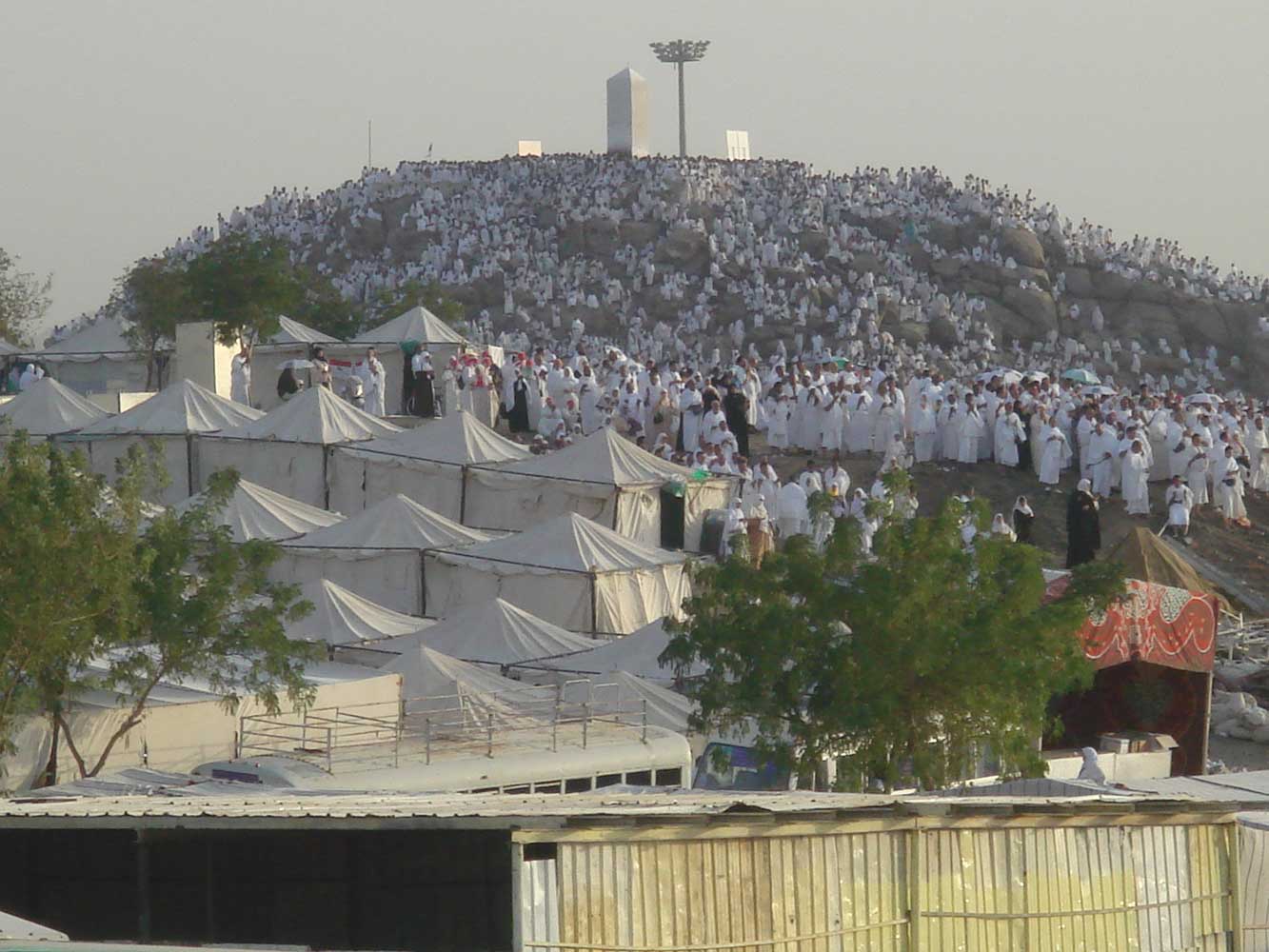
Mount of Mercy (Jabal al-Rahma), Arafat, near Mecca, during the annual Hajj pilgrimage, 2006. This is where the Prophet Muhammad delivered his Farewell Sermon to humanity in 632 CE, echoing God’s last message to humanity in the Qur’an [49:13].  Photo credit: (c) Haris Ahmad


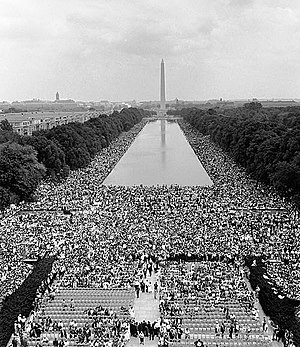
The “Million Man March” on Washington DC, 23 August 1968, that included Martin Luther King Jr.’s historic, “I Have A Dream” speech. Photo credit – Wikipedia

[This sermon is written to be read out, or adapted and edited by each individual preacher, khateeb or khateeba according to their unique situation, community and congregation. Delivery time is approximately 20-30 minutes, depending on your oratory style and any gems of wisdom that you would like to add further. You may also wish to add the traditional blessings upon mention of the Messengers of God, such as: “may God bless him and grant him peace.” You will also probably want to recite the Qur’anic verses quoted in Arabic as well – apologies that I do not have the time or technology at the moment to add the proper, mushaf text in Arabic. I hope to do that in the future, God-willing.]


[FIRST SERMON]

Al-hamdu li’Llahi rabbi-l-‘alamin. Was-salatu was-salamu ‘alal-mursalin – All Praise belongs to God, Lord of the Worlds. Blessings and Peace be upon the Messengers of God.


As hundreds of millions of people around our world mark the occasion of Hajj and Eid al-Adha this week, let us be reminded and inspired by the Qur’an,


O Humanity! We created you from Male and Female, and made you into Nations and Tribes, that you may know each other. Truly, the most honoured of you in the presence of God are the most pious of you. Truly, God is All-Knowing, All-Aware [Qur’an, Surat-ul-Hujurat, Chapter: The Chambers, 49:13]


… And by the Prophet Muhammad’s “Farewell Sermon” or Khutbat-ul-Wida’ delivered at the Hajj in the 10th year of the Islamic calendar or the year 632 of the Christian or Common Era. The Prophet’s farewell sermon was appropriately, and breathtakingly-symbolically, delivered at the “Mount of Mercy” (Jabal al-Rahma), for he was the most merciful messenger of God Most Merciful, and echoed the Qur’anic verse above:


“O people, truly your Lord is One and your ancestor is one. Truly, there is no superiority of Arab over non-Arab, of non-Arab over Arab, of white over black, of black over white, except by piety: all of you descended from Adam, and Adam was created from dust (or the soil of the earth).”  This is a soundly-transmitted, authentic or sahih hadith, and perfectly-congruent in meaning with the individual and holistic messages of the Qur’an.


These are the definitive Islamic declarations of universal equality: although clearly some people do more good than evil and vice-versa, since piety is only known to God, outwardly and essentially in this life, all people are absolutely equal.


When Martin Luther King Jr. famously declared,


I have a dream … that one day people will be judged not by the colour of their skin, but by the content of their character …


he was actually not stating anything new, except perhaps in the 1960s US context of the civil rights movement, a clear example of a blessed, social jihad, despite the US founding declaration that it was a self-evident truth that “all men are created equal.” The Muslim world had possessed this teaching for over 13 centuries, for “content of character” is another way of saying “piety” or “righteousness”, as in the above examples from the Book of God and the Way of His Messenger.


Let’s reflect on that again:


Firstly, in the 7th century of the Christian or Common Era, that is, in what many people today regard as backward medieval times, the Prophet Muhammad was inspired with a message of God that began, ya ayyuhan-nas: “O people or humanity!” Now, we know that there are many ayat or verses of the Qur’an, dozens in fact, that begin with ya ayyuhan-nas: “O people or humanity!” But if we study their tarteeb an-nuzul or chronological, time-based order of revelation, do you know which one was revealed last after 23 long years of prophethood, persecution and patient struggle in the path of God?


It was this verse of Surat-ul-Hujurat!


Secondly, after those long, 23 years of utter submission, servitude and spirituality, the Prophet chose, and he was guided by God as always, to impart this key teaching, or deliver this key message, as part of his farewell sermon on the Mount of Mercy that, like Jesus Christ’s Sermon on the Mount of Olives and Moses’ receipt of the revelation of the Ten Commandments on Mount Sinai centuries earlier, would resonate for millenia with the millions and millions of men and women of God.


The last verse of the Book of God addressed explicitly to humanity, and the last major message of the Messenger of God to mankind, delivered in the mountains of Mecca, the mountains that witnessed the message and still resonate with it, if only we knew. Therefore, this is indeed a universal, Islamic declaration by God and then by the Messenger of God, echoing and confirming his Brother-Messengers before him. But what does this universal Muhammadan proclamation say after ya ayyuhan-nas?


The Prophetic proclamation says, to paraphrase, that God created us and reflected in us the breathtaking beauty of His diversity, as males and females, and across the spectrum of gender and sexuality, for as we learn in multiple fields of God-given, beneficial knowledge, all of which is drops from the oceans of the Divine Knowledge, from mathematics to music to medicine to metaphysics, and from physics to photography to philology to politics and philosophy, the “opposite poles” of a spectrum such as “male and female” are often the dominant forces, normal modes, eigen-vectors and eigen-functions, but they also imply the entire spectrum itself.  “We created you from Male and Female.”


And in the Farewell Sermon, the Prophet reminded the male-dominated society that gender-based rights are mutual and that people of both sexes, the opposite pairs that imply the entire spectrum in between, complement each other in all aspects of life:


O People, it is true that you have certain rights with regard to your women, but they also have rights over you … Do treat your women well and be kind to them, for they are your lifelong partners and committed helpers.


Another passage of the Qur’an reminds us of our humble origins, our need for loving partners and spouses, and our ethnic and linguist diversity:


Amongst His Signs is this, that He created you from dust; and then,- behold, you are people scattered (far and wide)!


And amongst His Signs is this, that He created for you mates, partners and spouses from among yourselves, that you may dwell in tranquillity with them, and He has placed love and mercy between your (hearts): truly, in that are Signs for those who reflect.


And amongst His Signs is the creation of the heavens and the earth, and the variation and diversity in your languages and your colours: truly, in that are Signs for those who know.

[Qur’an, Surat al-Rum, Chapter: The Romans or Byzantines, 30:20-22]


The message of the Messenger continues with this depth of diversity by reminding us that we are different nations and tribes: different peoples in language, culture, with collectively multi-coloured skins and multi-coloured personalities. We have individual identities, but also group identities: nations and tribes, a tribe being a very large family. People now have new tribes, from political and religious affiliations to fans and supporters of particular sports-clubs and genres of art or music.


Nations and tribes lead to nationalism and tribalism, both of which can be good or bad, or a mixture of the two. The positives of nations and tribes is that these matters give us a sense of belonging and the comfort of community, for we are social creatures. Nations and tribes can do great things, such as feeding the poor, looking after widows, widowers and orphans, caring for animals and the earth, toppling tyrants, fighting oppression and injustice and building great civilisations that reflect the Majesty and Beauty of God by harnessing the power of collective effort and the synergy of diverse material and spiritual forces.


But nations and tribes can do immense evil when these forces descend, like vicious, collective egos into cycles of hatred, violence and revenge. “My nation first, whether it’s right or wrong!  My tribe first, whether it’s right or wrong!” The whole of human history, including the past, present and future, is littered with the awful cruelty, violence, warmongering and genocide caused by God-given nations and tribes being utterly misused, for evil rather than good.


And this is why, in this verse of Surat-ul-Hujurat, God follows mention of nations and tribes with: li ta’arafu: that you may know and recognise each other deeply. Know yourself, and know your nation and tribe, to give you a strong sense of the positive values, individual and collective, that inspire you to goodness, but do not use them to hate other people, other nations, other tribes, other sports fans, other political parties, simply for being different to you and irrespective of right and wrong.


Fourteen centuries ago, the Qur’an reminded us to dig deep and harness our individual and collective energies for goodness, and to bring people together. God didn’t say: li tanafaru or li taqatalu, that I created you in different nations and tribes to hate each other or to fight and kill each other and indulge your mad, genocidal impulses, but li ta’arafu: that you may know and recognise each other deeply, and see the beauty of God in each other’s good qualities, for people are mirrors of each other, with all our goodness and evil reflected back at us.


One of the great strengths and positive resources of today’s world is that through our God-given learning, telecommunication and travel, We, the peoples of the world, not just “We, the people” of America or Britain or Russia or Saudi Arabia or Iran or India or Pakistan or the blessed lands of Africa and the other great continents, but “We, the peoples of the world” are able to know, communicate with, learn about and develop deep friendships, and therefore to recognise each other on a deep human level, individually and collectively, more than ever before.


I seek the forgiveness of God, for me and for you all, for all of us. Seek His forgiveness, for truly, He alone is the Forgiver, the Merciful.


[SECOND SERMON]

Al-hamdu li’Llahi rabbi-n-nas, maliki-n-nas, ilahi-n-nas. All Praise belongs to God, Lord of humanity, King of humanity, Deity of humanity.

We now come to the crux, literally, of these majestic, divine teachings that are perhaps more relevant today than in all the bygone millenia of human history, because of the ever-increasing size of the human race and the competition for the earth’s scarce resource. Within our lifetimes, ours and our living parents and grandparents, the human family has rocketed from 2 billion people to nearly 8 billion today.


God says: Truly, the most honoured of you in the presence of God are the most pious of you.


And the Prophet said in his last message to the crowds of thousands gathered around him on his Hajjat-ul-Wida’ or Farewell Pilgrimage to Mecca:


O people, truly your Lord is One and your ancestor is one. Truly, there is no superiority of Arab over non-Arab, of non-Arab over Arab, of white over black, of black over white, except by piety: all of you descended from Adam, and Adam was created from dust (or the soil of the earth).


In other words, we are united despite our diversity: we are one human family, for as our scientists tell us, we are a narrow species as a human race, and there is no real scientific evidence for different races, only different skin-colours, that themselves will disappear through the increasing inter-marriage accelerated by globalisation, so that humans in a few centuries or millenia will all be the same colour and it will be clearer that there is only one race: the human race, and that is our ultimate nation and tribe.


There is no superiority of Arab over non-Arab, of non-Arab over Arab, of white over black, of black over white, except by piety.


And let’s face it bluntly and honestly, many Muslims have forgotten this and our communities and societies are plagued with racism: Arab v. non-Arab, North African Arab v. Black African, Arab v. Turk v. Kurd v. Persian v. Indian v. Chinese and all the subdivisions underneath. This jahiliyyah that Islam brilliantly eradicated in the City of the Prophet is back with a vengeance.  As we know from other Qur’anic verses and commentary and study of history from a Qur’anic lens, God honoured the Israelites with being custodians of His Covenant. Then this duty and honour passed to the Ishmaelites or Arabs. A century after the Prophet, it passed to the Persians and North Africans and Black Africans and Kurds and Mongols and Indians and Turks.  And now, each of these groups have nation-states that are vying for leadership of the Muslim world, and each one is claiming superiority over the other based on its history and supposedly-better culture. And the Arabs in particular – and my family, like most families of Indian Muslim heritage, claim Arab ancestry, have no superiority over others because, as Imam al-Shafi’i categorically showed, every Muslim is an Arab of sorts because every Muslim can recite at least one line from the Qur’an in Arabic. Furthermore, the Qur’an being in classical Arabic, does not make any Arab or Indian or Turk or Persian superior, if we do not live by the exalted ideals of God’s Holy, Noble and Majestic Word.

No!  The people who deserve to lead the “Muslim world” are the true people of God, plain and simple, those who love God and are loved by Him and who are always with the poor and the oppressed and the marginalised. And sometimes, it requires the greatest courage to keep saying basic truths when these are being forgotten and ridiculed.

As the greatest custodians and authorities of the Islamic tradition agreed:

God will give dominance to a non-Muslim state that practises justice over a Muslim state that practises oppression.

This is because God is Truth, and God is Just, and He underpinned His creation with the Balance, that we may not transgress the Balance. And there is no point countering Islamophobia with Westophobia, for Western, non-Muslim societies that are more just and better at human rights will continue to dominate Muslim societies that are culturally infested by racism, inequality, oppression of women, have appalling human rights records and even practise medieval slavery in a few places, although human-trafficking of men, women and children for forced labour and sexual slavery is a new problem all over the world, and it is called “modern slavery.”


Piety, or God-consciousness or true spirituality, is ultimately the most important “content of character.”

May Allah inspire us with the examples of His beloved servants. May Allah bless all of our countries, our nations, our peoples, our tribes, and enable us to do good and avoid evil.


[DU’AS OR SUPPLICATIONS]


[May Allah be with you, and accept and bless your sermons and your prayers!]


Usama Hasan

London, UK

Friday 8th Dhul Hijjah 1440 / 9th August, 2019


FROM THE PROPHET TO THE KING (A FRIDAY SERMON FOR MARTIN LUTHER KING DAY)

January 25, 2019

With the Name of God, All-Merciful, Most Merciful


FROM THE PROPHET TO THE KING – AN ISLAMIC FRIDAY SERMON ON THE UNIVERSAL EQUALITY OF HUMANITY, TO MARK THE WEEK OF MARTIN LUTHER KING JR. DAY


Mount of Mercy (Jabal al-Rahma), Arafat, near Mecca, during the annual Hajj pilgrimage, 2006. This is where the Prophet Muhammad delivered his Farewell Sermon to humanity in 632 CE, echoing God’s last message to humanity in the Qur’an [49:13].  Photo credit: (c) Haris Ahmad


The “Million Man March” on Washington DC, 23 August 1968, that included Martin Luther King Jr.’s historic, “I Have A Dream” speech. Photo credit – Wikipedia

[This sermon is written to be read out, or adapted and edited by each individual preacher, khateeb or khateeba according to their unique situation, community and congregation. Delivery time is approximately 20-30 minutes, depending on your oratory style and any gems of wisdom that you would like to add further. You may also wish to add the traditional blessings upon mention of the Messengers of God, such as: “may God bless him and grant him peace.” You will also probably want to recite the Qur’anic verses quoted in Arabic as well – apologies that I do not have the time or technology at the moment to add the proper, mushaf text in Arabic. I hope to do that in the future, God-willing.]


[FIRST SERMON]

Al-hamdu li’Llahi rabbi-l-‘alamin. Was-salatu was-salamu ‘alal-mursalin – All Praise belongs to God, Lord of the Worlds. Blessings and Peace be upon the Messengers of God.


As tens of millions of people around our world marked Martin Luther King Jr. Day this week, let us be reminded and inspired by the Qur’an,


O Humanity! We created you from Male and Female, and made you into Nations and Tribes, that you may know each other. Truly, the most honoured of you in the presence of God are the most pious of you. Truly, God is All-Knowing, All-Aware [Qur’an, Surat-ul-Hujurat, Chapter: The Chambers, 49:13]


… And by the Prophet Muhammad’s “Farewell Sermon” or Khutbat-ul-Wida’ delivered at the Hajj in the 10th year of the Islamic calendar or the year 632 of the Christian or Common Era. The Prophet’s farewell sermon was appropriately, and breathtakingly-symbolically, delivered at the “Mount of Mercy” (Jabal al-Rahma), for he was the most merciful messenger of God Most Merciful, and echoed the Qur’anic verse above:


“O people, truly your Lord is One and your ancestor is one. Truly, there is no superiority of Arab over non-Arab, of non-Arab over Arab, of white over black, of black over white, except by piety: all of you descended from Adam, and Adam was created from dust (or the soil of the earth).”  This is a soundly-transmitted, authentic or sahih hadith, and perfectly-congruent in meaning with the individual and holistic messages of the Qur’an.


These are the definitive Islamic declarations of universal equality: although clearly some people do more good than evil and vice-versa, since piety is only known to God, outwardly and essentially in this life, all people are absolutely equal.


When Martin Luther King Jr. famously declared,


I have a dream … that one day people will be judged not by the colour of their skin, but by the content of their character …


he was actually not stating anything new, except perhaps in the 1960s US context of the civil rights movement, a clear example of a blessed, social jihad, despite the US founding declaration that it was a self-evident truth that “all men are created equal.” The Muslim world had possessed this teaching for over 13 centuries, for “content of character” is another way of saying “piety” or “righteousness”, as in the above examples from the Book of God and the Way of His Messenger.


Let’s reflect on that again:


Firstly, in the 7th century of the Christian or Common Era, that is, in what many people today regard as backward medieval times, the Prophet Muhammad was inspired with a message of God that began, ya ayyuhan-nas: “O people or humanity!” Now, we know that there are many ayat or verses of the Qur’an, dozens in fact, that begin with ya ayyuhan-nas: “O people or humanity!” But if we study their tarteeb an-nuzul or chronological, time-based order of revelation, do you know which one was revealed last after 23 long years of prophethood, persecution and patient struggle in the path of God?


It was this verse of Surat-ul-Hujurat!


Secondly, after those long, 23 years of utter submission, servitude and spirituality, the Prophet chose, and he was guided by God as always, to impart this key teaching, or deliver this key message, as part of his farewell sermon on the Mount of Mercy that, like Jesus Christ’s Sermon on the Mount of Olives and Moses’ receipt of the revelation of the Ten Commandments on Mount Sinai centuries earlier, would resonate for millenia with the millions and millions of men and women of God.


The last verse of the Book of God addressed explicitly to humanity, and the last major message of the Messenger of God to mankind, delivered in the mountains of Mecca, the mountains that witnessed the message and still resonate with it, if only we knew. Therefore, this is indeed a universal, Islamic declaration by God and then by the Messenger of God, echoing and confirming his Brother-Messengers before him. But what does this universal Muhammadan proclamation say after ya ayyuhan-nas?


The Prophetic proclamation says, to paraphrase, that God created us and reflected in us the breathtaking beauty of His diversity, as males and females, and across the spectrum of gender and sexuality, for as we learn in multiple fields of God-given, beneficial knowledge, all of which is drops from the oceans of the Divine Knowledge, from mathematics to music to medicine to metaphysics, and from physics to photography to philology to politics and philosophy, the “opposite poles” of a spectrum such as “male and female” are often the dominant forces, normal modes, eigen-vectors and eigen-functions, but they also imply the entire spectrum itself.  “We created you from Male and Female.”


And in the Farewell Sermon, the Prophet reminded the male-dominated society that gender-based rights are mutual and that people of both sexes, the opposite pairs that imply the entire spectrum in between, complement each other in all aspects of life:


O People, it is true that you have certain rights with regard to your women, but they also have rights over you … Do treat your women well and be kind to them, for they are your lifelong partners and committed helpers.


Another passage of the Qur’an reminds us of our humble origins, our need for loving partners and spouses, and our ethnic and linguist diversity:


Amongst His Signs is this, that He created you from dust; and then,- behold, you are people scattered (far and wide)!


And amongst His Signs is this, that He created for you mates, partners and spouses from among yourselves, that you may dwell in tranquillity with them, and He has placed love and mercy between your (hearts): truly, in that are Signs for those who reflect.


And amongst His Signs is the creation of the heavens and the earth, and the variation and diversity in your languages and your colours: truly, in that are Signs for those who know.

[Qur’an, Surat al-Rum, Chapter: The Romans or Byzantines, 30:20-22]


The message of the Messenger continues with this depth of diversity by reminding us that we are different nations and tribes: different peoples in language, culture, with collectively multi-coloured skins and multi-coloured personalities. We have individual identities, but also group identities: nations and tribes, a tribe being a very large family. People now have new tribes, from political and religious affiliations to fans and supporters of particular sports-clubs and genres of art or music.


Nations and tribes lead to nationalism and tribalism, both of which can be good or bad, or a mixture of the two. The positives of nations and tribes is that these matters give us a sense of belonging and the comfort of community, for we are social creatures. Nations and tribes can do great things, such as feeding the poor, looking after widows, widowers and orphans, caring for animals and the earth, toppling tyrants, fighting oppression and injustice and building great civilisations that reflect the Majesty and Beauty of God by harnessing the power of collective effort and the synergy of diverse material and spiritual forces.


But nations and tribes can do immense evil when these forces descend, like vicious, collective egos into cycles of hatred, violence and revenge. “My nation first, whether it’s right or wrong!  My tribe first, whether it’s right or wrong!” The whole of human history, including the past, present and future, is littered with the awful cruelty, violence, warmongering and genocide caused by God-given nations and tribes being utterly misused, for evil rather than good.


And this is why, in this verse of Surat-ul-Hujurat, God follows mention of nations and tribes with: li ta’arafu: that you may know and recognise each other deeply. Know yourself, and know your nation and tribe, to give you a strong sense of the positive values, individual and collective, that inspire you to goodness, but do not use them to hate other people, other nations, other tribes, other sports fans, other political parties, simply for being different to you and irrespective of right and wrong.


Fourteen centuries ago, the Qur’an reminded us to dig deep and harness our individual and collective energies for goodness, and to bring people together. God didn’t say: li tanafaru or li taqatalu, that I created you in different nations and tribes to hate each other or to fight and kill each other and indulge your mad, genocidal impulses, but li ta’arafu: that you may know and recognise each other deeply, and see the beauty of God in each other’s good qualities, for people are mirrors of each other, with all our goodness and evil reflected back at us.


One of the great strengths and positive resources of today’s world is that through our God-given learning, telecommunication and travel, We, the peoples of the world, not just “We, the people” of America or Britain or Russia or Saudi Arabia or Iran or India or Pakistan or the blessed lands of Africa and the other great continents, but “We, the peoples of the world” are able to know, communicate with, learn about and develop deep friendships, and therefore to recognise each other on a deep human level, individually and collectively, more than ever before.


I seek the forgiveness of God, for me and for you all, for all of us. Seek His forgiveness, for truly, He alone is the Forgiver, the Merciful.


[SECOND SERMON]

Al-hamdu li’Llahi rabbi-n-nas, maliki-n-nas, ilahi-n-nas. All Praise belongs to God, Lord of humanity, King of humanity, Deity of humanity.

We now come to the crux, literally, of these majestic, divine teachings that are perhaps more relevant today than in all the bygone millenia of human history, because of the ever-increasing size of the human race and the competition for the earth’s scarce resource. Within our lifetimes, ours and our living parents and grandparents, the human family has rocketed from 2 billion people to nearly 8 billion today.


God says: Truly, the most honoured of you in the presence of God are the most pious of you.


And the Prophet said in his last message to the crowds of thousands gathered around him on his Hajjat-ul-Wida’ or Farewell Pilgrimage to Mecca:


O people, truly your Lord is One and your ancestor is one. Truly, there is no superiority of Arab over non-Arab, of non-Arab over Arab, of white over black, of black over white, except by piety: all of you descended from Adam, and Adam was created from dust (or the soil of the earth).


In other words, we are united despite our diversity: we are one human family, for as our scientists tell us, we are a narrow species as a human race, and there is no real scientific evidence for different races, only different skin-colours, that themselves will disappear through the increasing inter-marriage accelerated by globalisation, so that humans in a few centuries or millenia will all be the same colour and it will be clearer that there is only one race: the human race, and that is our ultimate nation and tribe.


There is no superiority of Arab over non-Arab, of non-Arab over Arab, of white over black, of black over white, except by piety.


And let’s face it bluntly and honestly, many Muslims have forgotten this and our communities and societies are plagued with racism: Arab v. non-Arab, North African Arab v. Black African, Arab v. Turk v. Kurd v. Persian v. Indian v. Chinese and all the subdivisions underneath. This jahiliyyah that Islam brilliantly eradicated in the City of the Prophet is back with a vengeance.  As we know from other Qur’anic verses and commentary and study of history from a Qur’anic lens, God honoured the Israelites with being custodians of His Covenant. Then this duty and honour passed to the Ishmaelites or Arabs. A century after the Prophet, it passed to the Persians and North Africans and Black Africans and Kurds and Mongols and Indians and Turks.  And now, each of these groups have nation-states that are vying for leadership of the Muslim world, and each one is claiming superiority over the other based on its history and supposedly-better culture. And the Arabs in particular – and my family, like most families of Indian Muslim heritage, claim Arab ancestry, have no superiority over others because, as Imam al-Shafi’i categorically showed, every Muslim is an Arab of sorts because every Muslim can recite at least one line from the Qur’an in Arabic. Furthermore, the Qur’an being in classical Arabic, does not make any Arab or Indian or Turk or Persian superior, if we do not live by the exalted ideals of God’s Holy, Noble and Majestic Word.

No!  The people who deserve to lead the “Muslim world” are the true people of God, plain and simple, those who love God and are loved by Him and who are always with the poor and the oppressed and the marginalised. And sometimes, it requires the greatest courage to keep saying basic truths when these are being forgotten and ridiculed.

As the greatest custodians and authorities of the Islamic tradition agreed:

God will give dominance to a non-Muslim state that practises justice over a Muslim state that practises oppression.

This is because God is Truth, and God is Just, and He underpinned His creation with the Balance, that we may not transgress the Balance. And there is no point countering Islamophobia with Westophobia, for Western, non-Muslim societies that are more just and better at human rights will continue to dominate Muslim societies that are culturally infested by racism, inequality, oppression of women, have appalling human rights records and even practise medieval slavery in a few places, although human-trafficking of men, women and children for forced labour and sexual slavery is a new problem all over the world, and it is called “modern slavery.”


Piety, or God-consciousness or true spirituality, is ultimately the most important “content of character.”


Hence, we’ve gone from the Prophet, Messenger of God, to the King, Reverend Martin Luther King, a man of God:


I have a dream … that one day people will be judged not by the colour of their skin, but by the content of their character …


Whether you’re inspired to universal equality by the Qur’an, the Prophet Muhammad, Martin Luther King Jr. or any other person, scripture or text, please remember that all people are indeed equal, and entitled to basic respect. We may disagree and criticise each other’s views, behaviour and actions, but we remain equal in our essence and our source, and our own behaviour and responses to others should reflect this fundamental truth.


In the week that many people remember Martin Luther King Jr., let us Muslims remember that Prophet Muhammad, Messenger of God, delivered the same message, but with even more depth, spirituality and heroic human spirit, and lived it out from Mecca to Medina and back to Mecca, nearly a millennium and a half ago.


May Allah inspire us with the examples of His beloved servants. May Allah bless all of our countries, our nations, our peoples, our tribes, and enable us to do good and avoid evil.


[DU’AS OR SUPPLICATIONS]


[Recommendation for the 2-rak’at salat (Friday prayer): recite Surah al-Hujurat over the two rak’ahs, preferably all of it or at least some of it, e.g.:


1st rak’ah: Verses 1-10

2nd rak’ah: Verses 11-17

I recommend also reading, just reading with no comment, a good translation of the entire Surah, after the prayer – we must rekindle the effect of sacred words, eloquently said from the heart, for then the Word of God needs no explanation, and will move mountains and hearts.

May Allah be with you, and accept and bless your sermons and your prayers!]


Usama Hasan

USA

Friday 25th January, 2019


[Version 1.0: 12.30pm GMT/UST ~2,000 words or 15-20 minutes’ sermon

Version 1.1:  11pm GMT/UST ~2,800 words or 20-30 minutes’ sermon]


The Moonsighting Controversy: Can Eid al-Adha be separated from the Hajj?

July 14, 2009

Is Eid-ul-Adha connected with the Hajj

In past years, the Saudi announcements for the dates of Eid have been heavily criticised by Muslim astronomers.  Many scholars argue that Muslims around the world are not obliged to celebrate Eid al-Adha the day after the Day of Arafat during the Hajj in present-day Saudi Arabia.  This 10-page article by Hood Bradford discusses the issue, with useful quotes from classical and contemporary jurists.

CONTENTS

1. DETERMINING THE ISLAMIC CALENDAR: GLOBAL VS. REGIONAL SIGHTING
2. DETERMINING THE ISLAMIC CALENDAR: USING ASTRONOMY AND CALCULATIONS
3. EVIDENCE FOR ARAFAH BEING THE DAY THE PEOPLE STAND AT ARAFAH AND EID AL ADHAA COINCIDING WITH THE STONING OF THE JAMARAAT
4. PRAYING WITH THE REST OF THE MUSLIMS IN THE COMMUNITY
5. RUDENESS AND SPEAKING BAD OF OTHERS FOR FOLLOWING AN ISSUE WHICH THERE IS LEGITMATE DIFFERENCE OF OPINION

Ibn Taymiyyah on Fasting and Moonsighting

July 14, 2009

Ibn Taymiyyah – Fasting and Moonsighting v1 (16 pages including commentary by Usama Hasan)

From the Collected Fatwas of Ibn Taymiyyah (Majmu’ Fatawa Shaykh al-Islam Ibn Taymiyyah), ed. ‘Abd al-Rahman b. Qasim and his son Muhammad, Riyadh, 1398 H, vol. 25 (vol. 5 of the Fiqh Section), pp. 98-113.

TABLE OF CONTENTS

1 Fasting on the day when it might or might not be the first of Ramadan
1.1 Caution in legal matters
1.2 Does the hilal exist only when it is visible, or does it have an independent existence?

2 How far geographically is a hilal-sighting valid?

2.1 The impact of knowledge and communication constraints on this matter
2.2 Travelling to a place where Ramadan began on a different day
2.3 The importance of information in this matter
2.4 The meaning of “hilal”
2.5 Summary of the discussion so far
2.6 A further discussion about the hilal and the Hajj

Hajj – The Journey of Love

June 7, 2009

An incomplete draft translation of the wonderful Qasidah Mimiyyah by Imam Ibn Qayyim al-Jawziyyah, with explanatory notes.  The translation has reached 133 of the 229 lines (abyat) of the original Arabic text, so there’s still some more to do, God-willing. The English rendering is not great poetry, but I’m simply trying to convey some of the meaning in this great Qasidah.

Hajj – The Journey of Love

Hajj – The Journey of Love (Arabic text)