Posts Tagged ‘Prophet Muhammad’

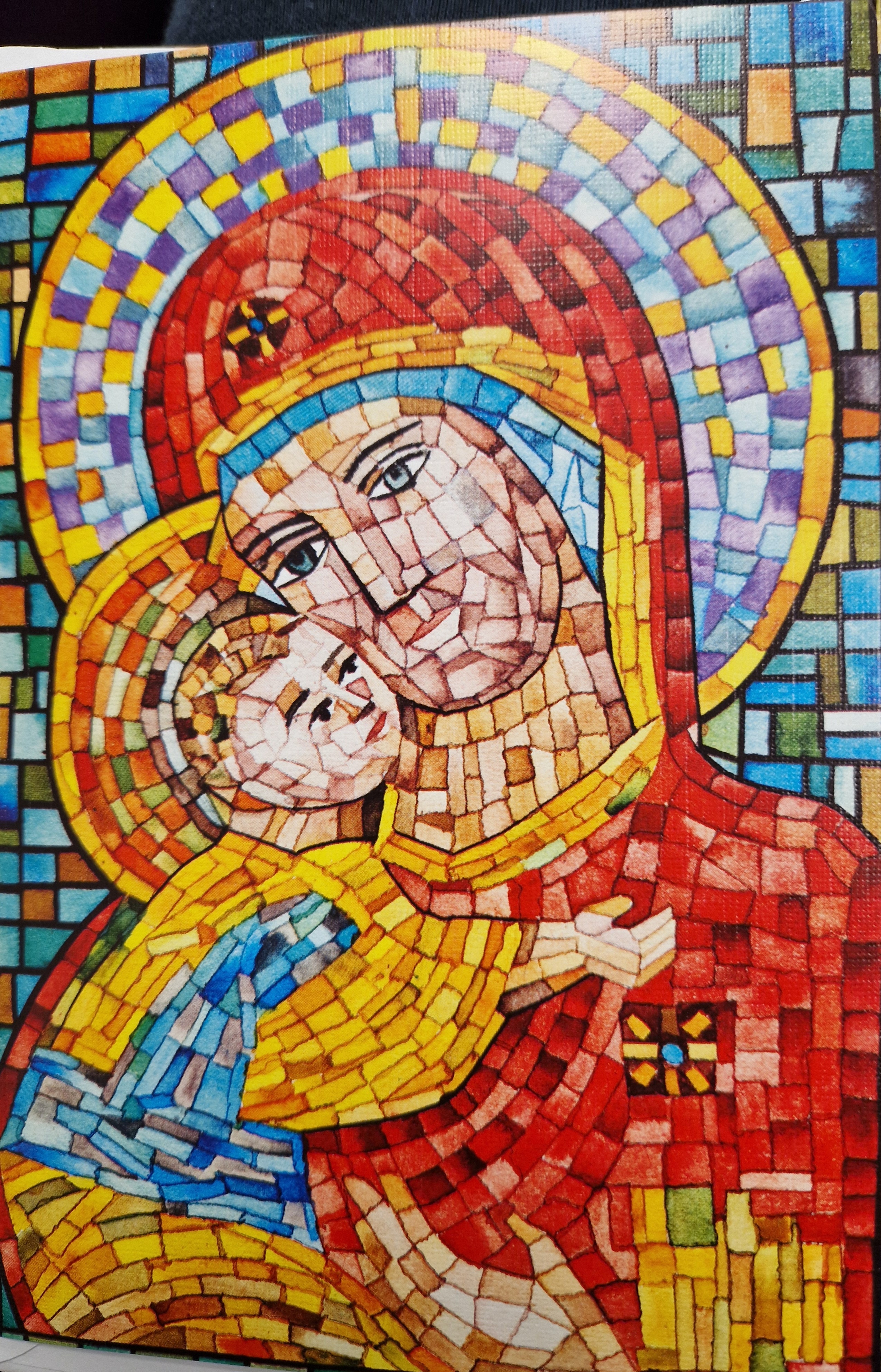
Did the Prophet Muhammad protect an icon of Mary and Jesus inside the Ka’bah at Mecca?

December 25, 2025

Bismillah. This alleged incident, at the time of the Conquest of Mecca when the Ka’bah was purified of the 360+ idols around it and inside it, was famously mentioned by Martin Lings (Abu Bakr Siraj al-Din), may God have mercy upon him, in his book, Muhammad: His Life Based on the Earliest Sources.

In 1990, JIMAS (UK) published a then-recent exchange of letters in the Saudi Gazette between Abu Bilal Mustafa al-Kanadi [The Canadian], may God have mercy upon him, and Martin Lings, in which Kanadi was very critical of Lings: one of his criticism was Lings’ inclusion of this story in his Sirah (Biography of the Prophet), based on its mention by al-Waqidi in Kitab al-Maghazi (The Book of Military Expeditions) and al-Azraqi (d. 250 H) in Akhbar Makkah (History of Mecca). That exchange is reproduced at the bottom of this post, for reference. Neither correspondent referred to the Hadith expert Imam Dhahabi’s discussion and comment on this report.

Imam Dhahabi’s discussion and comment on this report
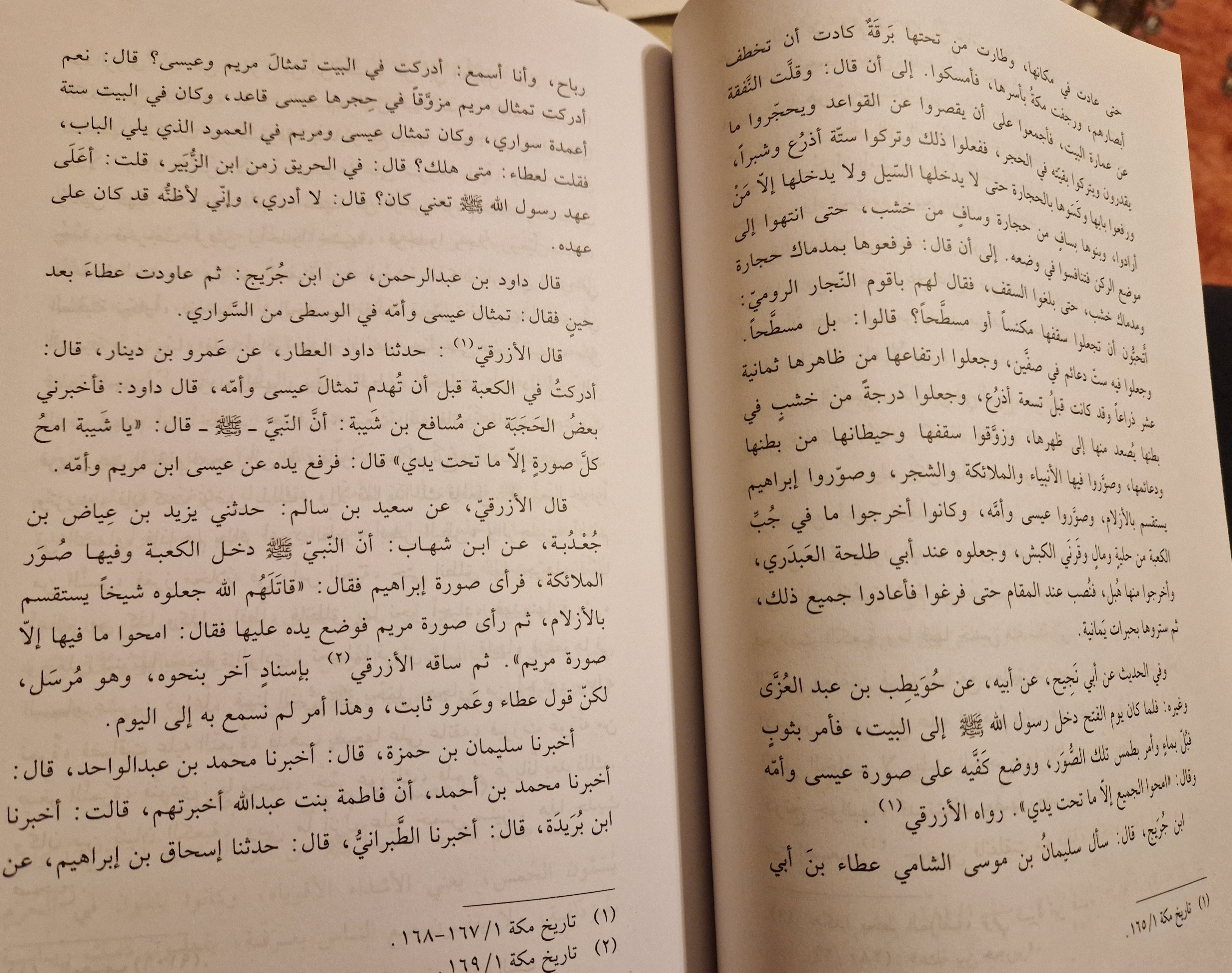
Muslim [bin Khalid] al-Zanji [The Negro], on the authority of Ibn Abi Najih, on the authority of his father [Abu Najih], who said: Men of the Quraysh sat and reminisced about the building of the Ka’bah … [The builders] depicted prophets, angels and trees inside it. They depicted Ibrahim [Abraham] divining with arrows. They depicted Jesus and his mother …

And in the hadith on the authority of Ibn Abi Najih, on the authority of his father [Abu Najih], on the authority of Huwaytib bin ‘Abdul ‘Uzza and others: On the day of the Conquest [of Mecca], the Messenger of God, may God bless him and grant him peace, entered the House [of God]. He ordered for a cloth to be moistened and commanded that those pictures be effaced. He placed his palms upon the picture of Jesus and his mother and said, “Erase them all, except what is beneath my hand.” Al-Azraqi transmitted it.[1]

Ibn Jurayj said: Sulayman bin Musa al-Shami [The Syrian] asked ‘Ata’ bin Abi Rabah [The Mufti of Mecca] whilst I was listening, “Did you come across the statue[2] of Mary and Jesus in the House [of God]?” He replied, “Yes, I came across the embellished[3] statue of Mary with Jesus standing in her lap. There used to be six support pillars inside the House: the statue of Jesus and Mary was in the pillar nearest the door.” So I [Ibn Jurayj] asked ‘Ata’, “When was it destroyed?” He replied, “In the fire during the rule of Ibn al-Zubayr.” I asked, “Do you mean that it was there during the time of the Messenger of God, may God bless him and grant him peace?” He replied, “I do not know, but I think it was there during his time.”

Dawud bin ‘Abdul Rahman said, on the authority of Ibn Jurayj: I then repeated the question to ‘Ata’ after a while. He said, “The statue of Jesus and his mother was in the middle pillar.”

Al-Azraqi said: [4] Dawud al-‘Attar [The Perfumier] narrated to us, on the authority of ‘Amr bin Dinar, who said, “I came across the statue of Jesus and his mother in the Ka’bah before it was demolished.”[5] Dawud said: One of the gatekeepers informed me on the authority of Musafi’ bin Shaybah that The Prophet, may God bless him and grant him peace, said: “O Shaybah! Erase all the pictures except what is beneath my hand.” When he lifted his hand, there was Jesus, son of Mary, and his mother.

Al-Azraqi said, on the authority of Sa’id bin Salim: Yazid bin ‘Iyad bin Ju’dubah narrated to me, on the authority of Ibn Shihab [al-Zuhri] that The Prophet, may God bless him and grant him peace, entered the Ka’bah containing pictures of angels. He saw the picture of Ibrahim [Abraham] and said, “May God fight them! They made him an old man divining with arrows.” He then saw the picture of Mary and placed his hand upon it, saying, “Erase all [the pictures] in it, except the picture of Mary.”

Al-Azraqi then quoted similarly with another chain of transmission. It is mursal [“hanging loose”; discontinuous].[6] But the statements of ‘Ata’ and ‘Amr are established (thabit): this is a matter that we had never heard of until today. [emphasis added]

Source:

al-Imam Shams al-Din Muhammad bin Ahmad bin ‘Uthman al-Dhahabi (d. 748 H / 1347 CE),
Siyar A’lam al-Nubala’ (Biographies of Notable Nobles),
ed. Dr Bashshar ‘Awwad Ma’ruf,
Mu’assasat al-Risalah, Beirut, 1422 H / 2001 CE, vol. 26, pp. 67-69


[1] The editor of the Siyar adds the reference: Akhbar Makkah,1/165

[2] Timthal: icon, picture or statue

[3] Muzawwaq: embellished, especially with quicksilver (mercury) or an amalgam of quicksilver and gold.

[4] The editor of the Siyar adds the reference: Akhbar Makkah,1/167-8

[5] The Ka’bah has been destroyed and rebuilt several times in its history due to floods, fires, earthquakes, etc.

[6] Mursal especially refers to a Follower (Tabi’i) quoting the Prophet directly without naming the Companion (Sahabi) from whom he must have heard the narration. In this case, Ibn Shihab [al-Zuhri] is a Follower and quotes The Prophet directly without naming the intervening Companion(s), so the narration is mursal. There is much difference of opinion amongst Hadith scholars about the authenticity of the mursal hadith. See the section on this topic in Suhaib Hasan, An Introduction to the Science of Hadith, Al-Qur’an Society, London, 1994, pp. 24-29.

ANALYSIS & BIOGRAPHICAL NOTES from Imam Dhahabi’s Tadhkirat al-Huffaz (Memoire of the Preservers of Hadith)

A. IBN SHIHAB AL-ZUHRI (50-124 H): The most knowledgeable of the Preservers of Hadith (Huffaz)

Abu Bakr Muhammad bin Muslim bin ‘Ubaydillah bin ‘Abdillah bin Shihab bin ‘Abdillah bin Zuhrah bin Kulab, The Qurayshi, The Zuhri, The Madinan, The Imam. He narrated Hadith from Ibn ‘Umar, Sahl bin Sa’d, Anas bin Malik, Mahmud bin al-Rabi’, Sa’id bin al-Musayyib, Abu Umamah bin Sahl and their generation of minor Companions (Sahabah) and major Followers (Tabi’in). The following narrated Hadith from him: Ma’mar bin Rashid, Awza’i, Layth, Malik, Sufyan bin ‘Uyaynah and multitudes besides them.

Layth said, “I never saw a person of knowledge at all more comprehensive than Zuhri. He would narrate about encouragement of worship: you would say that he only specialised in that. If he narrated about the (history of) the Arabs and genealogies, you would say that he only specialised in those. If he narrated about the Qur’an and the Sunnah, then similarly … He was amongst the most generous of people … He used to drink honey a lot, but not eat apples. He said: I never forgot any knowledge after my heart had deposited it … No-one has had patience upon knowledge like my patience; no-one has spread knowledge the way I have.”

Nafi’ checked his memorisation of the Qur’an with Zuhri. (Zuhri memorised the entire Qur’an in eighty nights.) ‘Umar bin ‘Abdul ‘Aziz said, “No one remains more knowledgeable about past traditions than Zuhri.” Malik said, “Ibn Shihab remained, but there was no-one similar to him in the world.” Ayyub al-Sikhtiani said, “I did not see anyone more knowledgeable than him.” ‘Amr bin Dinar said, “I did not see the dinar (gold coin) and the dirham (silver coin) less important to anyone than Zuhri: they were like dung to him.” Others said: Zuhri was an accomplished soldier. He used to dye his grey hair with henna.

[The Umayyad Caliph] Hisham bin ‘Abdul Malik asked Zuhri to dictate some knowledge to one of his sons, so he dictated four hundred hadiths to him. Zuhri then assembled People of Hadith and narrated those four hundred hadiths to them. He met Hisham again after a month or so: Hisham tested him by telling him that the book of dictated hadiths had been lost. Zuhri called a scribe and dictated the hadiths again: these were compared against the original book, and there was not a single difference, not even in a letter. Makhul was asked, “Who was the most knowledgeable person you ever met?” He replied, “Ibn Shihab.” He was asked, “Then who?” He replied, “Ibn Shihab.”

Some further statements of Ibn Shihab al-Zuhri:

“Al-Qasim bin Muhammad said to me: I see that you are eager for knowledge: Shall I not then point you to one of its great vessels? … ‘Amrah bint ‘Abdul Rahman, for she grew up in ‘Aisha’s lap. So I came to her and found her to be an ocean that could not be exhausted.”

“I never revised knowledge at all.”

“Whoever would like to memorise hadiths, should eat raisins.”

“A Preserver of Hadith is only born once in forty years.”

“God has not been worshipped via anything better than knowledge.”

B. ‘AMR BIN DINAR, THE PRESERVER OF HADITH, THE IMAM (c. 46-126 H)

The person of knowledge of the Sanctuary (Haram). Abu Muhammad of Jumayh (their freed-slave), The Meccan, al-Athram. He heard traditions from Ibn ‘Abbas, Ibn ‘Umar, Jabir bin ‘Abdillah, Bajalah bin ‘Abdah, Anas bin Malik, Abu l-Sha’tha’, Tawus and many others. Shu’bah, Ibn Jurayj, the two Hammads [Hammad bin Zayd & Hammad bin Salamah], the two Sufyans [Sufyan bin ‘Uyaynah & Sufyan al-Thawri], Warqa’ and many besides them, all narrated from him.

Shu’bah said, “I did not see anyone more established in Hadith than ‘Amr.” Ibn Mahdi said: Shu’bah said to me, “I did not see anyone like ‘Amr bin Dinar.” Yahya al-Qattan and Ahmad [bin Hanbal] said, “He was more established than Qatadah.” ‘Abdullah bin Abi Najih said, “I never saw anyone at all with more (juristic) understanding than ‘Amr, not even ‘Ata’, Mujahid or Tawus.”

Ibn ‘Uyaynah said, “He would not leave the mosque. He would ride a donkey. I only ever saw him sitting down. He was a person of understanding (jurist). He would narrate by meaning … Trustworthy, Trustworthy, Trustworthy … He divided the night into three: he would sleep for a third, teach his hadiths for a third and pray for a third … We did not have anyone with more understanding, knowledge or preservation than ‘Amr bin Dinar.”

The Hafiz Ibn al-Mufaddal established him as one of the four amongst the top generation (of hadith-narrators) after the year 40 H: Zuhri, ‘Amr bin Dinar, Qatadah & Abu Ishaq al-Sabi’i.

C. MUSLIM BIN KHALID AL-ZANJI (100-180 H): “the Imam, the Man of Understanding (Jurist) … Shaykh of the Sanctuary (Haram).”

Muslim bin Khalid al-Zanji [The Negro]. He narrated Hadith from the likes of Ibn Abi Mulaykah, Ibn Shihab al-Zuhri, ‘Amr bin Dinar, Zayd bin Aslam, Hisham bin ‘Urwah, ‘Abdul Malik Ibn Jurayj and their generation. He devoted himself to Ibn Jurayj for a while, gained juristic understanding and gave fatwas, concentrating on knowledge. He transmitted the (Qur’anic) letter variations (huruf) from ‘Abdullah bin Kathir, and gave Shafi’i permission to give fatwas. Shafi’i, Marwan al-Tatiri, Humaydi, Musaddad, Hakam bin Musa, the Hafiz Ibrahim bin Musa, Hisham bin ‘Ammar and others narrated Hadith from him.

Azraqi said, “He was a person of understanding and worship. He would fast all the time.”

Yahya Ibn Ma’in said, “There is no problem with him.”

Ibn ‘Adi said, “He is good in Hadith: I hope there is no problem with him.”

Abu Dawud said, “Weak in Hadith.”

Bukhari said, “Rejected in Hadith.”

Abu Hatim said, “He is not used as a proof.”

Ibrahim al-Harbi said, “He was the Jurist of Mecca.”

Suwayd said, “He was named ‘The Negro’ because of his black skin.” But Ibn Sa’d and others said that he was blonde: he was termed ‘The Negro’ via the irony of opposite meaning. Dhahabi: He died in 180 H, aged 80.

ISLAM & THE SEVEN STAGES OF GRIEF

November 29, 2025
3D Isometric Flat Vector Conceptual Illustration of Stages Of Grief, Denial, Anger, Bargaining, Depression, Acceptance

ISLAM & THE SEVEN STAGES OF GRIEF

Bismillah.

Previously, there were five stages of grief generally accepted amongst psychologists as:
1. SHOCK, 2. DENIAL, 3. ANGER, 4. BARGAINING, 5. ACCEPTANCE/HOPE.

Recently, some people have extended this to seven stages by adding GUILT & DEPRESSION after ANGER. But it varies from person to person: these are not necessarily linear stages: they may be cyclical or iterative.  Hence, the 7 stages of grief are:

1. SHOCK, 2. DENIAL, 3. ANGER, 4. GUILT, 5. DEPRESSION, 6. BARGAINING, 7. ACCEPTANCE/HOPE.

0. GRIEF

0.1 THE PROPHET MUHAMMAD’S YEAR OF GRIEF AND SORROW

The Prophet, peace be upon him, experienced his “year of grief or sorrow” (عام الحزن,  ‘Ām al Huzn) during his tenth year of prophethood, ie 3 years before the Hijra, when his only wife Khadija, his stalwart support for 25 years, died, followed closely by his uncle, Abu Talib, his tribal protector as chief of his clan, the Banu Hashim.

(I’m grateful to the Christian priest, whose name I’ve forgotten, who attended our Qur’an discussion circles c. 2013-14 and wished to co-write with me a Christian-Muslim guide to grief, since he had read about the Prophet’s “Year of Grief.” I didn’t have the time or capacity to work on it at the time, but he gave me an idea that has come to fruition today, God-willing.)

0.2 PROPHET YA’QUB BIN ISHAQ BIN IBRAHIM, aka ISRA’IL (JACOB BEN ISAAC BEN ABRAHAM, aka ISRAEL)

In the Surah named after his 11th son, Prophet Yusuf (Joseph), grief is prominent in the “best of stories.”

قال إني ليحزنني أن تذهبوا به وأخاف أن يأكله الذئب وأنتم عنه غافلون

(Yusuf, Joseph, 12:13)

When his elder 10 sons ask for his permission to take Joseph for a day out, Jacob combines grief (for the past) with fear (of the future):

“It grieves me that you take him away (from me), and I fear that the wolf will devour him whilst ye are heedless of him.”

When his sons lie to him, saying that the wolf had indeed eaten Joseph, Jacob sees through their lies and resigns himself to “beautiful patience” (صبر جميل).

Later, when his first 10 sons manage to come home without the 12th son Binyamin (Benjamin) as well, Jacob expresses extreme sorrow for Joseph, reiterates his commitment to “beautiful patience” and goes blind from grief:

وتولّى عنهم وقال ياأسفى على يوسف وابيضت عيناه من الحزن فهو كظيم 

(Yusuf, Joseph, 12:84)

Although Ibn Kathir quotes the commentator Dahhak as explaining kazeem here to mean ka’eeb: intense grief and broken in spirit, i.e. depressed, the vast majority of commentators agree that Prophet Jacob displayed beautiful patience and did not complain to anyone except God, restraining his sorrow and grief. Others amongst the Salaf said that he waited eighty years to see his beloved son Joseph, for whom his grief equalled that of seventy bereaved parents, but he “was never pessimistic about God.” (Tafsir Tabari)

1. SHOCK

1.1 UMAR BIN AL-KHATTAB: SHOCK, DENIAL, ANGER, ACCEPTANCE

Our Master Umar was in shock, denial and anger upon the news of the Prophet’s death, threatening to kill anyone who said that the Prophet was dead, until Our Master Abu Bakr said the famous words:

“Whoever worshiped Muhammad, he should know that Muhammad has died. Whoever worships God, he should know that God is The Ever-Living, Who Will Never Die.”

Abu Bakr also recited from Surah Āl Imran (The Family of Amram), the verses confirming that Muhammad was mortal and speaking of the possibility of his death, for every soul has a predestined moment of death, praising those who show gratitude. Umar commented: “It was as though I had never heard these verses before!” He rapidly reached the stage or station of Acceptance. 

وما محمد إلا رسول، قد خلت من قبله الرسل، أفائن مات أو قتل انقلبتم على أعقابكم، ومن ينقلب على عقبيه فلن يضرّ الله شيئا، وسيجزي الله الشاكرين

وما كان لنفس أن تموت إلا بإذن الله كتابا مؤجلا، ومن يرد ثواب الدنيا نؤته منها، ومن يرد ثواب الآخرة نؤته منها، وسنجزي الشاكرين

Āl Imran, The Family of Amram, 3:144-5)

3. ANGER

3.1 KHALID BIN WALEED 

Our Master Khalid bin Waleed, the Sword of God, was overcome by grief on his deathbed when he realised he wouldn’t be granted martyrdom on the battlefield (because no human’s sword could defeat the Sword of God). He was especially frustrated at knowing how many people are cowards. Khalid’s last words were:

“I have a wound on every inch of my body, but I’m dying like an aging camel. May the eyes of cowards never (find rest in) sleep!”

ASIDE:

Khalid bin Waleed’s extraordinary life and military genius and career deserve to be immortalised in an epic poem in English. I have written opening and closing stanzas for such a poem. I pray that I or someone else is able to complete it:

OPENING STANZA: THE TALE OF KHALID BIN WALEED 

If your eyes do weep and your heart does bleed

At the state of the Muslim nation, 

Then remember the tale of Khalid bin Waleed:

It is enough as inspiration. 

[…]

CLOSING STANZA: KHALID BIN WALEED’S LAST WORDS

“I’m dying like a camel

(Or like an aging sheep):

May the eyes of cowards 

Never rest in sleep!”

TRIVIUM: THE KHALID BIN WALEED PARK IN PESHAWAR, PAKISTAN

This park goes by its Urdu/Farsi name: Khalid bin Waleed Bagh. The locals are Pathan (Pashtun), and so pronounce it somewhat Farsi style, as follows, making the ‘a’ sound like ‘o’: Kholid bin Woleed Bagh. British Empire troops stationed in Peshawar heard it pronounced like this, switched the syllables around and nicknamed the park, the “Colly-Wolly Bean Bag.”

3.2 TRUE PATIENCE IS ONLY AT THE FIRST BLOW

Anas bin Malik narrated that the Prophet, may God bless him and grant him peace, passed by a woman who was weeping at a graveside, mourning a child she had lost. The Prophet said, “Fear God, and have patience.” She replied, not recognising him, “Get away from me, for you have not been afflicted by my affliction!” She was told that it was the Prophet who had spoken to her, so she came to his door and, finding no doorkeepers, said to him, “I did not recognise you.” He replied, “(True) Patience is only at the first blow.” (Bukhari & Muslim)

TRIVIUM: The Arabic for “blow” here is sadmah, root SDM. The name Saddam is derived from this as an intensive form, thus meaning, “One who delivers crushing blows.”

4. GUILT: JOSEPH’S BROTHERS

The 10 elder brothers of Prophet Yusuf (Joseph) had feelings of grief at the perceived favouritism of their father towards Yusuf. This manifested in Anger when some of them suggested killing him. Others felt guilty about this and suggested throwing him into a well, which is what they did. They must have had some feelings of guilt around this, and around lying to their father about Yusuf being eaten by a wolf. After many years, once they were reunited with Yusuf and his magnanimity, they went through the stages of Bargaining and Acceptance/Hope, admitting their mistakes to both Yusuf and their father Ya’qub. (Yusuf, Joseph, 12:91 & 12:97)

7. ACCEPTANCE/HOPE: NO FEAR, NO GRIEF

The Prophet, may God bless him and grant him peace, endured his Year of Grief with immense patience and acceptance. This is the way of “living in the moment” as “children of the moment in time” (abna’ al-waqt) without fear (of the future) or grief (for the past), the way of the “Friends of God” or saints. The phrase, “There will be no fear upon them, nor will they grieve,” occurs repeatedly in the Qur’an for the People of the Garden in the Hereafter. However, it applies to certain, select people in this world also:

أَلَآ إِنَّ أَوْلِيَآءَ ٱللَّهِ لَا خَوْفٌ عَلَيْهِمْ وَلَا هُمْ يَحْزَنُونَ
ٱلَّذِينَ ءَامَنُوا۟ وَكَانُوا۟ يَتَّقُونَ

Lo! Truly, the Friends of God:

There is no fear upon them, 

Nor do they grieve:

Those who have achieved faith (inner security)

And were always saving themselves (taqwa).

(Yunus, Jonah, 10:62-63)

In Imam al-Qushayri’s Treatise on Tasawwuf (Sufism), the first topic he discusses after brief biographies of early Sufis is that of Time (Waqt), where he says that “the Sufi is the son of his time,” i.e. that he lives in the moment. Shaykh Hamza Yusuf linked this to the above Qur’anic verse during a conversation in Abu Dhabi, 2022.

It is narrated from the Prophet, may God bless him and grant him peace, that this applies to people in this world “who did not fear when the people had fear, and did not grieve when people grieved.” They will be surrounded by Light in the Hereafter, and made to sit upon pulpits of Light: even the Prophets and the Martyr-Witnesses will be amazed by their station. (Tafsir Tabari, #17,730 & #17,731)

Usama Hasan

London, UK

8th Jumada al-Thani 1447

28th November 2025

WHO ARE THE MU’ALLAFATU QULUBUHUM (THOSE WHO ARE GIVEN ZAKAT TO BRING THEIR HEARTS NEAR) ?

April 22, 2024

WITH THE NAME OF GOD, ALL-MERCIFUL, MOST MERCIFUL

WHO ARE THE MU’ALLAFATU QULUBUHUM
(THOSE WHO ARE GIVEN ZAKAT/ALMS TO BRING THEIR HEARTS NEAR) ?

Allah (God) says in the Qur’an:

إِنَّمَا الصَّدَقـٰتُ لِلفُقَراءِ وَالمَسـٰكينِ وَالعـٰمِلينَ عَلَيها وَالمُؤَلَّفَةِ قُلوبُهُم وَفِى الرِّقابِ وَالغـٰرِمينَ وَفى سَبيلِ اللَّهِ وَابنِ السَّبيلِ ۖ فَريضَةً مِنَ اللَّهِ ۗ وَاللَّهُ عَليمٌ حَكيمٌ

Truly, the [compulsory] alms are only for: the poor; the needy;
those who work upon them (in alms-collection);
those whose hearts are brought near;
those whose necks are under the yoke;
those who have taken on a major debt;
in the path of God; and the child of the path [i.e. the traveller]:
an obligation from God: for God is Knowing, Wise.

(Surah al-Tawbah, Repentance, 9:60 Hafs)

TAFSIR TABARI ON THIS VERSE (SUMMARISED)

Imam Tabari (224-310 H / 839-923 CE) said:

As for “those whose hearts are brought near”: they were a group of people who were brought closer to Islam (through the incentive of being given wealth), who could not be (openly) supported. The alms benefited themselves and their close families. Such people were: Abu Sufyan bin Harb, ‘Uyaynah bin Badr, Aqra’ bin Habis and similar heads of tribes.

Similar to what we have said, has been said by the People of Interpretation.

Mention of those who said that: Ibn ‘Abbas, Yahya bin Abi Kathir, Zuhri, Mujahid, Hasan [Basri] and Qatadah. Yahya bin Abi Kathir said that such heads of tribes were given a hundred she-camels[1] each by the Prophet, may God bless him and grant him peace; a few others were given fifty each. Zuhri added that this phrase includes Jews and Christians who submit to God (via Islam), even if they are rich.

The people of knowledge differed about whether or not this category exists today, and whether anyone today may be given charity to bring them closer to Islam?

Some of them said: The category of “those whose hearts are brought together” is invalid today: there is no share in the compulsory alms except for those in need, those in the path of God and those who work upon them (in alms-collection).

Mention of those who said that: Hasan [Basri], ‘Amir [bin Sharahil al-Sha’bi] and ‘Umar bin al-Khattab.

When ‘Uyaynah bin Hisn came to [Caliph] ‘Umar bin al-Khattab [seeking to be given alms], ‘Umar said, “The Truth (has come) from your Lord: so whoever wishes to, may have faith; and whoever wishes to, may deny!” [Surah al-Kahf, The Cave, 18:29 Hafs] That is, there is no bringing near today.

‘Amir [bin Sharahil al-Sha’bi] said: Those whose hearts were brought near, were only during the time of the Prophet, may God bless him and grant him peace: when Abu Bakr, may God Exalted’s Mercy be upon him, came to power, incentives stopped.

Others said: “Those whose hearts are brought near” exist in every age, and they have a right to some alms.

Mention of those who said that: Abu Ja’far [i.e. Imam Muhammad bin ‘Ali al-Baqir].

Abu Ja’far [i.e. Imam Tabari, who had his own, independent Madhhab] said:

The correct saying from amongst those, in my view, is that God has made alms to serve two purposes. One of them is to fill any gaps (of need) amongst the Muslims. The other is to aid and strengthen Islam. Whatever charity is to aid Islam and strengthen its means, this is given to both rich and poor. This is because it is not given to a person due to his need for it, but is given to him in order to aid the religion. This is just like what is given to a person for the sake of sacred war (Jihad) in the way of God, for that is given to him whether he is rich or poor, and not to fill his gap (of need). Similar are those whose hearts are brought near: they are given that charity even if they are rich: such giving to them seeks to benefit the matter of Islam and seeks to strengthen and fortify it.

The Prophet, may God bless him and grant him peace, gave to whomever amongst those whose hearts were to be brought near, after God opened the victories for him: Islam spread and its people increased in honour. Thus, there is no proof in the argument of the one who says that “Today, no-one is to be brought near to Islam (via alms), because the people of Islam, by their great number, are prevented from being reached by anyone who wishes to give them alms.” The Prophet, may God bless him and grant him peace, gave to those whom he gave whilst they were in the condition that has been described.

TAFSIR IBN KATHIR ON THIS VERSE (SUMMARISED)

Imam Ibn Kathir (700-774 H / 1300-1373 CE) said:

As for “those whose hearts are brought near”:

[1] Some were those who were given (alms) that they may submit (in Islam).

An example is that the Prophet, may God bless him and grant him peace, gave to Safwan bin Umayyah out of the spoils (of war) at Hunayn, a battle that the latter had witnessed as a polytheist. Imam Ahmad, Muslim and Tirmidhi narrated that Safwan bin Umayyah said, “The Messenger of God, may God bless him and grant him peace, gave me (wealth) on the Day of Hunayn whilst he was the most hated of people to me, but he continued giving me (wealth) until he became the most beloved of people to me.”

[2] Some were given (alms) in order that they improve their Islam (having already submitted) and for their hearts to become firm.

An example is that he distributed (wealth), on the Day of Hunayn, to a group of tribal chiefs and nobles amongst the released captives: a hundred camels each. He said, “Truly, I give to a man whilst another is more beloved to me, fearing that God will upend him (the former) on his face in the Fire of Jahannam.”

In the two Sahihs (of Bukhari and Muslim), there is on the authority of Abu Sa’id that ‘Ali sent a small nugget of gold, (encased) in its rock, to the Prophet, may God bless him and grant him peace, from Yemen: he divided it amongst four people: Aqra’ bin Habis, ‘Uyaynah bin Badr, ‘Alqamah bin ‘Ulathah and Zayd al-Khayr, and said, “I bring them near.”

[3] Some were given (wealth) because of the hope that their peers would submit (in Islam).

[4] Some were given (wealth) in order to elicit alms from those around them, or

[5] To ward off harm from the border lands around the territory of the Muslims.

The place for detailed explanation of this is the books of jurisprudential rulings (furu’).

And God knows best.

Can alms be given to those being brought closer to Islam, after the (time of) the Prophet, may God bless him and grant him peace ?

There is difference of opinion in this matter.

It is narrated from ‘Umar, ‘Amir al-Sha’bi and a group (of authorities) that they are not to be given (alms) after his time, because God has honoured Islam and its people, established them firmly in the land and made the necks of others subservient to them.

Others said: Rather, they are to be given (alms) because he, Blessings and Peace be upon him, gave to such people after the Opening of Mecca [i.e. when Islam had already become established] and the Breaking of (the Tribe of) Hawazin [at Hunayn]: this was a situation where alms might be needed, so these could be diverted to them.

IMAM ABU BAKR AL-JASSAS (HANAFI) & QADI ABU BAKR IBN AL-‘ARABI (MALIKI)[2]

Imam Abu Bakr al-Jassas (305-370 H / 917-981 CE) said in his Ahkam al-Qur’an (Rulings of the Qur’an), whilst discussing the premise that alms are essentially for the poor:

If it is said that “those whose hearts were brought near” would receive alms without being poor, it would be said in reply: they would not receive it as alms; rather, alms would be collected for the poor, but some of it would be given to those whose hearts are brought near, in order to repel their harm against the poor amongst the Muslims, and that the former might submit in Islam, thus strengthening the poor amongst the Muslims. Thus, they would not receive it as alms; rather, alms were collected and used for the benefit (masalih) of the Muslims. This is because wealth given for the poor may be diverted for their benefit (masalih) if the Imam [i.e. the Caliph] rules over them and decides about matters beneficial to them (masalih).

[Summarised] Qadi Abu Bakr ibn al-‘Arabi (468-543 H / 1076-1148 CE) said in his Ahkam al-Qur’an (Rulings of the Qur’an):

THE NINTH ISSUE [regarding this verse of the Qur’an]

About “those whose hearts are brought near,” there are four views:

  1. They were given alms because of the weakness of their certainty, until this became strong. Those who said that they were Muslims, cited the examples of Abu Sufyan bin Harb, Aqra’ bin Habis and ‘Abbas bin Mirdas. Those who said that they were non-Muslims, cited the example of ‘Amir bin Tufail. Those who said that they were polytheists with an inclination towards Islam, cited the example of Safwan bin Umayyah.

  2. Yahya bin Abi Kathir named them as leaders of the following [ten] tribes or clans: Banu Umayyah, Banu Jumah, Banu ‘Amir, Banu Asad, Banu Hashim, Banu Fazarah, Banu Tamim, Banu Nasr, Banu Sulaym and Thaqif.

  3. Ibn Wahb narrated from Malik that he said: Safwan bin Umayyah, Hakim bin Hizam, Aqra’ bin Habis, ‘Uyaynah bin Badr, Suhayl bin ‘Amr and Abu Sufyan were amongst “those whose hearts were brought near,” and that on the day [of Hunayn] when Safwan was given alms, he was a polytheist.

    Asbagh said, on the authority of Ibn al-Qasim: “Those whose hearts were brought near” were Safwan bin Umayyah and certain men of Quraysh.

  4. The Shaykh Abu Ishaq named them to be forty men of the Quraysh and other tribes, including leaders and others.

THE TENTH ISSUE

There has been a difference of opinion as to whether [the category of] “those whose hearts are brought near” persisted.

Some of them said: They [i.e. this category of people] disappeared. This view was expressed by a group (of authorities), and was held by Malik.

Some said: They remain, because the Imam [i.e. the Caliph] may need to bring people near to Islam. [Caliph] ‘Umar discontinued them [i.e. this category of people] because of what he saw of the might of the religion.

My view is that if Islam is strong, this category disappears; but if such people are needed, they are given their share, just as the Messenger of God, may God bless him and grant him peace, used to give the share. For it is narrated in the Sahih (authentic hadiths): “Islam began as a stranger, and will return as a stranger, as it began.” [Sahih Muslim]

THE ELEVENTH ISSUE

If we say that this category of people has disappeared, then their share returns to all the (other) categories, or to whichever (category or categories) the Imam decides, according to the previous explanation regarding the root of the disagreement.

Zuhri said: Half of their share is to be given to those who frequent the mosques. There is no evidence for this view. The first view (mentioned above) is more correct.


[1] A hundred camels represents a lot of wealth: it is the same as the diyah (blood-money) for murder. In today’s financial terms, it would approximate up to a hundred thousand US dollars or UK pounds, or even more. (AQS)

[2] The Hanafi and Maliki schools are complementary, in the sense that they represent the schools of Reason (Ahl al-Ra’y) and Tradition (Ahl al-Hadith) respectively. A holistic approach to the Sunnah combines these complementary approaches, as per Imam Shatibi (cf. Al-Shanqiti, On Madhhabs & Taqlid, AQS, 1445/2023)

On Following Madhhabs – Shaykh Muhammad al-Amin al-Shanqiti

September 16, 2023

CONTEMPLATING THE QUR’AN

FOLLOWING THE QUR’AN AND SUNNAH:
BENEFITING FROM THE MADHHABS HOLISTICALLY
AND NOT FOLLOWING ONE MADHHAB RIGIDLY

Shaykh Muhammad al-Amin al-Shanqiti

An abridged translation of the author’s tafsir of
an ayah of the Qur’an (Surah Muhammad, 47:24)
from his Adwa’ al-Bayan (Lights of Eloquence)

with an

INTRODUCTION

by

Shaykh Suhaib Hasan

1st Rabi’ al-Awwal 1445 H / 16th September 2023

© Al-Qur’an Society, 1445 H / 2023 CE – All rights reserved.

Contemplating the Qur’an is a treatise on following the Qur’an and the Sunnah, benefiting from the codified Madhhabs holistically whilst not following any one Madhhab rigidly or blindly, by Shaykh Muhammad al-Amin al-Shanqiti (1325-1393 H / 1907-1973 CE) of Mauritania and Saudi Arabia, one of the greatest authorities on the Qur’an of the 20th century CE and the 14th Islamic century. The treatise is an abridged translation of the author’s tafsir of an ayah of the Qur’an (Surah Muhammad, 47:24) from his monumental tafsir, Adwa’ al-Bayan (Lights of Eloquence).

In this treatise, the author covers the following topics:

  • Muslims must contemplate the Qur’an, learn it, understand it and act by it
  • There is no basis for those who say that the above is only for the mujtahids 
  • A muqallid is not an ‘alim: a follower of opinions does not have knowledge
  • Saying that we cannot follow the Qur’an and Sunnah but must follow the codified Madhhabs, is one of the greatest falsehoods
  • A critique of Sawi’s view that holding to the apparent meanings of the Book and the Sunnah is one of the principles of kufr (blasphemy)
  • On Ijtihad, Taqlid and Madhhab; permissible and impermissible taqlid

He concludes with eleven “Important Notes About This Issue,” including:

the Four Imams were united in forbidding their blind taqlid;

Haram/Halal cannot be stated on the basis of taqlid;

the difference between taqlid & ittiba’;

our stance towards the Imams;

every Imam has been criticized for going against the Sunnah in particular matters (with examples);

muqallids must distinguish between their Imam’s actual views and those added to his Madhhab after him;

it is impermissible for a Muslim to believe that the era of ijtihad is closed, and that only four Madhhabs must be followed;

turning away from the Qur’an and Sunnah in favour of the Four Madhhabs is one of the greatest problems that has beset Muslims over recent centuries.

We have added five important Appendices.

Firstly, an earlier, concise fatwa from the Shaykh about following Madhhabs, given in 1385 H (1964/5 CE). The Shaykh moved on from this fatwa somewhat, but we include it for the sake of integrity.

Secondly, we mention the Shaykh’s broadening out from his basis of the Maliki Madhhab after becoming exposed in Mecca and Medina to diverse views and schools from around the Muslim world.

Thirdly, we correct a contemporary misquote from Imam Ibn al-Qayyim, whom the Shaykh quotes extensively in his full discussion.

The misquote attempts to portray Ibn al-Qayyim as saying the opposite of his actual position, so we are happy to set the record straight.

Fourthly, we show how Imam Shatibi also presented a holistic approach to the Madhhabs.

Finally, we include Zamakhshari’s classic, educational and entertaining poem about Madhhabi sectarianism.

THE AGE OF AISHA AT MARRIAGE

September 26, 2021

With the Name of God, All-Merciful, Most Merciful

THE AGE OF AISHA AT MARRIAGE

Abridged translation from Islam Bahiri, Aisha’s marriage to the Prophet aged nine – a big mistake in the books of Hadith (in Arabic), Al-Yawm al-Sabi’, 15th July 2008. With additions from Salahi (2013).

Translation and editing by Usama Hasan

ABSTRACT

Aisha was about 18 years old when her marriage to the Prophet was consummated, and not nine.  The narrations of Bukhari and Muslim saying otherwise are dubious in their texts and chains of transmission.  They contradict the law (Sharia), the intellect, authentic hadiths, and the customs, habits and ethos of the age of Prophethood.  Furthermore, they are completely incongruous with the timeline of the Prophetic mission.

1   The hadith of Bukhari about the age of Aisha at marriage

Imam Bukhari included this hadith with five slightly-different chains of narration in his Sahih:

Aisha said: The Prophet, may God bless him and grant him peace, married me when I was six years old. We then came to Medina and I gave myself to him: I was nine years old then.

2         Timeline of the Prophetic Mission

The foundational sources of Islamic history and of the life of the Prophet overwhelmingly agree on the following timeline of the Prophetic mission:[1]

570-1 CE: Birth of the Prophet

610: Beginning of the Prophetic mission (aged 40)

623: Migration (Hijrah) to Medina, after 13 years of the mission in Mecca

632-3: Death of the Prophet in Medina, after 10 years of his mission there.

3         Historical critique of the narration of Bukhari

According to the narration of Bukhari, the Prophet married Aisha in 620 when she was six, and the marriage was consummated in 623 when she was nine. This would mean that she was born in 614, four years into the Prophet’s mission. This is a glaring error, as we shall now show.

3.1        Comparing Aisha’s age to that of her older sister Asma

The above historical sources are unanimous that Asma was 10 years older than Aisha, and that Asma was born 27 years before the Hijrah, i.e. in 596.

Thus:

Asma was born in 596: she was 14 when the Prophetic mission began and 27 at the time of the Hijrah.

Aisha was born in 606: she was 4 when the Prophetic mission began and 17 at the time of the Hijrah. She was married at 14; the marriage was consummated when she was 17, or 18 if we allow for a few months after the Hijrah.

The historical sources are unanimous that Asma died soon after a famous historical incident, the death of her son Abdullah bin Zubayr at the hands of Hajjaj bin Yusuf in 73 H, when she was aged 100.

Thus, she was born in 596 and died c. 693-696.[2]

3.2        Tabari: all of Abu Bakr’s children were born before the Prophetic mission

The previous point is in agreement with Tabari’s statement that all of Abu Bakr’s children, including Asma and Aisha, were born before the Prophetic mission.

When the Prophetic mission began, Asma was 14 and Aisha was 4. This further confirms the weakness of Bukhari’s narration.

3.3        Comparing Aisha’s age to that of Fatima, the Prophet’s daughter

Ibn Hajar, author of the premier commentary on Bukhari, mentions a narration in his Al-Isabah that Fatima was born in the year of the rebuilding of the Ka’bah, when the Prophet was 35 years old, and that she was 5 years older than Aisha.

According to this, Aisha would have been born around the time of the Prophetic mission. She would then have been 13 at the time of the Hijrah, and not 9 as the narration of Bukhari says.

This again illustrates that the narration of Bukhari is unreliable and suffers from what is known as idtirab (inconsistency) in Hadith terminology.

[NB: Ibn Hajar does not appear to have noticed this inconsistency, because in his same work Al-Isabah, he repeats that Aisha was born four years into the Prophet’s mission, even though other narrations, some of which he himself mentions, indicates that she was born several years before this. – U.H.]

3.4        Aisha’s age when she accepted Islam

Ibn Kathir mentions in Al-Bidayah wa l-Nihayah that “amongst the females who accepted Islam during the first three years of the Prophetic mission were Asma and Aisha. This was whilst the Prophet’s preaching was covert. Then, in the fourth year of his mission, God commanded him to announce his mission publicly.”

This again contradicts the original narration of Bukhari, since the latter implies that Aisha was born in the fourth year of the Prophetic mission.

However, according to the correct calculation, Aisha was born 4 years before the Prophetic mission began and so was 7 when she accepted Islam, being just about old enough to do so.

[Salahi (p. 204) further adds that Aisha is mentioned in Ibn Ishaq’s Sirah, the earliest book on the biography of the Prophet, amongst the first fifty people to accept Islam.  She is nineteenth on the list. There are no children on the list, although Ibn Ishaq mentions that she was young.  Salahi estimates that she must have been at least ten, making her 18 at the time of her marriage. – U.H.]

3.5        Aisha’s early memories of Islam

Imam Bukhari himself narrates in a chapter, “Abu Bakr’s neighbouring the Prophet” that Aisha said:

“My earliest memories are of my parents already practising Islam. The Prophet would visit us daily, morning and evening. When the Muslims were persecuted, Abu Bakr left, intending to migrate to Abyssinia.” [He was persuaded to return from the outskirts of Mecca. – U.H.]

The historical sources are unanimous that the first Muslim migration to Abyssinia was in Year 5 of the Prophetic mission. If Aisha was born in Year 4 of the Prophetic mission, there is no way she could have remembered her father heading towards Abyssinia. But the correct date for her birth is 4 years before the Prophetic mission: this is consistent with her remembering her father’s attempted journey, when she would have been around 9 years old.

3.6        The appropriate age of marriage

In his Musnad, section on Aisha, Imam Ahmad narrates that when the Prophet’s first wife Khadijah bint Khuwaylid died, Khawlah bint Hakeem, wife of Uthman bin Maz’oon, came to the Prophet and suggested that he should remarry. When the Prophet asked to whom, she said,

“A virgin or a matron, as you wish.”

The Prophet replied, “A virgin.”

Khawlah then recommended Aisha.

This establishes that Aisha was ready for marriage at this time, and that the Prophet did not need to wait for a few years.

The Qur’an (Women, 4:6) confirms that the minimum age of marriage is the same as that for financial responsibility.

Therefore, there is no way that Aisha could have been only 6 years old at this time.

3.7        Aisha’s previous engagement

In his Musnad, Imam Ahmad also narrates from Khawlah bint Hakeem that Abu Bakr had already agreed with Mut’im bin Adi that Aisha would marry the latter’s son, Jubayr bin Mut’im.  Abu Bakr then called off this engagement so that she could marry the Prophet.

Now, there is no way that Abu Bakr would have engaged her to Jubayr after the beginning of the Prophet’s mission, because Mut’im and his family were polytheists; Jubayr even fought against the Muslims at the Battles of Badr and Uhud.  Thus, this engagement must have been when Jubayr and Aisha were both children, before the Prophet’s mission began.  This again confirms that Aisha could not have been born four years into the Prophet’s mission; in fact, she was born four years before it began, as we have established above.

3.8        Aisha remembering the revelation of a Qur’anic verse as a child

Imam Bukhari narrates that Aisha said: “I was a little girl playing when this verse was revealed to Muhammad: Nay, the Hour is their appointed time; the Hour is more calamitous and more bitter.[3]

Now, it is established that Surat al-Qamar was revealed c. 614 CE, around four years into the Prophet’s mission.  This again is consistent with the correct view that Aisha would have been around 8 years old at this time: this fits with her saying, “I was a little girl playing then.”

3.9        A virgin must not be married without her permission

Imam Bukhari also narrates from the Prophet that he said, “A virgin must not be married without her permission.” 

It is impossible that the Prophet could say such a thing and do the opposite, for if the original hadith is to be believed, Aisha was six years old and playing with her friends and dolls when she got married – there is no mention of her permission being asked.  And even if it had been, it would have no Sharia acceptability, since it was before her age of responsibility, puberty and intellectual maturity.

3.10    Aisha nurses the wounded at the Battle of Uhud

[Salahi reminds us that Imam Bukhari also quotes that Aisha, along with Umm Salamah, nursed the Muslim soldiers at the Battle of Uhud, which took place 18 months after her marriage.[4]  Had she been nine upon marriage, she would have been only eleven at this time.  The Prophet did not allow anyone under 15 to join the army as a soldier – would he have allowed a girl of 11 to come along?  (Abdullah bin Umar turned 15 between the Battles of Badr and Uhud: he was not allowed to participate at Badr, but was allowed at Uhud.)]

4         Criticism of the chain of transmission

The original hadith has five routes of narration in Sahih Al-Bukhari.

4.1        The narrations in Bukhari are all suspect, because they are those of Hisham bin ‘Urwah to the people of Iraq

The five different chains of transmission (isnad) given by Imam Bukhari all have two narrators between him and Hisham bin ‘Urwah, who narrates from his father ‘Urwah from Aisha.  Thus, the hadith is singly-narrated by Hisham, Urwah and Aisha.  The two narrators between Bukhari and Hisham in each case are all people of Iraq:

  • Farwah bin Abi l-Mighra’ and Ali bin Mishar
  • ‘Ubayd bin Isma’il and Abu Usamah
  • Mu’alla bin Asad and Wuhayb
  • Muhammad bin Yusuf and Sufyan [bin ‘Uyaynah]
  • Qabisah bin ‘Uqbah and Sufyan [bin ‘Uyaynah]

Hisham appears to be the weak link in this chain.  Ibn Hajar narrates in his Hady al-Sari as well as in his Tahdhib that Imam Malik did not approve of Hisham’s narrations to the people of Iraq. Imam Malik said that Hisham went to Kufa in Iraq three times to narrate hadiths: the first time, he said: “My father narrated to me that he heard Aisha …” The second time, he said: “My father informed me on the authority of Aisha …”  The third time, he said: “My father, on the authority of Aisha …”

In other words, Imam Malik did not accept Hisham’s narrations in Iraq, since he went there to narrate in his old age when his memory had faltered somewhat, and he practised tadlis, i.e. obscuring or omitting the mode of transmission, making the narration suspect. 

4.2        Hisham never narrated these hadiths in Medina: the Muwatta omits them completely

Furthermore, Imam Malik learnt hadiths directly from Hisham in Medina for many years, but the age of Aisha at marriage is not mentioned in the Muwatta at all.  Thus, Hisham never mentioned this narration at all in Medina, but only in Iraq where his narrations are suspect anyway.  These considerations strengthen the earlier historical ones, confirming that the hadith about the age of Aisha is seriously flawed.

5         Conclusion

Islam Bahiri concludes:

Aisha was about 18 years old when her marriage to the Prophet was consummated, and not nine.  The narrations of Bukhari and Muslim saying otherwise are textually corrupt and dubious in their chains of transmission.  They contradict the law (Sharia), the intellect, authentic hadiths, and the customs, habits and ethos of the age of Prophethood.  Furthermore, they are completely incongruous with the timeline of the Prophetic mission.

Thus, we are not obliged to revere Bukhari and Muslim more than the Prophet, peace be upon him.  We have the right to reject what they accepted and accept what they rejected.  Islam is neither confined to the scholars of Hadith and Fiqh, nor to their time.  Thus, we are able to critique, correct and evaluate the books of Hadith, Fiqh, Sirah and Tafsir.  We are able to reject the numerous mistakes and fabrications found in them. In the end, these books are a purely human heritage: we are not obliged, and in fact it does not befit us, to imbue them with sacredness or divinity.  We are equal human beings to the people of our history.

6         References

  1. Islam Bahiri, Aisha’s marriage to the Prophet aged nine – a big mistake (or lie) in the books of Hadith (in Arabic), Al-Yawm al-Sabi’, 15th July 2008. Reproduced in Jamal al-Banna, Tajrid al-Bukhari wa Muslim min al-ahadith allati la tulzim [Expunging Bukhari and Muslim of non-binding hadiths], Da’wah al-Ihya’ al-Islamiyyah, Cairo, Dhu l-Qi’dah 1429 / November 2008.

  2. Adil Salahi, Muhammad – His Character and Conduct, Islamic Foundation, Markfield, 2013, pp. 203-5

[1] Al Kamil fi l-Tarikh by Ibn al-Athir; Tarikh Dimashq by Ibn ‘Asakir; Siyar A’lam al-Nubala’ by Dhahabi; Tarikh by Tabari; Al-Bidayah wa l-Nihayah by Ibn Kathir; Tarikh Baghdad by Khatib Baghdadi; Wafayat al-A’yan by Ibn Khillakan and many others.

[2] The three years’ uncertainty in her date of death is simply due to uncertainty between the pre-Islamic lunisolar Arabian calendar and the Islamic lunar calendar: over a century, the two differ by three years. – U.H.

[3] Qur’an, Surat al-Qamar, The Moon, 54:46

[4] Bukhari, Sahih, Kitab al-Jihad wa l-Siyar (Book of War and Military Expeditions), Dar al-Kutub al-‘Ilmiyyah, Beirut, 1423/2002, p. 530, no. 2880.

ISLAM AND UNIVERSAL EQUALITY (A FRIDAY OR EID SERMON FOR HAJJ OR EID AL-ADHA)

August 9, 2019

With the Name of God, All-Merciful, Most Merciful


ISLAM AND UNIVERSAL EQUALITY
(A FRIDAY OR EID SERMON FOR HAJJ OR EID AL-ADHA)


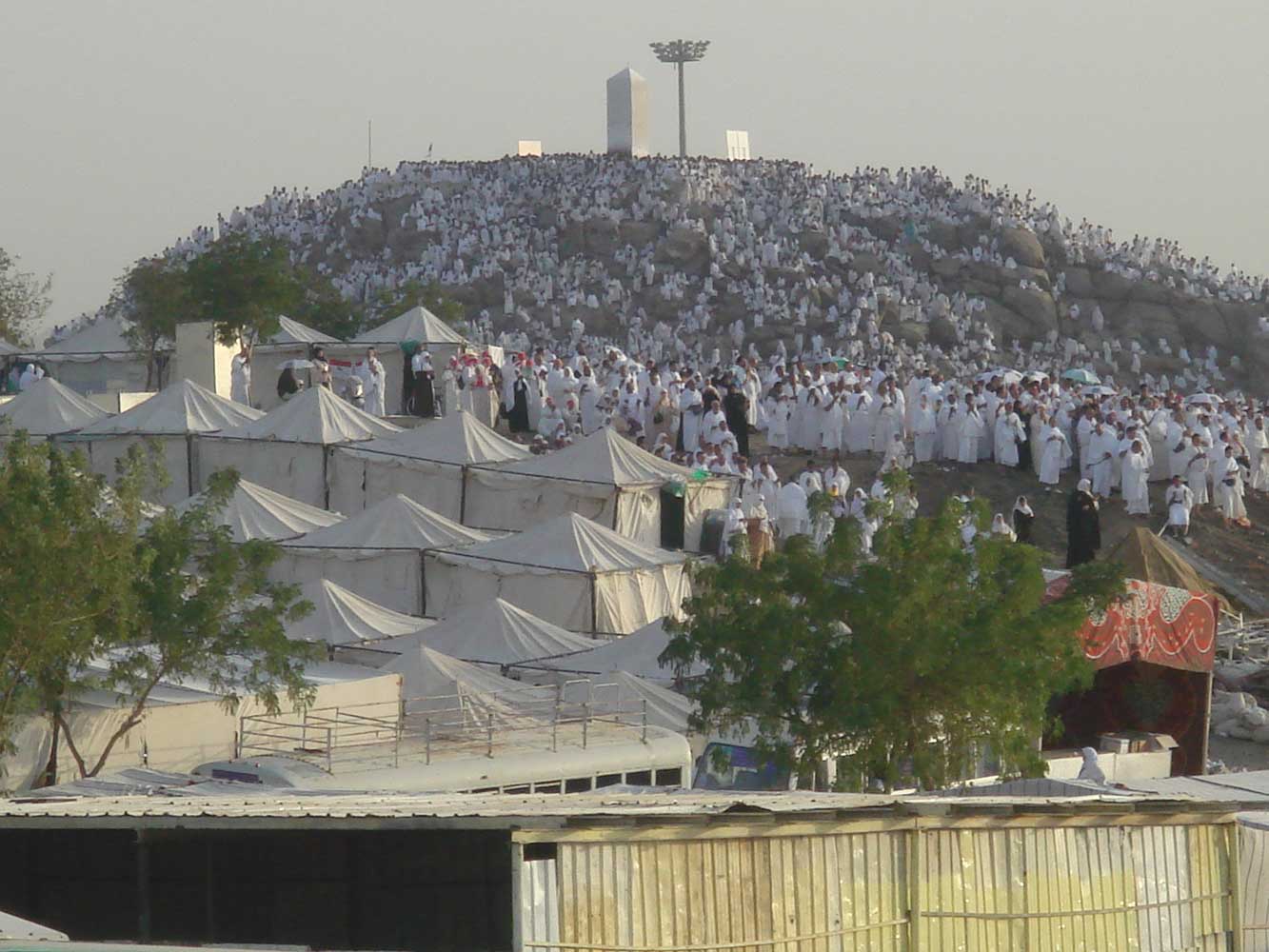
Mount of Mercy (Jabal al-Rahma), Arafat, near Mecca, during the annual Hajj pilgrimage, 2006. This is where the Prophet Muhammad delivered his Farewell Sermon to humanity in 632 CE, echoing God’s last message to humanity in the Qur’an [49:13].  Photo credit: (c) Haris Ahmad


The “Million Man March” on Washington DC, 23 August 1968, that included Martin Luther King Jr.’s historic, “I Have A Dream” speech. Photo credit – Wikipedia

[This sermon is written to be read out, or adapted and edited by each individual preacher, khateeb or khateeba according to their unique situation, community and congregation. Delivery time is approximately 20-30 minutes, depending on your oratory style and any gems of wisdom that you would like to add further. You may also wish to add the traditional blessings upon mention of the Messengers of God, such as: “may God bless him and grant him peace.” You will also probably want to recite the Qur’anic verses quoted in Arabic as well – apologies that I do not have the time or technology at the moment to add the proper, mushaf text in Arabic. I hope to do that in the future, God-willing.]


[FIRST SERMON]

Al-hamdu li’Llahi rabbi-l-‘alamin. Was-salatu was-salamu ‘alal-mursalin – All Praise belongs to God, Lord of the Worlds. Blessings and Peace be upon the Messengers of God.


As hundreds of millions of people around our world mark the occasion of Hajj and Eid al-Adha this week, let us be reminded and inspired by the Qur’an,


O Humanity! We created you from Male and Female, and made you into Nations and Tribes, that you may know each other. Truly, the most honoured of you in the presence of God are the most pious of you. Truly, God is All-Knowing, All-Aware [Qur’an, Surat-ul-Hujurat, Chapter: The Chambers, 49:13]


… And by the Prophet Muhammad’s “Farewell Sermon” or Khutbat-ul-Wida’ delivered at the Hajj in the 10th year of the Islamic calendar or the year 632 of the Christian or Common Era. The Prophet’s farewell sermon was appropriately, and breathtakingly-symbolically, delivered at the “Mount of Mercy” (Jabal al-Rahma), for he was the most merciful messenger of God Most Merciful, and echoed the Qur’anic verse above:


“O people, truly your Lord is One and your ancestor is one. Truly, there is no superiority of Arab over non-Arab, of non-Arab over Arab, of white over black, of black over white, except by piety: all of you descended from Adam, and Adam was created from dust (or the soil of the earth).”  This is a soundly-transmitted, authentic or sahih hadith, and perfectly-congruent in meaning with the individual and holistic messages of the Qur’an.


These are the definitive Islamic declarations of universal equality: although clearly some people do more good than evil and vice-versa, since piety is only known to God, outwardly and essentially in this life, all people are absolutely equal.


When Martin Luther King Jr. famously declared,


I have a dream … that one day people will be judged not by the colour of their skin, but by the content of their character …


he was actually not stating anything new, except perhaps in the 1960s US context of the civil rights movement, a clear example of a blessed, social jihad, despite the US founding declaration that it was a self-evident truth that “all men are created equal.” The Muslim world had possessed this teaching for over 13 centuries, for “content of character” is another way of saying “piety” or “righteousness”, as in the above examples from the Book of God and the Way of His Messenger.


Let’s reflect on that again:


Firstly, in the 7th century of the Christian or Common Era, that is, in what many people today regard as backward medieval times, the Prophet Muhammad was inspired with a message of God that began, ya ayyuhan-nas: “O people or humanity!” Now, we know that there are many ayat or verses of the Qur’an, dozens in fact, that begin with ya ayyuhan-nas: “O people or humanity!” But if we study their tarteeb an-nuzul or chronological, time-based order of revelation, do you know which one was revealed last after 23 long years of prophethood, persecution and patient struggle in the path of God?


It was this verse of Surat-ul-Hujurat!


Secondly, after those long, 23 years of utter submission, servitude and spirituality, the Prophet chose, and he was guided by God as always, to impart this key teaching, or deliver this key message, as part of his farewell sermon on the Mount of Mercy that, like Jesus Christ’s Sermon on the Mount of Olives and Moses’ receipt of the revelation of the Ten Commandments on Mount Sinai centuries earlier, would resonate for millenia with the millions and millions of men and women of God.


The last verse of the Book of God addressed explicitly to humanity, and the last major message of the Messenger of God to mankind, delivered in the mountains of Mecca, the mountains that witnessed the message and still resonate with it, if only we knew. Therefore, this is indeed a universal, Islamic declaration by God and then by the Messenger of God, echoing and confirming his Brother-Messengers before him. But what does this universal Muhammadan proclamation say after ya ayyuhan-nas?


The Prophetic proclamation says, to paraphrase, that God created us and reflected in us the breathtaking beauty of His diversity, as males and females, and across the spectrum of gender and sexuality, for as we learn in multiple fields of God-given, beneficial knowledge, all of which is drops from the oceans of the Divine Knowledge, from mathematics to music to medicine to metaphysics, and from physics to photography to philology to politics and philosophy, the “opposite poles” of a spectrum such as “male and female” are often the dominant forces, normal modes, eigen-vectors and eigen-functions, but they also imply the entire spectrum itself.  “We created you from Male and Female.”


And in the Farewell Sermon, the Prophet reminded the male-dominated society that gender-based rights are mutual and that people of both sexes, the opposite pairs that imply the entire spectrum in between, complement each other in all aspects of life:


O People, it is true that you have certain rights with regard to your women, but they also have rights over you … Do treat your women well and be kind to them, for they are your lifelong partners and committed helpers.


Another passage of the Qur’an reminds us of our humble origins, our need for loving partners and spouses, and our ethnic and linguist diversity:


Amongst His Signs is this, that He created you from dust; and then,- behold, you are people scattered (far and wide)!


And amongst His Signs is this, that He created for you mates, partners and spouses from among yourselves, that you may dwell in tranquillity with them, and He has placed love and mercy between your (hearts): truly, in that are Signs for those who reflect.


And amongst His Signs is the creation of the heavens and the earth, and the variation and diversity in your languages and your colours: truly, in that are Signs for those who know.

[Qur’an, Surat al-Rum, Chapter: The Romans or Byzantines, 30:20-22]


The message of the Messenger continues with this depth of diversity by reminding us that we are different nations and tribes: different peoples in language, culture, with collectively multi-coloured skins and multi-coloured personalities. We have individual identities, but also group identities: nations and tribes, a tribe being a very large family. People now have new tribes, from political and religious affiliations to fans and supporters of particular sports-clubs and genres of art or music.


Nations and tribes lead to nationalism and tribalism, both of which can be good or bad, or a mixture of the two. The positives of nations and tribes is that these matters give us a sense of belonging and the comfort of community, for we are social creatures. Nations and tribes can do great things, such as feeding the poor, looking after widows, widowers and orphans, caring for animals and the earth, toppling tyrants, fighting oppression and injustice and building great civilisations that reflect the Majesty and Beauty of God by harnessing the power of collective effort and the synergy of diverse material and spiritual forces.


But nations and tribes can do immense evil when these forces descend, like vicious, collective egos into cycles of hatred, violence and revenge. “My nation first, whether it’s right or wrong!  My tribe first, whether it’s right or wrong!” The whole of human history, including the past, present and future, is littered with the awful cruelty, violence, warmongering and genocide caused by God-given nations and tribes being utterly misused, for evil rather than good.


And this is why, in this verse of Surat-ul-Hujurat, God follows mention of nations and tribes with: li ta’arafu: that you may know and recognise each other deeply. Know yourself, and know your nation and tribe, to give you a strong sense of the positive values, individual and collective, that inspire you to goodness, but do not use them to hate other people, other nations, other tribes, other sports fans, other political parties, simply for being different to you and irrespective of right and wrong.


Fourteen centuries ago, the Qur’an reminded us to dig deep and harness our individual and collective energies for goodness, and to bring people together. God didn’t say: li tanafaru or li taqatalu, that I created you in different nations and tribes to hate each other or to fight and kill each other and indulge your mad, genocidal impulses, but li ta’arafu: that you may know and recognise each other deeply, and see the beauty of God in each other’s good qualities, for people are mirrors of each other, with all our goodness and evil reflected back at us.


One of the great strengths and positive resources of today’s world is that through our God-given learning, telecommunication and travel, We, the peoples of the world, not just “We, the people” of America or Britain or Russia or Saudi Arabia or Iran or India or Pakistan or the blessed lands of Africa and the other great continents, but “We, the peoples of the world” are able to know, communicate with, learn about and develop deep friendships, and therefore to recognise each other on a deep human level, individually and collectively, more than ever before.


I seek the forgiveness of God, for me and for you all, for all of us. Seek His forgiveness, for truly, He alone is the Forgiver, the Merciful.


[SECOND SERMON]

Al-hamdu li’Llahi rabbi-n-nas, maliki-n-nas, ilahi-n-nas. All Praise belongs to God, Lord of humanity, King of humanity, Deity of humanity.

We now come to the crux, literally, of these majestic, divine teachings that are perhaps more relevant today than in all the bygone millenia of human history, because of the ever-increasing size of the human race and the competition for the earth’s scarce resource. Within our lifetimes, ours and our living parents and grandparents, the human family has rocketed from 2 billion people to nearly 8 billion today.


God says: Truly, the most honoured of you in the presence of God are the most pious of you.


And the Prophet said in his last message to the crowds of thousands gathered around him on his Hajjat-ul-Wida’ or Farewell Pilgrimage to Mecca:


O people, truly your Lord is One and your ancestor is one. Truly, there is no superiority of Arab over non-Arab, of non-Arab over Arab, of white over black, of black over white, except by piety: all of you descended from Adam, and Adam was created from dust (or the soil of the earth).


In other words, we are united despite our diversity: we are one human family, for as our scientists tell us, we are a narrow species as a human race, and there is no real scientific evidence for different races, only different skin-colours, that themselves will disappear through the increasing inter-marriage accelerated by globalisation, so that humans in a few centuries or millenia will all be the same colour and it will be clearer that there is only one race: the human race, and that is our ultimate nation and tribe.


There is no superiority of Arab over non-Arab, of non-Arab over Arab, of white over black, of black over white, except by piety.


And let’s face it bluntly and honestly, many Muslims have forgotten this and our communities and societies are plagued with racism: Arab v. non-Arab, North African Arab v. Black African, Arab v. Turk v. Kurd v. Persian v. Indian v. Chinese and all the subdivisions underneath. This jahiliyyah that Islam brilliantly eradicated in the City of the Prophet is back with a vengeance.  As we know from other Qur’anic verses and commentary and study of history from a Qur’anic lens, God honoured the Israelites with being custodians of His Covenant. Then this duty and honour passed to the Ishmaelites or Arabs. A century after the Prophet, it passed to the Persians and North Africans and Black Africans and Kurds and Mongols and Indians and Turks.  And now, each of these groups have nation-states that are vying for leadership of the Muslim world, and each one is claiming superiority over the other based on its history and supposedly-better culture. And the Arabs in particular – and my family, like most families of Indian Muslim heritage, claim Arab ancestry, have no superiority over others because, as Imam al-Shafi’i categorically showed, every Muslim is an Arab of sorts because every Muslim can recite at least one line from the Qur’an in Arabic. Furthermore, the Qur’an being in classical Arabic, does not make any Arab or Indian or Turk or Persian superior, if we do not live by the exalted ideals of God’s Holy, Noble and Majestic Word.

No!  The people who deserve to lead the “Muslim world” are the true people of God, plain and simple, those who love God and are loved by Him and who are always with the poor and the oppressed and the marginalised. And sometimes, it requires the greatest courage to keep saying basic truths when these are being forgotten and ridiculed.

As the greatest custodians and authorities of the Islamic tradition agreed:

God will give dominance to a non-Muslim state that practises justice over a Muslim state that practises oppression.

This is because God is Truth, and God is Just, and He underpinned His creation with the Balance, that we may not transgress the Balance. And there is no point countering Islamophobia with Westophobia, for Western, non-Muslim societies that are more just and better at human rights will continue to dominate Muslim societies that are culturally infested by racism, inequality, oppression of women, have appalling human rights records and even practise medieval slavery in a few places, although human-trafficking of men, women and children for forced labour and sexual slavery is a new problem all over the world, and it is called “modern slavery.”


Piety, or God-consciousness or true spirituality, is ultimately the most important “content of character.”

May Allah inspire us with the examples of His beloved servants. May Allah bless all of our countries, our nations, our peoples, our tribes, and enable us to do good and avoid evil.


[DU’AS OR SUPPLICATIONS]


[May Allah be with you, and accept and bless your sermons and your prayers!]


Usama Hasan

London, UK

Friday 8th Dhul Hijjah 1440 / 9th August, 2019


FROM THE PROPHET TO THE KING (A FRIDAY SERMON FOR MARTIN LUTHER KING DAY)

January 25, 2019

With the Name of God, All-Merciful, Most Merciful


FROM THE PROPHET TO THE KING – AN ISLAMIC FRIDAY SERMON ON THE UNIVERSAL EQUALITY OF HUMANITY, TO MARK THE WEEK OF MARTIN LUTHER KING JR. DAY


Mount of Mercy (Jabal al-Rahma), Arafat, near Mecca, during the annual Hajj pilgrimage, 2006. This is where the Prophet Muhammad delivered his Farewell Sermon to humanity in 632 CE, echoing God’s last message to humanity in the Qur’an [49:13].  Photo credit: (c) Haris Ahmad


The “Million Man March” on Washington DC, 23 August 1968, that included Martin Luther King Jr.’s historic, “I Have A Dream” speech. Photo credit – Wikipedia

[This sermon is written to be read out, or adapted and edited by each individual preacher, khateeb or khateeba according to their unique situation, community and congregation. Delivery time is approximately 20-30 minutes, depending on your oratory style and any gems of wisdom that you would like to add further. You may also wish to add the traditional blessings upon mention of the Messengers of God, such as: “may God bless him and grant him peace.” You will also probably want to recite the Qur’anic verses quoted in Arabic as well – apologies that I do not have the time or technology at the moment to add the proper, mushaf text in Arabic. I hope to do that in the future, God-willing.]


[FIRST SERMON]

Al-hamdu li’Llahi rabbi-l-‘alamin. Was-salatu was-salamu ‘alal-mursalin – All Praise belongs to God, Lord of the Worlds. Blessings and Peace be upon the Messengers of God.


As tens of millions of people around our world marked Martin Luther King Jr. Day this week, let us be reminded and inspired by the Qur’an,


O Humanity! We created you from Male and Female, and made you into Nations and Tribes, that you may know each other. Truly, the most honoured of you in the presence of God are the most pious of you. Truly, God is All-Knowing, All-Aware [Qur’an, Surat-ul-Hujurat, Chapter: The Chambers, 49:13]


… And by the Prophet Muhammad’s “Farewell Sermon” or Khutbat-ul-Wida’ delivered at the Hajj in the 10th year of the Islamic calendar or the year 632 of the Christian or Common Era. The Prophet’s farewell sermon was appropriately, and breathtakingly-symbolically, delivered at the “Mount of Mercy” (Jabal al-Rahma), for he was the most merciful messenger of God Most Merciful, and echoed the Qur’anic verse above:


“O people, truly your Lord is One and your ancestor is one. Truly, there is no superiority of Arab over non-Arab, of non-Arab over Arab, of white over black, of black over white, except by piety: all of you descended from Adam, and Adam was created from dust (or the soil of the earth).”  This is a soundly-transmitted, authentic or sahih hadith, and perfectly-congruent in meaning with the individual and holistic messages of the Qur’an.


These are the definitive Islamic declarations of universal equality: although clearly some people do more good than evil and vice-versa, since piety is only known to God, outwardly and essentially in this life, all people are absolutely equal.


When Martin Luther King Jr. famously declared,


I have a dream … that one day people will be judged not by the colour of their skin, but by the content of their character …


he was actually not stating anything new, except perhaps in the 1960s US context of the civil rights movement, a clear example of a blessed, social jihad, despite the US founding declaration that it was a self-evident truth that “all men are created equal.” The Muslim world had possessed this teaching for over 13 centuries, for “content of character” is another way of saying “piety” or “righteousness”, as in the above examples from the Book of God and the Way of His Messenger.


Let’s reflect on that again:


Firstly, in the 7th century of the Christian or Common Era, that is, in what many people today regard as backward medieval times, the Prophet Muhammad was inspired with a message of God that began, ya ayyuhan-nas: “O people or humanity!” Now, we know that there are many ayat or verses of the Qur’an, dozens in fact, that begin with ya ayyuhan-nas: “O people or humanity!” But if we study their tarteeb an-nuzul or chronological, time-based order of revelation, do you know which one was revealed last after 23 long years of prophethood, persecution and patient struggle in the path of God?


It was this verse of Surat-ul-Hujurat!


Secondly, after those long, 23 years of utter submission, servitude and spirituality, the Prophet chose, and he was guided by God as always, to impart this key teaching, or deliver this key message, as part of his farewell sermon on the Mount of Mercy that, like Jesus Christ’s Sermon on the Mount of Olives and Moses’ receipt of the revelation of the Ten Commandments on Mount Sinai centuries earlier, would resonate for millenia with the millions and millions of men and women of God.


The last verse of the Book of God addressed explicitly to humanity, and the last major message of the Messenger of God to mankind, delivered in the mountains of Mecca, the mountains that witnessed the message and still resonate with it, if only we knew. Therefore, this is indeed a universal, Islamic declaration by God and then by the Messenger of God, echoing and confirming his Brother-Messengers before him. But what does this universal Muhammadan proclamation say after ya ayyuhan-nas?


The Prophetic proclamation says, to paraphrase, that God created us and reflected in us the breathtaking beauty of His diversity, as males and females, and across the spectrum of gender and sexuality, for as we learn in multiple fields of God-given, beneficial knowledge, all of which is drops from the oceans of the Divine Knowledge, from mathematics to music to medicine to metaphysics, and from physics to photography to philology to politics and philosophy, the “opposite poles” of a spectrum such as “male and female” are often the dominant forces, normal modes, eigen-vectors and eigen-functions, but they also imply the entire spectrum itself.  “We created you from Male and Female.”


And in the Farewell Sermon, the Prophet reminded the male-dominated society that gender-based rights are mutual and that people of both sexes, the opposite pairs that imply the entire spectrum in between, complement each other in all aspects of life:


O People, it is true that you have certain rights with regard to your women, but they also have rights over you … Do treat your women well and be kind to them, for they are your lifelong partners and committed helpers.


Another passage of the Qur’an reminds us of our humble origins, our need for loving partners and spouses, and our ethnic and linguist diversity:


Amongst His Signs is this, that He created you from dust; and then,- behold, you are people scattered (far and wide)!


And amongst His Signs is this, that He created for you mates, partners and spouses from among yourselves, that you may dwell in tranquillity with them, and He has placed love and mercy between your (hearts): truly, in that are Signs for those who reflect.


And amongst His Signs is the creation of the heavens and the earth, and the variation and diversity in your languages and your colours: truly, in that are Signs for those who know.

[Qur’an, Surat al-Rum, Chapter: The Romans or Byzantines, 30:20-22]


The message of the Messenger continues with this depth of diversity by reminding us that we are different nations and tribes: different peoples in language, culture, with collectively multi-coloured skins and multi-coloured personalities. We have individual identities, but also group identities: nations and tribes, a tribe being a very large family. People now have new tribes, from political and religious affiliations to fans and supporters of particular sports-clubs and genres of art or music.


Nations and tribes lead to nationalism and tribalism, both of which can be good or bad, or a mixture of the two. The positives of nations and tribes is that these matters give us a sense of belonging and the comfort of community, for we are social creatures. Nations and tribes can do great things, such as feeding the poor, looking after widows, widowers and orphans, caring for animals and the earth, toppling tyrants, fighting oppression and injustice and building great civilisations that reflect the Majesty and Beauty of God by harnessing the power of collective effort and the synergy of diverse material and spiritual forces.


But nations and tribes can do immense evil when these forces descend, like vicious, collective egos into cycles of hatred, violence and revenge. “My nation first, whether it’s right or wrong!  My tribe first, whether it’s right or wrong!” The whole of human history, including the past, present and future, is littered with the awful cruelty, violence, warmongering and genocide caused by God-given nations and tribes being utterly misused, for evil rather than good.


And this is why, in this verse of Surat-ul-Hujurat, God follows mention of nations and tribes with: li ta’arafu: that you may know and recognise each other deeply. Know yourself, and know your nation and tribe, to give you a strong sense of the positive values, individual and collective, that inspire you to goodness, but do not use them to hate other people, other nations, other tribes, other sports fans, other political parties, simply for being different to you and irrespective of right and wrong.


Fourteen centuries ago, the Qur’an reminded us to dig deep and harness our individual and collective energies for goodness, and to bring people together. God didn’t say: li tanafaru or li taqatalu, that I created you in different nations and tribes to hate each other or to fight and kill each other and indulge your mad, genocidal impulses, but li ta’arafu: that you may know and recognise each other deeply, and see the beauty of God in each other’s good qualities, for people are mirrors of each other, with all our goodness and evil reflected back at us.


One of the great strengths and positive resources of today’s world is that through our God-given learning, telecommunication and travel, We, the peoples of the world, not just “We, the people” of America or Britain or Russia or Saudi Arabia or Iran or India or Pakistan or the blessed lands of Africa and the other great continents, but “We, the peoples of the world” are able to know, communicate with, learn about and develop deep friendships, and therefore to recognise each other on a deep human level, individually and collectively, more than ever before.


I seek the forgiveness of God, for me and for you all, for all of us. Seek His forgiveness, for truly, He alone is the Forgiver, the Merciful.


[SECOND SERMON]

Al-hamdu li’Llahi rabbi-n-nas, maliki-n-nas, ilahi-n-nas. All Praise belongs to God, Lord of humanity, King of humanity, Deity of humanity.

We now come to the crux, literally, of these majestic, divine teachings that are perhaps more relevant today than in all the bygone millenia of human history, because of the ever-increasing size of the human race and the competition for the earth’s scarce resource. Within our lifetimes, ours and our living parents and grandparents, the human family has rocketed from 2 billion people to nearly 8 billion today.


God says: Truly, the most honoured of you in the presence of God are the most pious of you.


And the Prophet said in his last message to the crowds of thousands gathered around him on his Hajjat-ul-Wida’ or Farewell Pilgrimage to Mecca:


O people, truly your Lord is One and your ancestor is one. Truly, there is no superiority of Arab over non-Arab, of non-Arab over Arab, of white over black, of black over white, except by piety: all of you descended from Adam, and Adam was created from dust (or the soil of the earth).


In other words, we are united despite our diversity: we are one human family, for as our scientists tell us, we are a narrow species as a human race, and there is no real scientific evidence for different races, only different skin-colours, that themselves will disappear through the increasing inter-marriage accelerated by globalisation, so that humans in a few centuries or millenia will all be the same colour and it will be clearer that there is only one race: the human race, and that is our ultimate nation and tribe.


There is no superiority of Arab over non-Arab, of non-Arab over Arab, of white over black, of black over white, except by piety.


And let’s face it bluntly and honestly, many Muslims have forgotten this and our communities and societies are plagued with racism: Arab v. non-Arab, North African Arab v. Black African, Arab v. Turk v. Kurd v. Persian v. Indian v. Chinese and all the subdivisions underneath. This jahiliyyah that Islam brilliantly eradicated in the City of the Prophet is back with a vengeance.  As we know from other Qur’anic verses and commentary and study of history from a Qur’anic lens, God honoured the Israelites with being custodians of His Covenant. Then this duty and honour passed to the Ishmaelites or Arabs. A century after the Prophet, it passed to the Persians and North Africans and Black Africans and Kurds and Mongols and Indians and Turks.  And now, each of these groups have nation-states that are vying for leadership of the Muslim world, and each one is claiming superiority over the other based on its history and supposedly-better culture. And the Arabs in particular – and my family, like most families of Indian Muslim heritage, claim Arab ancestry, have no superiority over others because, as Imam al-Shafi’i categorically showed, every Muslim is an Arab of sorts because every Muslim can recite at least one line from the Qur’an in Arabic. Furthermore, the Qur’an being in classical Arabic, does not make any Arab or Indian or Turk or Persian superior, if we do not live by the exalted ideals of God’s Holy, Noble and Majestic Word.

No!  The people who deserve to lead the “Muslim world” are the true people of God, plain and simple, those who love God and are loved by Him and who are always with the poor and the oppressed and the marginalised. And sometimes, it requires the greatest courage to keep saying basic truths when these are being forgotten and ridiculed.

As the greatest custodians and authorities of the Islamic tradition agreed:

God will give dominance to a non-Muslim state that practises justice over a Muslim state that practises oppression.

This is because God is Truth, and God is Just, and He underpinned His creation with the Balance, that we may not transgress the Balance. And there is no point countering Islamophobia with Westophobia, for Western, non-Muslim societies that are more just and better at human rights will continue to dominate Muslim societies that are culturally infested by racism, inequality, oppression of women, have appalling human rights records and even practise medieval slavery in a few places, although human-trafficking of men, women and children for forced labour and sexual slavery is a new problem all over the world, and it is called “modern slavery.”


Piety, or God-consciousness or true spirituality, is ultimately the most important “content of character.”


Hence, we’ve gone from the Prophet, Messenger of God, to the King, Reverend Martin Luther King, a man of God:


I have a dream … that one day people will be judged not by the colour of their skin, but by the content of their character …


Whether you’re inspired to universal equality by the Qur’an, the Prophet Muhammad, Martin Luther King Jr. or any other person, scripture or text, please remember that all people are indeed equal, and entitled to basic respect. We may disagree and criticise each other’s views, behaviour and actions, but we remain equal in our essence and our source, and our own behaviour and responses to others should reflect this fundamental truth.


In the week that many people remember Martin Luther King Jr., let us Muslims remember that Prophet Muhammad, Messenger of God, delivered the same message, but with even more depth, spirituality and heroic human spirit, and lived it out from Mecca to Medina and back to Mecca, nearly a millennium and a half ago.


May Allah inspire us with the examples of His beloved servants. May Allah bless all of our countries, our nations, our peoples, our tribes, and enable us to do good and avoid evil.


[DU’AS OR SUPPLICATIONS]


[Recommendation for the 2-rak’at salat (Friday prayer): recite Surah al-Hujurat over the two rak’ahs, preferably all of it or at least some of it, e.g.:


1st rak’ah: Verses 1-10

2nd rak’ah: Verses 11-17

I recommend also reading, just reading with no comment, a good translation of the entire Surah, after the prayer – we must rekindle the effect of sacred words, eloquently said from the heart, for then the Word of God needs no explanation, and will move mountains and hearts.

May Allah be with you, and accept and bless your sermons and your prayers!]


Usama Hasan

USA

Friday 25th January, 2019


[Version 1.0: 12.30pm GMT/UST ~2,000 words or 15-20 minutes’ sermon

Version 1.1:  11pm GMT/UST ~2,800 words or 20-30 minutes’ sermon]


Jesuit Muslims

December 28, 2016

JESUIT MUSLIMS (OR MUSLIM JESUITS)

From Ibn ‘Arabi, al-Futuhat al-Makkiyyah [The Meccan Revelations], Dar Ihya’ al-Turath al-‘Arabi [House of Revival of Arab Heritage], Beirut, 1418/1997, vol. 1, pp. 286-291.

[NB: This is not about the Christian, Roman Catholic Order of Jesuits, but refers to Muslims who also follow Jesus in their practices and states.]

With the Name of God, All-Merciful, Most Merciful

Chapter 36: On the recognition of [Muslim] Jesuits …

Know, may God strengthen you, that the Way of Muhammad, may God bless him and grant him peace, includes all previous ways, and that the latter have no validity in this world save that of them that is endorsed by the Muhammadan Way, by the endorsement of which they remain valid. We exert ourselves in worship via these ways because Muhammad, may God bless him and grant him peace, endorsed them, not because the prophet specific to that way in his time endorsed it.

This is why the Messenger of God, peace be upon him, was given “Comprehensive Words” (jawami’ al-kalim). Thus, when a Muhammadan does a work, and the entire responsible universe today of human and jinn is Muhammadan, for there is no divine way in the universe today except for the Muhammadan Way, this worker from the [Muslim] nation may coincide in his work, with an opening in his heart and path, with a path of one of the previous prophets that it is included in this Way, which endorses it and the result of following it. Thus, such a person will be attributed to the founder of that way and called Jesuit (‘Isawi), Mosaic (Musawi) or Abrahamic (Ibrahimi) …

There is no prophethood with a way (shar’) after Muhammad, may God bless him and grant him peace … This is why it is mentioned in the report that “the people of knowledge are the inheritors of the prophets” …

The original Jesuits are the disciples and followers of Jesus … the second Jesuits are those who followed Jesus directly without a veil and then followed him via Muhammad, may God bless him and grant him peace, and there is an experiential difference between the two. This is why the Messenger of God, may God bless him and grant him peace, said about such a person, “Truly, he will be rewarded twice” [cf. Qur’an, The Story, 28:52-55], and similarly, such a person has two different sets of inheritances, openings and experiences, in each of which he is only attributed to the relevant prophet.

These are the second Jesuits. Their base of principles is to unify God, free of all likenesses. This is because the initiation into existence of Jesus, peace be upon him, was not by way of a human male, but by the manifestation (or likeness) of a spirit in the form of a human [Q. Mary 19:17]. This is why the doctrine of God manifested in a form dominated the nation of Jesus, son of Mary, over all other nations: they make forms, images and likenesses in their churches, and worship within themselves by focusing their attention on these. The origin of their prophet, peace be upon him, was by a likeness, so this reality has continued amongst his nation until now.

Then, when the Way of Muhammad, may God bless him and grant him peace, came and forbade likenesses (images), whilst he, peace be upon him, included the reality of Jesus, and his way in his, he laid the path for us, peace be upon him, “that we worship God as though we see Him,” in imagination, which is the meaning of making images. But he forbade us from this (making images) in the sensual/physical world, lest physical forms or images [of God] should appear in this nation.

Furthermore, this particular teaching, “Worship God as though you see Him,” was not stated to us by Muhammad, may God bless him and grant him peace, directly; rather, it was stated by Gabriel, peace be upon him, and it was he who appeared in the total likeness of a man to Mary at the conception of Jesus, peace be upon him … We were the ones addressed by that statement, which is why it occurs at the end of the tradition, “This was Gabriel: he wished for you to know, since you would not ask”; or in other narrations, “He came to teach the people their religion,” or “He came to you, to teach you your religion” …

Moreover, you should know that their [the Jesuits’] base of principles also includes the teaching that comes from ways other than that of Jesus, peace be upon him, “… but if you were not able to see Him, then truly, He sees you.”

Our shaykh, Abu l-‘Abbas al-‘Uraybi, may God have mercy upon him, was Jesuit at the end and extent of his path, which was the beginning of ours [i.e. the beginning of Ibn ‘Arabi’s path was Jesuit]; then we moved to a solar, Mosaic opening, then to Hud, peace be upon him, then to all the prophets, peace be upon them. After that, we moved to Muhammad, may God bless him and grant him peace. Thus was our matter in this path, may God establish us in it and not divert us from the straightness of the path …

Jesuits have extremely active aspiration, their prayers are answered and their speech is heard. One of the signs of the Jesuits, if you wish to recognise them, is that you will see each of them having mercy and compassion towards everyone, whoever they are, no matter what religion they follow. They entrust other people’s matters to God: when they address the servants of God, they do not utter anything that will constrain people’s hearts in respect of anyone at all.

Another of their signs is that they see the best in everything and only goodness flows from their tongues … e.g.

(1) What is narrated from Jesus, peace be upon him, that he saw a pig and said to it, “Go safely, in peace.” Upon being asked about this, he replied, “I train my tongue to speak goodness.”

(2) The Prophet, may God bless him and grant him peace, passed by a carcass and said, “How beautifully white are its teeth!” whereas those with him said, “How horrible is its stench!”

(3) The Prophet, may God bless him and grant him peace, commanded the killing of snakes in specific situations and informed us that God loves courage, even if only in killing snakes. However, despite this, when he was in the cave in Mina where Surah al-Mursalat [Qur’an Chapter: The Messengers, no. 77] descended upon him (it is known as the Cave of al-Mursalat until today – I have entered it, seeking blessings), a snake came out of its hole and the Companions rushed to kill it but it frustrated them, the Messenger of God, may God bless him and grant him peace, said, “Truly, God saved it from your evil just as He saved you from its evil.”

[3a] He thus named it (killing snakes) “evil”, even though it is a commanded matter, just like His saying, Most Exalted, regarding retribution, “The reward of a bad deed is a bad deed like it; [so whoever forgives and reforms, their reward is with God: truly, He does not love the oppressors” – Q. Consultation 42:40] – He named retribution a “bad deed” and encouraged forgiveness.

Thus, the Prophet’s eye, may God bless him and grant him peace, only fell upon the best aspect of the carcass. Similarly, the friends of God only see the best in everything they look at: they are blind to the faults of people, although not to faults in themselves, for they have been commanded to avoid these. Similarly, they are deaf against listening to obscenity and dumb against uttering bad words, even if this is allowed in some places.

This is how we have known them [the Jesuits], so Glory be to the One who purified them, chose them and guided them to the straight path. “They are the ones whom God has guided: by their guidance, follow!” [Q. Cattle 6:90]

This is the station of Jesus, peace be upon him, within Muhammad, may God bless him and grant him peace, for he preceded him in time and these states were transmitted from him by the latter. God said to His Prophet [Muhammad], may God bless him and grant him peace, after mentioning several prophets including Jesus, peace be upon them, “They are the ones whom God has guided: by their guidance, follow!” [Q. Cattle 6:90].

However, the station of Messenger determines that the beautiful must be explained and distinguished from the ugly in order to be known, as the Exalted said, “… that you may explain to the people what has been revealed to them” [Q. The Honey-Bee 16:44]. Thus, when he explained the bad side of a person, it was by inspiration from God, such as his saying about someone, “What a bad son of his tribe!” Similarly, Khidr killed a lad and said about him, “His nature had been stamped as an ingrate unbeliever (kafir)” and reported that if he had left him alive, he would have behaved badly towards his parents. He also said, “I did not do that of my own accord.” [i.e. it was by God’s command; Q. The Cave 18:74, 80-82]

Thus, the essences of such people, whether prophets or saints, are characterised by kind speech, seeing the best in everything and listening attentively only to goodness. However, if there is the occasional exception to this, it is by divine command, not from their own tongue.

This is what we have mentioned of the states of the Jesuits, as facilitated by God upon my tongue, “and God speaks the Truth and He guides to the Way.” [Q. The Confederates 33:4]


Abridgment and Translation: Usama Hasan

London, 28th December 2016 / 29th Rabi’ al-Awwal 1438


A FATWA ON ZAKAT AL-FITR AND FOOD BANKS IN THE UK

July 16, 2015

WITH THE NAME OF GOD, MOST GRACIOUS, MOST MERCIFUL

A FATWA ON ZAKAT AL-FITR (“FAST-BREAKING ALMS-GIVING” AT THE END OF RAMADAN) & FOOD BANKS IN THE UK

Measuring foodstuffs for zakat al-fitr

(Please click here for a PDF of this fatwa: Zakat al-Fitr and food banks)

All Praise be to God, Lord of the Worlds.  Peace and Blessings of God be upon His Noble Messengers.

  1. The “fast-breaking alms-giving” (zakat al-fitr or sadaqat al-fitr) is a confirmed Islamic tradition at the end of Ramadan, of donating food (in the form of staple foodstuffs) to poor people before Eid prayer in the morning of the day of Eid. The majority of jurists hold that zakat al-fitr is compulsory (fard), whilst a minority hold that it is a highly-recommended tradition (sunna); a small minority even argued that it was abrogated by the full obligation of zakat.
  2. Any charitable donation may be sent abroad. However, it is a basic Islamic principle, in common with other religions, that “Charity begins at home,” or as the Prophet Muhammad, peace be upon him, expressed it repeatedly, “Begin with your dependants.” (ibda’ bi man ta’ul, a sound hadith with several narrations)  Thus, it is recommended for Muslims in Britain to distribute their zakat al-fitr offerings locally.  Furthermore, God and His Prophets repeatedly recommend the rights of neighbours: regarding food, the Prophet Muhammad, peace be upon him, emphatically taught, “By God, they are not trustworthy believers: those who spend the night with stomachs full whilst their neighbours go hungry!”
  3. Zakat al-fitr is usually given as food items; the Hanafi jurists allowed the giving of cash, but this was with the intention that the poor recipients may use the cash to buy food or other essential items. Therefore, it remains an option to donate zakat al-fitr as either food items or cash.
  4. The amount of zakat al-fitr payable is, per wealthy Muslim head (adult or child), traditionally equal to one saa’ (approximately 3 litres in volume[1]) of the staple food item, or possibly half of one saa’ (approximately 1.5 litres) for more expensive foodstuffs.[2] One saa’ equates to the following approximate weight of common UK staple foods: rice 2.5kg, flour 2kg, pasta 1kg, porridge (porage) oats 1kg; by comparison, one saa’ of dates (not a UK staple food) weighs approximately 2kg.[3]
  5. The retail prices of the above items imply that UK zakat al-fitr is approximately £3-£5 per person. Some jurists recommend, to be safe, giving 3kg of staple food, which would be more than one saa’ in the vast majority of cases of staple food.
  6. Alternatively, the zakat al-fitr amount was traditionally understood to be the equivalent of food for one or two meals, each meal consisting of one or two mudds (one saa’ = four mudds). Since an average, filling meal costs roughly £2.50-5.00 in the UK currently, this approach gives us a similar answer, i.e. zakat al-fitr at £2.50-5.00 or £5-10.
  7. Traditionally, zakat al-fitr was mostly given to poor Muslims: most jurists held that poor people who were not Muslim were not eligible to receive zakat al-fitr, since both poverty and Islam were conditions for recipients. But Imam Abu Hanifa and others held that poor dhimmis (non-Muslim People of Scripture, protected by Muslim authorities) were eligible to receive it, since poverty was the only condition for recipients.
  8. Since the category of dhimmis was abolished by the Ottoman caliph in 1856 in favour of equal citizenship (muwatana) irrespective of faith or religion, and since Muslims comprise only 4-5% of the population of Britain where all citizens are equal, zakat al-fitr in the UK may simply go to poor people, irrespective of their religion, faith or belief (or lack thereof).
  9. With up to a million annual estimated uses of food banks by people in the UK to complement their situation of poverty, an obvious way for Muslims to distribute their zakat al-fitr locally is via their local food banks. Since the recipients do not have to be Muslim, based on the view of Imam Abu Hanifa, this should pose no problem religiously.  Food banks based in areas of the UK with Muslim-majority populations, or those run by mosques, are likely to have recipients who are mainly Muslim.
  10. Suggestions for the staple foodstuffs of people in the UK include, but are not limited to: bread, potatoes, rice, pasta, cereals, flour, couscous, etc. (Traditionally, zakat al-fitr has been given in solid staple foodstuffs, whereas for fidya and kaffara, bread was prominently given, accompanied by oil, fat, vinegar, meat, etc. – cf. Tafsir Ibn Kathir on Qur’an 5:89 & 5:95. Long-life milk and juice is in demand at UK foodbanks, and it is arguable that these liquids are also UK staple foods.)
  11. It is thus recommended for wealthy Muslims in the UK who wish to distribute their zakat al-fitr to do so either directly to needy families, else via their local food bank, else via cash to a local, national or international charity.
  12. May God accept and bless our worship during Ramadan, Eid and all year round, and guide us towards helping to eliminate poverty and unnecessary hunger.

(Sheikh Dr) Usama Hasan: London (UK), 29th Ramadan 1436 / 16th July 2015

APPENDIX: SOME BACKGROUND RESEARCH


  1. EXTRACTS FROM THE BOOK OF ZAKAT AL-FITR (“FAST-BREAKING ALMSGIVING”) by IBN RUSHD / AVERROES[4]

Its ruling: The majority of jurists hold that zakat al-fitr is compulsory (fard).

The ‘Iraqi jurists and some of the later Maliki ones hold that it is a recommended tradition (sunna).

Some said that it was abrogated by the obligation of zakat, based on the hadith of Qays bin Sa’d bin ‘Ubadah, who said, “The Messenger of God, may God bless him and grant him peace, used to order us to give it [zakat al-fitr] before the obligation of zakat was revealed.  When the verse of zakat was revealed, we were neither commanded to, nor forbidden from, giving it [zakat al-fitr], but we continue doing so.”[5]


When does zakat al-fitr become obligatory?

Abu Hanifa and Malik via Ibn al-Qasim: At dawn on the day of Eid al-Fitr.

Shafi’i and Malik via Ashhab: At sunset on the last day of Ramadan.

Thus, for a newborn baby between these two times, there is disagreement as to whether or not zakat al-fitr is due on his/her behalf.


Recipients

Poor Muslims may receive it, by consensus (ijma’).

As for poor dhimmis [protected non-Muslims], most of the jurists say that they may not receive it. Imam Abu Hanifa said that they may receive it. Some said that only monks amongst dhimmis may receive it.


  1. EXTRACT FROM FATH AL-BARI, IBN HAJAR AL-‘ASQALANI’S COMMENTARY ON SAHIH AL-BUKHARI, CHAPTERS ON SADAQAH AL-FITR, HADITHS NOS. 1503-1512 (translations of these hadiths widely available)

http://hadith.al-islam.com/Page.aspx?pageid=192&TOCID=965&BookID=33&PID=2783

Ja’far al-Firyabi narrated in his Kitab Sadaqat al-Fitr (Book of Fast-Breaking Almsgiving) that when Ibn ‘Abbas was the governor of Basra, he ordered the giving of zakat al-fitr: a saa’ of dates etc. or half a saa’ of wheat. When ‘Ali came and saw the cheap prices, he commanded that a saa’ measure be used for all foodstuffs, indicating that he considered the value of the food, whilst Abu Sa’id considered the volume of the food.

ويدل على أنهم لحظوا ذلك ما روى جعفر الفريابي في ” كتاب صدقة الفطر ” أنابن عباس لما كان أمير البصرة أمرهم بإخراج زكاة الفطر وبين لهم أنها صاع من تمر ، إلى أن قال : أو نصف صاع من بر . قال : فلما جاء علي ورأى رخص أسعارهم قال : اجعلوها صاعا من كل ، فدل على أنه كان ينظر إلى القيمة في ذلك ، ونظرأبو سعيد إلى الكيل كما سيأتي .


  1. ABOUT UK FOOD BANKS

In the UK, the Trussell Trust (http://www.trusselltrust.org/) runs a network of foodbanks, although there are many other independent foodbanks and collection points run by churches, mosques, synagogues, temples, community centres, etc.  Trussell can help community and faith organisations to begin a foodbank, and also have a partnership with Tesco, such that every Tesco store is potentially a foodbank collection point.  Many foodbanks distribute food parcels to the needy on one day each week.

Trussell’s recommended items for foodbanks, based on http://www.trusselltrust.org/resources/documents/foodbank/website-shopping-list.pdf and variations in printed leaflets from Trussell:

  • Milk (long-life/UHT or powdered)
  • Sugar
  • Fruit Juice (long-life or carton)
  • Soup / Hot Chocolate
  • Pasta Sauces
  • Sponge Pudding (tinned)
  • Cereals
  • Rice pudding / Custard
  • Tea Bags / Instant Coffee
  • Instant Mashed Potato
  • Rice / Pasta
  • Tinned Meat / Fish
  • Tinned Fruit, incl. tomatoes
  • Jam
  • Biscuits or Snack Bars
  1. APPROXIMATE WEIGHT (MASS) OF ONE SAA’ (THREE LITRES) OF VARIOUS FOODSTUFFS, THE RECOMMENDED AMOUNT OF ZAKAT AL-FITR TO BE GIVEN PER PERSON

This is based on simple measuring out and weighing using a measuring container and scales found in an average kitchen, by the author on the date of the fatwa. (This is a fun, instructive and educational activity for adults and children towards a religious, humanitarian objective.)

  • Rice 2.4kg
  • Flour (medium chapatti) 1.8kg
  • Dates (sticky Saudi ones) 2.1kg
  • Pasta (white fusilli) 1.0kg
  • Porridge / porage oats (Scott’s) 1.1kg
  • Corn Flakes (Kellogg’s) 480g
  • Crunchy Nut Corn Flakes (Kellogg’s) 600g
  • Cheerios (Nestle) 360g


  1. EXAMPLE OF DIY ZAKAT AL-FITR IN ACTION IN THE UK

On this date, the author and his wife are blessed with four children, so the following foodstuffs, all in 500g packets, were bought from a local supermarket and delivered to a local foodbank collection point, by the grace of God:

Rice 5kg

Pasta 3kg

Porridge oats 2.5kg

Total cost: £20, working out at just under £3.50 per head for a family of six

May Allah (God) accept and bless our Ramadan and Eid!

FOOTNOTES / REFERENCES

[1] Cf. http://www.bakkah.net/en/zakat-fitr-measurements-saa-three-litres-mudd.htm

[2] Cf. Sahih al-Bukhari, Book of Zakat, Chapters on Sadaqat al-Fitr, Hadiths nos. 1503-1512

[3] Note that 3 litres of water weigh exactly 3kg, so this implies that all these foods are less dense (“lighter”) than water. In fact, they are denser than water but the air trapped between the food particles means that 3 litres of food generally weighs less than 3 litres of water (3kg).

[4] Extracted from: Ibn Rushd al-Qurtubi al-Andalusi [Averroes], Bidayat al-Mujtahid [The Distinguished Jurist’s Primer], Dar al-Kutub al-‘Ilmiyyah, Beirut, 1418/1997, vol. 1, pp. 413-420; a full English translation of this work is available, by Prof. Imran Ahsan Khan Nyazee

[5] Nasa’i, Ibn Majah, Hakim & Bayhaqi

The coward of the caliphate

July 1, 2015

Bismillah al-Rahman al-Rahim [With the Name of God, All-Merciful, Most Merciful]

[MUSLIM TUNISIA – LOGO]

BREAKING NEWS: Tens of innocent holiday-makers, supporting the economy of Muslim Tunisia and the livelihoods of Tunisian Muslims, killed and injured in a cowardly attack in the city of Sousse in Muslim Tunisia

9 Ramadan 1436 [26 June 2015]

In a cowardly attack, which God facilitated Muslim members of the local security services to cut short and save many innocent lives, a coward of the so-called caliphate, the loser Abu Yahya, calling himself al-Qayrawani, as though he was steeped in prayer and learning at one of the world’s most ancient mosques and universities, although neither was the case, launched an inhuman attack upon Muslim-owned resorts where innocent, guest civilians were enjoying their summer holidays, supporting the economy of Muslim Tunisia and the livelihoods of Tunisian Muslims, and benefiting from traditional Muslim hospitality in the city of Sousse. Taking advantage of soft targets on the al-Qantawi beach: men, women and children, including families and the elderly, our deluded brother was unfortunately able to reach the Imperial Hotel. Rather than attempting to share the beautiful teachings of mercy, compassion and kindness of the Noble Qur’an and the Holy Prophet, a mercy to the worlds, Abu Yahya mercilessly killed nearly forty people aged 19 to 80 in cold blood and injured just as many, leaving little children psychologically and emotionally traumatised. Most of them were nationals of western democracies where millions of Muslims enjoy unparalleled freedom and prosperity as equal citizens, including the freedom to practise their faith and criticise their governments. This was a painful blow and a message dyed with blood to the 99% Muslim Tunisia and their civilised friends of all faiths and humanistic philosophies, from a small band of people devoid of true faith, understanding, compassion or humanity. Civilised people should seek God’s refuge and protection against more sad news in the coming days, by the permission of God, for in Muslim Tunisia, there are hate-filled, ruthless and raging madmen who do not sleep on the absurd grievances taught to them by their tours of qital [fighting for the sake of fighting, devoid of ethics and humanity] in Iraq, Syria, Libya and elsewhere. We ask God to accept the innocent victims amongst the ranks of the martyrs, and make from their blood a ray of light to illuminate the path of noble and courageous people everywhere. We ask God to envelop the innocent victims in His Mercy and Compassion, and to deal with their murderer with His Infinite Justice. [END]

The caption under the photo of Seifeddine Rezgui that is being circulated online reads, The coward of the so-called caliphate Abu Yahya (may God deal with him harshly), the loser who carried out the attack on Muslim Tunisia, murdering people from the same western nations that taught him to enjoy break-dancing and the football of Real Madrid


Make sense?  Now read the pathetic and monstrous original:

[ISLAMIC STATE TUNISIA – LOGO]

BREAKING NEWS: Tens of Crusader coalition nationals killed and injured in unique raid in the city of Sousse in Muslim Tunisia

9 Ramadan 1436 [26 June 2015]

In a unique raid, for which God facilitated the causes of success, a soldier of the Caliphate, the gallant knight Abu Yahya al-Qayrawani, launched an attack upon the filthy dens where prostitution, vice and disbelief in God are bred in the city of Sousse. In spite of the stringent security protecting these target dens on the al-Qantawi beach, our brother was able to reach the target in the Imperial Hotel. God enabled him to defy the infidels with a great defiance, killing nearly forty and injuring just as many. Most of them were nationals of states of the Crusader coalition that wages war on the state of the Caliphate. This was a painful blow and a message dyed with blood to the apostates in Tunisia and those behind them, their masters in the Crusader alliance. They should brace themselves for good news that will sadden them in the coming days, by the permission of God, for in Muslim Tunisia, there are gallant men who do not sleep on the grievances taught to them by their tours of jihad in Iraq, Syria, Libya and elsewhere. We ask God to accept our brother amongst the ranks of the martyrs, and make from his blood a ray of light to illuminate the path of monotheists everywhere. [END]

The caption under the photo of Seifeddine Rezgui that is being circulated online reads, The soldier of the Caliphate Abu Yahya al-Qayrawani (may God accept him), the knight who carried out the raid in Muslim Tunisia.

ISIL on Tunisia hotel attack 2015


Read both visions and narratives for the world, and make up your mind.  Choose the right one, and share it with others! As Muslims, including British Muslims, we need to challenge extremist and murderous rhetoric robustly whenever it appears, dismantling its arguments so that we do not leave a shred of doubt for impressionable people.  May God guide us to help heal humanity’s self-inflicted wounds, and not deepen them further.

Usama Hasan

London, 14 Ramadan 1436 / 1 July 2015